


Qureshi calls for non-use of force, respect for states, territorial integrity, self-determination right
- Referring to the COVID-19, he said the pandemic had triggered the worst economic crisis since the Great Depression of the 1930s.
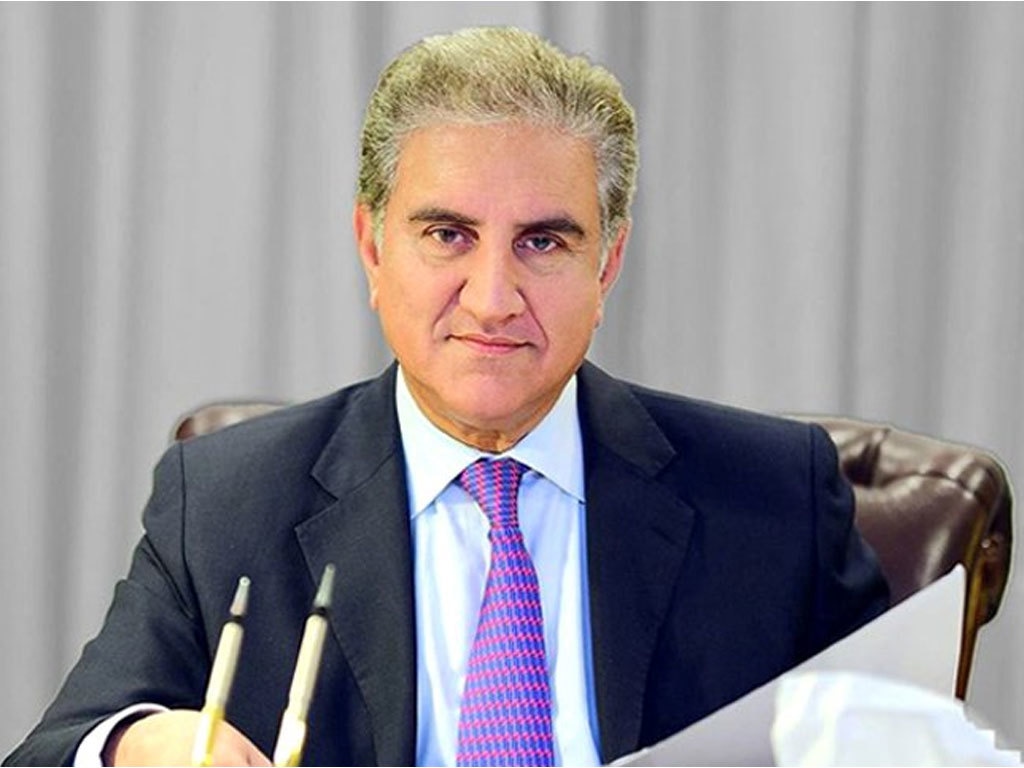

ISLAMABAD: Minister for Foreign Affairs Shah Mahmood Qureshi Sunday called for strict adherence to the principles of the United Nations (UN) Charter, especially non-use of force, respect for states’ sovereignty and territorial integrity, non-interference in the internal affairs, and the exercise of the right to self-determination by peoples under colonial and foreign occupation.
Addressing the High-Level Segment of the United Nations Economic and Social Council (ECOSOC), through video link, he expressed deep concern over the oppression and atrocities being perpetrated against the people of Indian occupied Jammu and Kashmir.
Referring to the COVID-19, he said the pandemic had triggered the worst economic crisis since the Great Depression of the 1930s.
The pandemic had exposed the inequalities of global finance, trade and investment structures as the poorest, among and within nations, would suffer the most and 130 million people would be pushed back into poverty.
The foreign minister pointed out that while the rich nations, with a population of 1.5 billion, had generated nearly $10 trillion in deficit financing to address the crisis, amounting to 10 to 20 percent of their gross domestic product (GDP), developing countries, with over 7 billion people, were struggling to mobilize even $1 trillion – around 1 percent of GDP – to respond to the health and economic challenges.
He said, to overcome this challenge, Prime Minister Imran Khan had proposed debt relief as one of the quickest ways to provide essential fiscal space to the developing countries.
He also added that the reallocation of existing Special Drawing Rights (SDRs) and creation of additional SDRs was another avenue to meet the financing requirements of developing countries. Foreign Minister Qureshi also highlighted that despite its financial difficulties, Pakistan had deployed $8 billion, three percent of its GDP, to assist the disadvantaged and poor.
Keeping in view the geopolitical divisions within the UN Security Council, he cautioned that the council would not be revitalized by accommodating the narrow ambitions of those who sought power and privilege.
The additional permanent members in the security council would compound, not resolve, its inability to act, he remarked. He noted that the world was facing three simultaneous challenges “fighting the COVID-19 pandemic, achieving the 2030 Agenda and preventing climate catastrophe.”
To meet these challenges, he stressed the need to restore the central role of ECOSOC to promote “better standards of life in larger freedoms.” The foreign minister pledged that Pakistan would take a leading role to promote those objectives during its forthcoming Presidency of the Economic and Social Council.












Comments
Comments are closed for this article.