


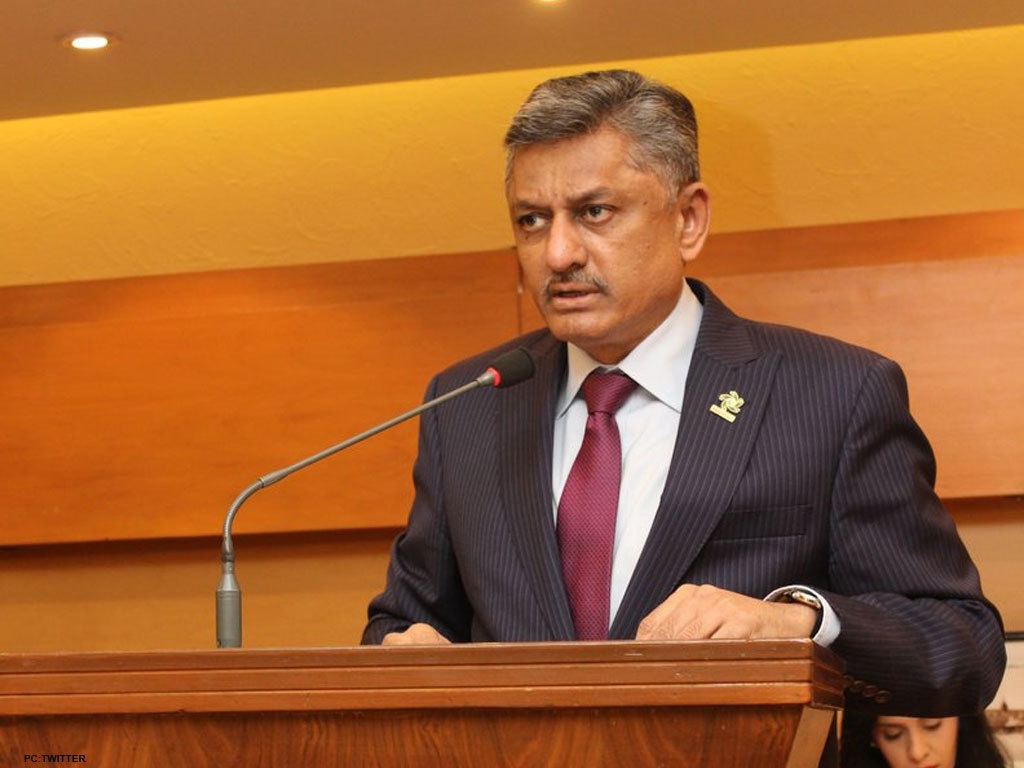

ISLAMABAD: Former Finance Secretary Muhammad Younus Dagha has argued that utility companies should not be sold to investment companies.
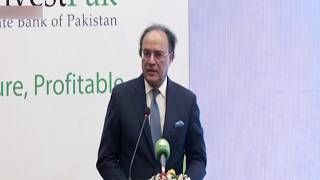
Delivering a presentation on 'KE experience for privatization of other Discos ' at a forum comprising Chief Executive Officers (CEOs) and other corporate executives of various companies, Dagha, who is a well respected officer of Pakistan Administrative Service (PAS) having served as Finance and Commerce Secretary and Secretary Water and Power, said that converting public sector monopolies into private monopolies is not a good idea and privatization without a strong element of competition, as learnt in the case of KE, has been counterproductive which leaves no incentive for better performance. He explained that regulation cannot substitute competition and franchising of retail business should be the new model for utilities privatization rather than asset transfer as it will allow for greater competition and provide room for professionals to take over utilities. He maintained that the expected outcome of privatization is investment in capacity so that there is no load shedding with better controls, lesser costs, minimal customer complaints, reliable supply network, flawless safety management, decreased losses, efficiency and transparency in dealings.
While giving the background, he stated that KE was given a Multiyear Tariff whereby all its losses and non-recoveries to the extent of 35% were built in the end-consumer tariff - making it the highest tariff in the country. It allowed all profit improvements to be passed on to the KE owners and gave targets to bring the losses down to 15% by 2015. However, KE T&D losses for FY 2019 stood at 19.1%.
All excessive profits were passed on to KE but the clawback arrangement which provided for some of the gains to be passed on to consumers was not implemented. To defeat the clawback provision, KE was allowed to revalue its assets to keep its returns on assets lower than where the clawback provision would be activated. On the other hand, all efficiencies at generation plants were passed on unilaterally to KE without lowering of generation cost calculations hence all efficiency benefits went to KE and all its inefficiencies losses to consumers/taxpayers.
With regards to power availability, there was power deficit in the NTDC system of 4920MW in 2015 which now has surplus power; however KE is still operating in power deficit. Secondly, Gencos have better plant efficiencies from 52-63% as compared to 36% of KE. As per Nepra's recent State of Industry report, KE is still continuing its policy about not supplying electricity to certain categories of consumers, in spite of the fact that some of its own generation plants were intentionally underutilized and the utility is subjecting its consumers to undue and unauthorized load shedding by underutilizing its own generation capacity.
In terms of transmission outage statistics at 132kV level, it has increased from 26 in 2017-18 to 46 in 2018-19. Total duration in minutes has also been doubled from 2451 minutes to 4997 minutes. Maximum duration of any single outage (Min.) has also increased from 362 minutes to 469 minutes. For a customer base of 2.8 million, KE received 1.8 million complaints with 0.64 incidence which is 7 times higher as compared to 28 million combined customer base of other 9 Discos with 2.5 million complaints having an incidence of 0.09.
Dagha also shared an electricity consumer bill of FESCO with a photo of meter reading appearing on the bill whereas this facility is still not available with KE. With regards to fatal accidents in KE network, it increased from 4 fatalities in 2014-15 to 54 in 2018-19 - a 13-time increase whereas the combined incidents in 9 other Discos decreased by 50% during the same period.
He said that the federal government's Policy of Uniform Tariff Regime saves the Consumers of KE from inefficient/costly power produced by KE due to lack of investment in new more efficient technology in generation. The price paid by taxpayers in the form of Tariff Differential Subsidy to KE in 2018-19 is Rs 90 billion, which otherwise had to be borne by KE customers.
Copyright Business Recorder, 2020















Comments
Comments are closed for this article.