


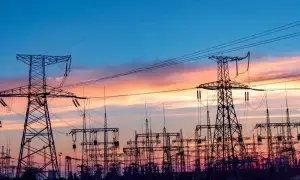
 ISLAMABAD: The rising sun of 2018 will harbinger to make Pakistan free from power load-shedding for ever, preluding a new era of socio-economic prosperity in the country.
In modern economy, electricity plays an important role just like an oxygen for human life. "A human life can not survive without inhaling oxygen and without an electricity a modern economy cannot flourish," an economic experts said.
The incumbent government inherited the power load-shedding soon its inception in 2013. The government's pragmatic steps will not only end power load-shedding in the country but also usher in a new era of progress and prosperity.
The Pakistan Muslim League (N) government since its inception gave top priority to cope with power shortage which had badly crippled economic growth of the country besides adding to the woes of the people.Electricity shortage was 7,000 MW on assumption of charge by present government in 2013, official sources told APP here Friday.
Various long and short term measures were taken immediately to address energy crisis as per PML-N election manifesto, they said.
Owing to the untiring efforts of PML-N leadership, the government attracted $ 46 billion foreign investment under China-Pakistan Economic Corridor (CPEC) project, they said. Out of the total, some $ 34 billion was being invested in energy related projects, which would not only help overcome the existing energy crisis faced by the country but would produce surplus electricity for the benefit of the country, they added.
The sources said some 17,045 megawatts electricity would be generated through these projects spread all across the country, hence leading the Nation try towards self-sufficiency in energy production.
They said so far around 7,000 MW electricity has already been added to the national system. Out of which 474 MW electricity was added in 2013, 1422 MW in, 2014, 717 MW in 2015, 920 MW in 2016 and 3450 MW till June 2017.
The projects included LNG based plants in Bhikki (800 MW), CHASHNUPP-IV (315 MW), LNG based Plants in Balloki (800 MW), Port Qasim Power Project Unit-1 (660 MW), Patrind Hydropower Project 147 (MW), Tarbela 4th Unit -1 (470 MW), Golen Hol, M/s United Energy Pakistan etc.
The Energy Ministry officials said that in the month of July 715 MW, August 547 MW, September 400 MW, November 15.89MW and 2451 MW would be added to the national grid.?They said the additional projects of 2250 MW capacity would be completed after 2018.
Giving the details, they said, work on 600 MW Engro Thar Coal project also continued on fast track which would produce 300 MW electricity by 2017 and additional 300 MW by 2018.
As many as 300 MW would be added in the national gird from Salt Range Mine Mouth Power Project while the Hubco would give 660 MW to national gird by 2018. Work on Thar Block-I has also been initiated to produce 660 MW electricity by 2018 and additional 660 MW after the year 2018.
4500 MW Diamer Bhasha Dam, 720 MW Krote Hydro Power Project and 870 MW Sukhi Kinari Hydro Power projects of Khyber Pakhtunkhwa were also in pipeline and were included in CPEC. Many other energy projects are also part of the CPEC but these would be initiated after 2018.
Tarbela 4th and 5th extension powers would add 2820 MW cheap hydel electricity to the national grid. With the addition of Tarbela 4th and 5th Extension projects, the total generation capacity of Tarbela would cross over 6000 MW.
Tarbela 4th extension project was near to completion while tender for 5th extension had already been floated.
To tap hydel generation potential in Khyber-Pakhtunkhwa (KPK), the federal government has vigorously pursuing mega projects including 4500 MW Diamer Bhasha and 4320 MW Dasu dams.
















Comments
Comments are closed for this article.