


Aid has a positive impact on growth in developing countries with good fiscal, monetary, and trade polices but has little effect in the presence of poor policies. Foreign aid is a vague concept. Properly defined it involves "a transfer of real resources or immediate claims on resources which would not have taken place in the absence of specific official action designed to promote the transfer by the donor country."
The transfer, moreover, should be on terms more favourable than those obtainable in world capital markets. So grants of freely convertible currency, constitute aid in the full sense, while loans may contain only some elements of aid. Aid components in loans are greater the longer the grace period and lower the interest rate. Private foreign investment and short-term capital on commercial terms cannot be termed as aid.
From the economic standpoint, the justification of aid lies in the fact that since developing countries are too poor to generate the required amount of savings and foreign exchange to push the economy off the "dead centre" of stagnation, inflows of external capital provide the missing link for that purpose.
Of course, for sustaining the process of growth at a respectable rate, there are elements other than foreign capital (eg stability and predictability of the political system, efficiency and honesty of public administration, education with commitment to public and personal discipline, a development strategy that reaches out to the poor, appropriate attitudes and institutions and sound and consistent framework of socio-economic policies) which are just as crucial as inflows of external resources. It is now generally agreed, on the basis of development experience of the past five decades that while some conditions for a satisfactory rate of growth can be conferred by foreign economic assistance, the most critical components must arise from the society itself.
In the case of Pakistan, there is no doubt that external economic assistance has played a key role in the economic development of the country. Not only did it supply resources, which could not be mobilised in an economy with low per capita income and high propensity to consume; more significantly it put at the disposal of Pakistan much needed foreign exchange without which basic investment needs could not have been satisfied. It is not surprising, therefore, that foreign aid, investment and national product have moved together. Over the years, there has been a significant increase in the effectiveness of aid as an instrument for supplementing savings and relieving bottlenecks.
Pakistan has been receiving economic aid from various sources which can be grouped under three categories - Consortium (Paris Club Countries and Multilateral Institutions), Non-Consortium (Non Paris Club Countries) and Islamic Countries. The Aid to Pakistan Consortium which was formed in 1960 and now is renamed as the 'Pakistan Development Forum' is the largest source of external economic assistance. In 2004-05 Consortium / PDF provided 75.3 per cent of total commitments. Shares of Non-Consortium, Islamic Countries and Relief assistance for Afghan refugees were 23.3 per cent, 1.3 per cent and 0.1 per cent respectively.
There has been a shift in the terms of external commitments during the last five decades. The grant and grant like assistance was as high as 80 per cent of total commitments during the first five-year plan period. It started declining afterwards and came down to mere 12 per cent during the non-plan period (1970-78).
The rate of interest which averaged at about 4.6 per cent during the 1950s, declined to 3.3 per cent during the 1960s and 3.6 per cent during the 1970s; it, however, increased to 4.8 per cent during the 1980s. In the 1990s Pakistan benefited from internationally prevailing low interest rates and its interest declined to 4.4 per cent.
During the period 1999-2000 to 2004-05, the average interest rate was 1.5 per cent, and repayment period was 26 years including a grace period of 7 years. While we are not a heavily indebted country, we cannot afford to be complacent about the future growth of foreign loans. External financing no doubt, if productively used helps to accelerate domestic investment rates but at the cost of future domestic consumption and investment when foreign debt must be serviced or repaid through higher exports or lower imports.
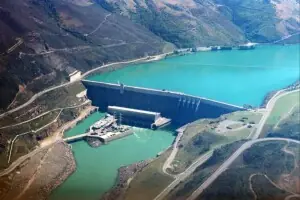
The principal uses to which foreign economic aid has been put are the following: development and modernisation of transport and communication facilities; power projects; steel mill; fertiliser projects; rural development and agricultural research; irrigation and land reclamation projects; population welfare programmers; expansion of education and health facilities; water supply and urban development schemes; import of food items and some other essential inputs for agricultural and industrial operations.
Notwithstanding the significant contribution made by external aid and loans in supporting the country's development effort and in easing the strains on its balance of payments, it has negative features also. The very inflow of external assistance has led to a state of complacency and has had a dampening impact on national initiatives to increase domestic savings and exports and develop indigenous technology. For example, the easy availability of food-grains under soft loan conditions during the 1950s and 1960s led us to accord low priority to agricultural development in our first and second five year plans. We have been so much under the spell of foreign technology that we did not develop technology appropriate to our conditions.
It is by now crystal clear that external aid has many faces, the ugliest of them being disguised or undisguised imperialism. It has been observed that countries heavily dependent on aid can be de-stabilised economically if they refuse to toe the line of their donors. Aid dependency as such, is not a healthy prospect, much less for a country like Pakistan which would like to follow an independent foreign policy.
In recent years there has been much talk about self-reliance as a cardinal aim of our economic strategy. It is, however, necessary to have a clear vision of the concept of self-reliance so that proper policy instruments are created to achieve this aim.
The basic philosophy underlying the concept of self-reliance is the capability to bear any crisis on the basis of internal strength and resilience. Self-reliance, however, is not synonymous with economic autarky implying a completely closed economic system with no international links. This is neither possible nor desirable in the modern world. Self-reliance signifies the achievement of a stage of economic development characterised by a state of economic equilibrium based on normal commercial transactions rather than on any forms of special supports such as concessional bilateral loans and grants. It implies self-confidence and capacity for autonomous goal setting and decision-making. Consequently, it emphasises the need to resist and reject all forms of dependency, self-invited or externally imposed that can be converted into political pressure and weaken our national sovereignty.
Self-reliance as an objective can be viewed either from a static or a dynamic angle. Self-reliance would lose much of its appeal if it were associated with economic stagnation. What is to be aimed at is dynamic self-reliance, where the rate of growth is accelerated, while simultaneously the capacity to sustain it exclusively from our domestic resources is developed.
This implies that a self reliant economy must generate enough savings and exports to sustain growth at a socially necessary rate which in the case of Pakistan is 8 per cent per annum.
With a proper framework of economic policies based on a correct assessment of the nature and dimensions of our problems as well as our failures and achievements in economic management, we can certainly reach a stage where we can sustain the socially desired rate of growth of 8 per cent per annum without the support of conditional bilateral economic assistance by the end of the current decade. This will however, necessitate the articulation and implementation of a coherent economic strategy for promoting positive inter-actions of growth with savings, investment and exports in a milieu characterised by good governance.












Comments
Comments are closed for this article.