



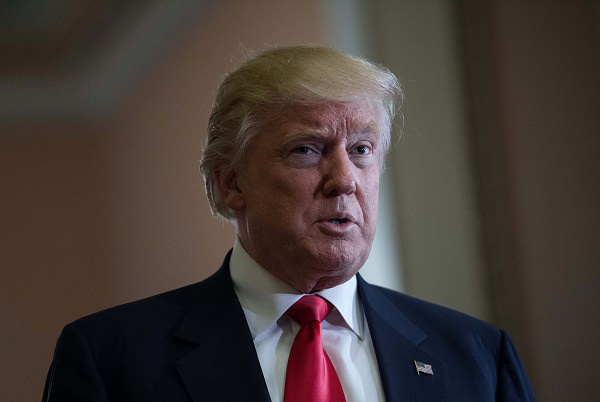
 BRUSSELS: The European Parliament on Tuesday backed an EU plan to deepen coordination of member states' defence policies and rely less on the United States, driven in part by US President-elect Donald Trump's suggestion he may scale back protection of NATO allies.
EU lawmakers voted 369-255 in favour of plans to increase European spending on military missions, as well as developing and sharing assets like helicopters.
There were 70 abstentions. While the parliament's backing is not binding on European governments, it represents a sign of cross-party political support for the European Union to pursue its most ambitious defence plan in decades after years of spending cuts.
"Our Union is not equipped to face overwhelming defence challenges," said liberal lawmaker Urmas Paet, a former Estonian foreign minister who drew up the resolution put to the parliament in Strasbourg.
"Europe continues to rely heavily on NATO capabilities and on US solidarity," he said.
The EU defence plan proposed in September by France and Germany had been months in the making, but Britain's vote in June to leave the EU and Trump's election on Nov. 8 have lent extra momentum to the initiative.
During his election campaign, Trump questioned whether the United States should protect allies seen as spending too little on their defence, raising fears that he could withdraw funding for NATO at a time of heightened tensions with Russia. Britain has blocked plans for joint EU defence for years, objecting to a European army run from Brussels.
France, which along with Britain is Europe's main military power, now sees an opportunity with Germany to push a so-called Common Defence Union, while stressing that this is not an "EU army".
The European Parliament, which has a say in how much of the EU budget can be used to fund defence research, saw resistance to the Franco-German plan from eurosceptic, far-right lawmakers who have good relations with Russia, and from the far-left, who are against military spending in general.
But the US election and broader concerns about Europe's ability to maintain its citizens' security at a time of growing instability in North Africa and a more assertive Russia helped garner support from centrists, lawmakers said.
"The Americans will not care about security in Europe for the long term," said German centre-right lawmaker Michael Gahler.
"The outcome of the US election ... makes building up European defence capabilities even more urgent."
EU leaders are expected to discuss the joint defence plans at a summit in Brussels in December, before tasking their governments and EU foreign policy chief Federica Mogherini to flesh out the proposals.
Ideas include creating a new planning headquarters to oversee training missions, deploying military crisis-response forces, working together to develop new weapons systems and annual reviews of defence spending across the bloc.
The EU insists it is not duplicating NATO, but wants to be able to act independently of the US-led military alliance when necessary.
NATO has so far welcomed measures that would strengthen European defences, given that 22 EU nations also belong to the alliance.
















Comments
Comments are closed for this article.