



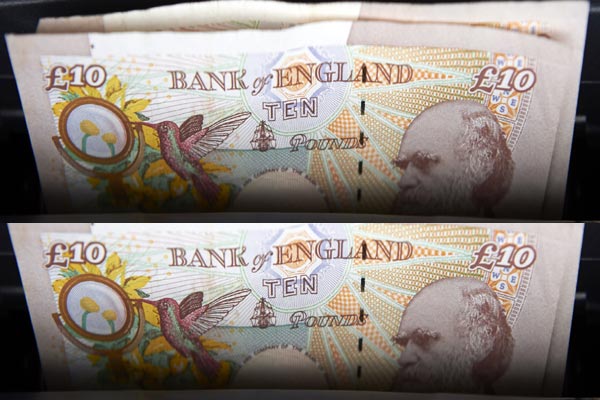
 LONDON: Sterling strengthened amid a more upbeat mood across global markets on Thursday, as investors focused on a Bank of England policy meeting that looks set to yield the first cut in British interest rates in seven years.
Governor Mark Carney clearly flagged two weeks ago that stimulus was on its way, signalling the economy was in safe hands following the shock decision by voters to pull Britain out of the European Union.
The central bank is expected to halve its benchmark interest rate to a record low of 0.25 percent in its monthly policy statement at 1100 GMT.
After weeks of uncertainty following the June 23 referendum, which drove sterling to a 31-year low of $1.2798, Theresa May became Britain's new prime minister on Wednesday, appointing leading "Brexit" supporters including former London mayor Boris Johnson to key positions in her new government.
Having already climbed almost 3 percent against the dollar since hitting its lows last week, sterling was another half a percent higher ahead on Thursday at $1.3210.
"Within the broader sterling trend we're not below $1.30 because we have a functioning government now," said BMO currency strategist Stephen Gallo, adding that sterling's moves on Thursday amounted to not much more than "a lot of backing and filling ahead of the BoE".
Against the euro, the pound climbed half a percent to 84 pence, and topped 140 yen for the first time since the 'Leave' vote.
Money markets have all but fully priced in a quarter point cut on Thursday in the BoE's main rates, held at a record low of 0.5 percent since March 2009.
A Reuters poll of economists showed the BoE is also likely to revive its quantitative easing programme of bond purchases at its next meeting in three weeks' time.
BMO's Gallo said sterling could fall up to 1 percent in the event of just a 25 basis point cut, but added: "If there's anything in the minutes that suggests August is a done deal for a QE injection I think sterling will sell off a bit more."
Data released early on Thursday showed interest among buyers in Britain's housing market tumbled to its lowest since mid-2008, adding to signs of impact on the economy from the Brexit vote.
"There is an opportunity (and a need) for the UK to counter the post-referendum economic slowdown with a more expansionary fiscal stance, and were that to happen, it would be positive for sterling," wrote Societe Generale currency strategists in a research note to clients.




















Comments
Comments are closed for this article.