



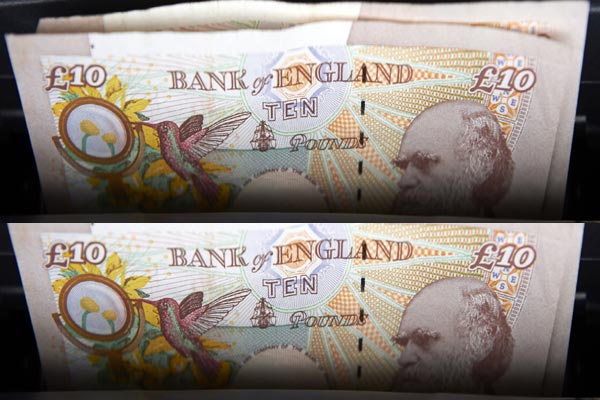
 LONDON: Sterling jumped above $1.45 to its highest since mid-February on Tuesday, extending a week of gains, as expectations grew that Britain will vote to remain a member of the European Union.
Investors worry that a vote for a Brexit in June would leave Britain exposed to a further slide by the pound - already weak compared with its historical average - raise the cost of financing its huge public debt and undermine a shaky economic recovery.
But the intervention of U.S. President Barack Obama last week in favour of EU membership, along with a shift in some polling towards the "In" camp, has shifted bookmakers' odds against Britain voting to leave.
The cost of hedging against swings in sterling reached six-year highs as options contracts moved to capture the result of the referendum on June 23. But those moves came after implied volatility - the chief vehicle speculative investors have used to bet on trouble for the pound around the vote - fell by its most in a year on Monday.
Sterling's slide since last November reached almost 12 percent earlier this month. It has recovered around 3 percent in value in the fortnight since.
"It looks as if there has been a change of sentiment," said Esther Reichelt, an FX strategist with Commerzbank in Frankfurt.
"The options market in general is pricing in less chance of a big move around the Brexit vote and the market seems less worried it will happen."
Senior figures with the global banks who dominate currency trading in London said sterling's gains in the past week stemmed chiefly from a cut in bets on volatility around the vote put on by hedge funds earlier this year.
They said many currency-focused funds had already been hurt by the failure of the pound to fall further, and better results for the "In" campaign had prompted some stock market-focused funds to bet on a vote to remain.
On the day, the pound gained around half a percent against both the euro and the dollar to trade at 77.50 pence and $1.4555 respectively.
Two-month sterling/dollar options, extending for the first time to cover the vote and the result a day later, rose to 14.40 percent, their highest since mid-2010, from around 11 percent.
But three-month pricing has fallen from highs around 16 percent to 13 percent. Two-month sterling/dollar risk reversals - a gauge of bets a currency will rise or fall -- also show a lesser bias for sterling weakness against the dollar, trading little changed from Monday at 1.5 vols.
The latest poll on Tuesday, by the ORB organisation for The Daily Telegraph newspaper, showed support for remaining in the EU declined by 2 percentage points to 51 percent over the past week.
The first poll to be taken after Obama's visit is not due until Wednesday.
"Somewhat stabilizing expectations when it comes to the June EU referendum seems to increase uncertainty among all those who are short the currency," Credit Agricole analysts said in a note, pointing to the potential for sterling to gain further.
"(But) it is still early days and real demand is unlikely to return until a positive outcome in June."




















Comments
Comments are closed for this article.