


TSX dives to year low on recession fears

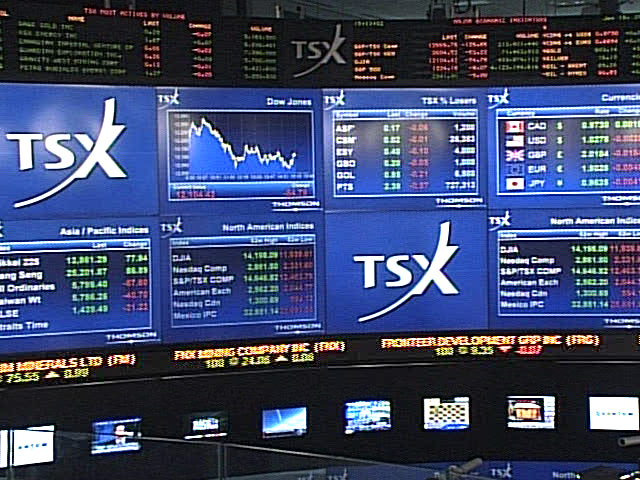 TORONTO: Toronto's main stock index plunged nearly 400 points on Thursday, touching its lowest level in more than a year, as a grim economic outlook from the US Federal Reserve and weak data from China stoked fears of a global recession.
Both Bay and Wall Street finished down more than 3 percent. European stocks fell more than 4 percent to a two-year low, and the US dollar rose to a seven-month high against major currencies as risk aversion gripped global markets.
"The headlines that are coming out should not be unexpected - we all know that growth is slowing across the globe," said Barry Schwartz, vice-president and portfolio manager at Baskin Financial Services.
"Fears of economic contraction and default in Europe create lack of confidence, which creates self-fullfilling prophecy, which quite possibly will lead to a recession in the fourth quarter," said Schwartz.
"Market prices where they are, specific companies, stocks, and sectors are trading as if a recession is a done deal."
The Toronto Stock Exchange's S&P/TSX composite index ended the session down 392.5 points, or 3.28 percent, at 11,562.51. Earlier, it sank as low as 11,420.35, its weakest point since July 2010.
The selloff was widespread, with eight of the index's 10 main sectors finishing lower.
The materials group sagged 6 percent while energy issues slid 4.7 percent as global commodity prices were pummeled by the economic uncertainty.
Data showing contraction in China's manufacturing sector for a third straight month helped drive down oil prices by more than 4 percent and sent the price of copper to a one-year low.
Gold, a traditional safe haven, slumped more than 3 percent as the US dollar strengthened.
Barrick Gold was the heaviest drag on the index, down 6.3 percent at C$50.19, followed by Suncor Energy, which dropped 6.8 percent to C$26.21. Potash Corp lost 4.3 percent to C$48.18, and Teck Resources tumbled 6.7 percent to C$31.75.
Financials tumbled 2.3 percent, led by Royal Bank of Canada, down 2.6 percent at C$45.36. Toronto-Dominion Bank was down 2.4 percent at C$70.49.
Thursday's market meltdown came after weeks of worries that Europe's debt crisis could freeze the global financial system, and a day after the Federal Reserve disappointed markets with its latest effort to boost flagging US economy by lowering long-term borrowing costs.
The Fed also spooked investors with its stark outlook for the US economy, saying it faced "significant downside risks".
Levente Mady, a market strategist at Union Securities in Vancouver said that with interest rates already at zero in the US, there was little more that policy-makers could do to help stimulate the economy and rally markets. "When you get to zero percent, they can't help any more. You might as well toss the Fed, all their governors and the rest, into the trash bin because they are becoming irrelevant like the bank of Japan did 20 years ago," he said. "That means this market could be in trouble for a while."
Copyright Reuters, 2011
















Comments
Comments are closed for this article.