



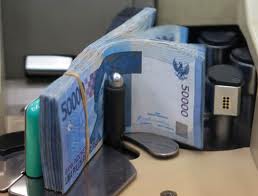
 SINGAPORE: The Indonesian rupiah hit a 16-year low versus the dollar on Monday, dented by year-end corporate demand for dollars and possible position squaring in Indonesian bonds by overseas investors.
The rupiah, like other Asian currencies, has faltered in recent weeks as investors positioned for the US Federal Reserve to start raising interest rates next year on the back of a gradual economic recovery in the United States.
Its fall accelerated over the past two trading sessions, with the currency hitting a low of 12,695 versus the dollar on Monday, its lowest level since August 1998, according to Reuters data.
Indonesia's central bank said on Monday it is intervening in both the bond and foreign exchange markets to stabilise prices.
The rupiah's weakness stood out on a mixed day overall for emerging Asian currencies, with the South Korean won and Singapore dollar, edging higher while currencies such as the Indian rupee retreated.
Market participants said the rupiah was hit by worsening global risk sentiment as well as year-end corporate demand for the greenback.
"Ahead of the end of year, we are seeing some increased onshore corporate demand for US dollar, which is keeping dollar/IDR quite bid," said Divya Devesh, FX strategist for Standard Chartered Bank in Singapore.
There was also focus on possible rupiah-selling linked to overseas investor holdings of Indonesian bonds.
"We have seen massive inflows into Indonesian bonds this year, and there seems to be a minor selloff in bonds as well, so people might be taking profit ahead of the year-end," said Devesh.
Indonesia's 10-year government bonds came under pressure on Monday, with their yields rising 11.6 basis points to 8.203 percent, on track for the biggest one-day rise in yields since late September.
The rupiah's weakness in non-deliverable forwards (NDFs) since around Friday suggests that overseas investors are behind the currency's latest drop, said Satoshi Okagawa, senior global markets analyst for Sumitomo Mitsui Banking Corporation in Singapore.
"There are some visible signs of currency hedging against rupiah weakness...by overseas investors," Okagawa said.
The rupiah fell as low as 12,908 versus the dollar on one-month NDFs, its lowest level since November 2008, according to Reuters data.
PHILIPPINE PESO
The peso edged lower versus the dollar but the drop was limited, thanks to some support in the wake of its sovereign rating upgrade last week.
Last week, the peso had touched a 2-1/2 month high versus the dollar at 44.470. That rise came after Moody's Investors Service upgraded its rating on the Philippines by one notch to Baa2 on Thursday, citing a decline in its debt burden and structural improvements in fiscal management.




















Comments
Comments are closed for this article.