



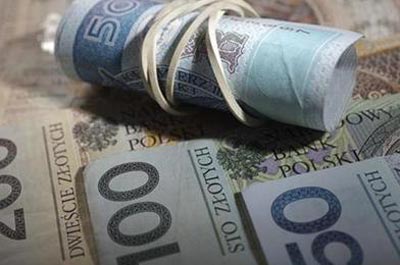
 BUDAPEST/PRAGUE: Poland's zloty pulled back from four-month highs on Thursday as the European Central Bank's policy steps disappointed investors, having gained as much as 2 percent in the past two weeks on hopes of dovish comments from ECB President Mario Draghi.
The euro zone's central bank cut its growth and inflation outlook at Thursday's meeting and said it would reassess the impact of its monetary policy stimulus early next year and take further action if necessary.
The zloty had fallen 0.3 percent on the day to 4.162 to the euro by 1447 GMT.
"The zloty is weakening because investors are disappointed with Draghi's comments," Millennium Bank analyst, Mateusz Sutowicz, said. "The market thought that he would deliver today more details on potential QE implementation, but it did not happen."
Draghi said the level of technical preparation for further measures, widely believed to include quantitative easing (QE), had been stepped up.
Other currencies were little moved, with Romania's leu and Hungary's forint each down about 0.1 percent. Stock markets were mixed, with Prague leading losses, dropping 0.9 percent.
Central European policymakers have cut interest rates to record lows this year to aid economic recovery.
Poland's Monetary Policy Council (MPC) left its base rate unchanged at 2 percent on Wednesday and stuck to its stance that it will only resume monetary easing if there is a weakening of economic growth.
A Reuters poll of analysts has shown that the zloty could retreat from recent highs in coming months as deflation in Poland keeps alive the risk of rate cuts by the central bank.
"Not much new information out of yesterday's MPC statement or follow-up press conference: several references to still room for rate cuts if slow EZ growth were to persist," Commerzbank analysts said in a note.
Hungary's central bank, which has also said it would keep rates at a record low 2.1 percent throughout next year, will meet for its last policy meeting of the year on Dec. 16.
Analysts expect no change in rates as Hungary tries to prevent any forint swings late in the year with the government aiming to ensure its debt pile, much of which is denominated in foreign currencies, keeps edging lower.

























Comments
Comments are closed for this article.