



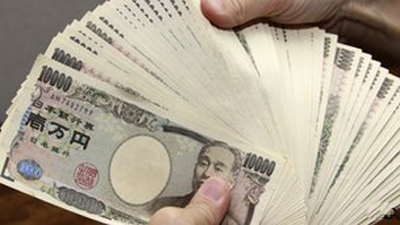
 SINGAPORE: The yen hit a fresh seven-year low versus the dollar on Wednesday, staying on the defensive after Japanese Prime Minister Shinzo Abe decision to postpone a sales tax rise was read as supportive of risk sentiment.
The dollar rose to as high as 117.31 yen, its highest level since October 2007.
The dollar last traded at 117.21 yen, up 0.3 percent on the day.
The yen showed limited reaction after the BoJ kept policy unchanged on Wednesday as expected.
The safe haven yen slipped as investors held out hope for an economic recovery in Japan after Abe on Tuesday said he would postpone a second increase in the sales tax to 10 percent that had been scheduled for October 2015, for 18 months.
Abe also called an early election to seek a fresh mandate for his economic strategy.
His decision came after Japan's economy unexpectedly shrank for a second consecutive quarter in July-September, a sign the effects of the initial rise in the sales tax to 8 percent from 5 percent in April were lasting longer than expected.
"It's more a case that this is seen as a boon for the economy and the equity market," said Mitul Kotecha, head of FX strategy Asia Pacific, for Barclays in Singapore. "Given the still-strong correlation between the equity market and the yen, it still suggests more upward momentum for dollar/yen," Kotecha added.
Japan's benchmark Nikkei share average touched a high of about 17,472 earlier on Wednesday, nearing a seven-year peak just above the 17,520 touched last week, although the Nikkei later reversed its gains and was last down 0.1 percent.
Many market participants, particularly foreign investors, sell the yen to hedge their equities positions, meaning the yen can come under pressure from such hedging flows when Japanese shares rise.
Gains in equities can also help support investor risk appetite and bolster demand for carry trades, in which investors sell low-yielding currencies such as the yen to fund investment in higher-yielding assets.
POLICY DIVERGENCE
The yen had already been under pressure versus the dollar after the Bank of Japan surprised the market last month by expanding its monetary stimulus, underscoring the diverging outlook for interest rates and monetary policy in Japan and the United States.
Later on Wednesday, attention will turn to minutes of the Bank of England's last policy meeting.
The Federal Reserve will also release minutes of its latest policy review.
The BoE minutes are likely to show that policymakers want to keep interest rates lower for longer.
In contrast, some traders expect the Fed minutes to sound relatively more hawkish, highlighting the diverging policy pathways between the Fed and its peers.
Traders said more hawkish Fed minutes could lift the dollar index, which last traded at 87.735, up 0.2 percent on the day. The euro slipped 0.2 percent to $1.2515, giving back some of the gains it made on Tuesday, when it rose about 0.7 percent.
The euro had rallied on Tuesday as investors scrambled to cut bearish positions on the common currency after a survey showed German analyst and investor sentiment rose in November for the first time in almost a year.
The Australian dollar fell 0.5 percent to $0.8673. Much of the Aussie dollar's weakness came after the price of iron ore, Australia's top export earner, slipped to its lowest in five years.


























Comments
Comments are closed for this article.