



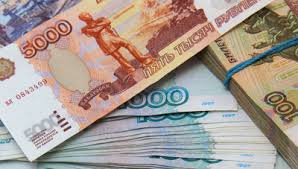
 LONDON: The rouble may have plunged 25 percent against the dollar so far this year, but some currency traders are betting on a further 10 percent drop in 2015 on the grounds that the currency is still expensive once trade and inflation are factored in.
Russia's currency is on course for its biggest weekly loss since early 2009 after the central bank decided to cap daily dollar sales at $350 million - and investors interpreted that to mean it would not shore up the rouble.
The bank's stance is unsurprising given that prices for oil, Russia's main export, are at four-year lows around $82 a barrel and threaten to blow a big hole in the country's trade balance unless its currency remains weak.
But the decision also looks prescient given that inflation and exchange rates of trade partners suggest the rouble is still overvalued - despite already crashing past the 41 roubles-per dollar exchange rate analysts predicted for the end of the year.
"The central bank is saying clearly that it does not consider the rouble weak enough to take stronger action and that is fuelling more weakness," UBS strategist Manik Narain said.
"If you look at the terms of trade and current account flows, it's hard to argue the rouble has significantly overshot. At this level of oil price, I'd say it's getting close to fair value rather than looking cheap." This graphic of real effective exchange rates (REER) -
http://link.reuters.com/vuf47v - shows that the rouble stands 1.5 percent above its 10-year average.
REER is the weighted average of a currency against a basket of its trade partners' currencies and adjusted for inflation.
The measure is commonly used to determine whether an exchange rate is overvalued or undervalued.
While the rouble is significantly down from early-2014 levels, the currencies of Russia's major trade partners - other emerging economies such as Poland, Hungary, India, Turkey - are in contrast 3.5 to 11 percent weaker than their long-term averages.
Balanced against that is the relentless capital flight prompted by Western sanctions - estimated at over $75 billion in the first half of 2014 alone - and a current account surplus suffering from the fact that every $10 drop in the oil price is estimated to cost Russia $28 billion in receipts.
A weaker currency that shores up the surplus is therefore helpful.
"The question is at what level of dollar-rouble does the current account surplus start to rise sufficiently to offset the capital outflows," Narain added.
Non-deliverable forwards (NDF)- short-term contracts used by counterparties to lock in a future exchange rate - indicate a rouble-dollar exchange rate of around 47.7, a 3 percent depreciation from current levels.
In a year's time, forwards are pricing the exchange rate at 51.5, roughly 10 percent weaker than spot levels.
FAIR VALUE CLOSE BY
This year's rouble move only partly reverses the sharp appreciation of the prior decade and a half, fuelled by oil's vertiginous rise from $30 per barrel in early-2004. Crude prices peaked at $147 in 2008 and held near $100 until 2014.
JPMorgan calculates the rouble rose by almost 50 percent in REER terms between 2004 and September 2014, its appreciation second only to the Brazilian real among major emerging currencies. And since 1999, the rouble's REER is up 137 percent.
Similarly, oil prices, despite the recent drop, remain above long-term averages, Standard Bank analyst Tim Ash noted. "So the rouble might look cheap nominally over a one-year view, but over a slightly longer real time-frame the rouble still does not look cheap, and neither does oil," he added.
On the positive side, however, the rouble is not far off its 10-year average REER. Second, the central bank's decision to hold off regular interventions also allows it to unleash its firepower at will instead of at set exchange rate levels.
That should, at least in theory, make it harder for currency speculators to short the rouble and exacerbate any drop.
"I don't think there is any doubt the central bank could destroy those that are shorting the rouble," said Jan Dehn, head of research at Ashmore who believes 90 percent of the rouble move is already done.
Analysts at Russia's VTB Capital were also optimistic, reckoning that with no additional sanctions and oil at $80 a barrel, fair value for the rouble was at 41-42 to the dollar.




















Comments
Comments are closed for this article.