



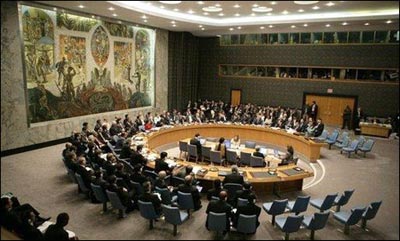
 UNITED NATIONS: The UN Security Council on Friday split a sanctions blacklist for the Taliban and al-Qaeda in an effort to encourage the Taliban to join reconciliation efforts in Afghanistan.
Until now, both militant networks were placed in the same UN sanctions regime.
In two resolutions, the 15-nation Council decided that the al-Qaeda sanctions list will include only names of "those individuals, groups, undertakings and entities associated with al-Qaeda". Individuals and groups associated with the Taliban will be governed by a separate sanctions list and a Council committee will determine future requests for additions, updates or removals.
Diplomats said the move recognises that the two groups have different goals.
Al-Qaeda is seeking worldwide jihad while the Taliban are involved in an insurgency focused in Afghanistan.
The UN has been asked by the Afghan government o remove about 20 former Taliban figures from the list.
It originally asked for 50 names to be considered, but withdrew many because paperwork to back up their cases was not available. The sanctions committee is due to debate the remaining cases in mid-July. Meanwhile, UN Office on Drugs and Crime (UNODC) and the UN Office of the Counter-Terrorism Implementation Task Force (CTITF) today organized a one-day seminar in the Hungarian capital, Budapest, to promote awareness of the UN Global Counter-Terrorism Strategy and highlight concrete actions by countries in implementing the strategy.
"For successful implementation of the strategy's four pillars, exchange of information is vital", said
Yury Fedotov, the UNDOC Executive Director." Each of the pillars is composed of the building blocks of information necessary to prevent and combat terrorism. To translate strategy into action, we need the quick transference of this information. We need greater regional and international cooperation".
The CTITF officer-in-charge, Rafiuddin Shah, said that only integrated plans to implement the strategy will lead to success.
"There is need to develop cohesive regional strategies to address this issue in many parts of the world.
Deep understanding of the problem, related capacity-building to tackle these problems and respect of rule of law and human rights need to be integrated in the terrorism response processes," Mr. Shah added.
The seminar was attended by counter-terrorism practitioners from more than 60 governmental and international organizations.
Copyright APP (Associated Press of Pakistan), 2011

















Comments
Comments are closed for this article.