


UK to protect retail from casino banking

 LONDON: Britain's top banks will have to protect their retail business from so-called casino banking activities after the government backed a radical overhaul of the industry aimed at shielding taxpayers from losses.
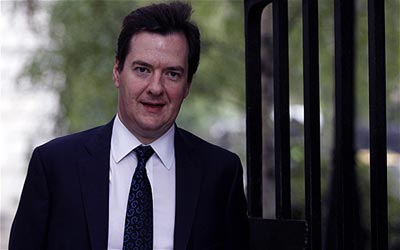
Finance minister George Osborne will on Wednesday throw his weight behind the ring-fencing proposal, Treasury sources said, in a move aimed at showing the public that the coalition government is fulfilling its promise to be tough on the banks.
Full details of the proposal, which aims to shield retail depositors and ensure tax-payers, are not required to bail-out the industry in any future crisis by creating much larger capital cushions, have not yet been finalised.
The reforms appear to go further than measures being proposed by other countries, although the capital requirements are not likely to be as harsh as in Switzerland.
While a blow to the banks, some had expected the proposals to be more severe. As now proposed they are unlikely to prompt banks to follow through on threats to leave Britain in favour of lighter touch regulatory regimes, industry analysts said.
"This is a regressive and costly outcome for UK banks, although perhaps a more palatable option than full break-up," said Mike Trippitt, analyst at Oriel Securities.
Shares in HSBC, Barclays and Royal Bank of Scotland, those most affected, all fell by more than 1 percent after the news that Osborne would use the annual Mansion House speech in the City of London to endorse the plan.
"It's yet more regulation that they're going to have to deal with which will impact their profitability," said Ion-Marc Valahu, fund manager at Geneva-based ClairInvest, who owns bonds in Barclays.
Osborne is backing the central plank of proposals put forward by Britain's Independent Commission on Banking (ICB) to ring-fence UK retail banking operations.
Banking sources said they were surprised Osborne was endorsing the ICB's proposals three months before the full report is released and there is more clarity.
Full details of the plan will not be released by the ICB until September 12, and banks and analysts said more details are needed to assess the impact and cost.
"There are a lot of issues and a lot of details that need to be thought through and need to be discussed," British Bankers' Association chief executive Angela Knight told BBC Radio 4.
The ICB stopped short of recommending a full break-up of banking groups. Instead it proposed distancing retail banking from investment banking by setting up different subsidiaries for different business units under one parent holding company.
Banks should hold a minimum core Tier 1 capital ratio of 10 percent for the UK retail operations some 3 percentage points higher than the 7 percent global minimum standard.
The proposals represent a compromise, allowing the Conservative-Liberal Democrat coalition to appease public anger against the banks by showing taxpayers that the banks are being reformed, while not harming Britain's competitive role.
The changes are likely to cost banks billions of pounds and may take years to fully achieve.
Banks are working on plans and putting forward proposals, but many are intertwined with recovery resolution plans and other issues as the regulatory landscape shifts.
The ICB said the costs of the process "may be material" but would fall far short of the 12-15 billion pounds calculated by management consultants Oliver Wyman.
The top banks are split over how ring-fencing would work. HSBC and Lloyds favour a broad ring-fence including far more assets than a set-up supported by Barclays and RBS.
HSBC last week told lawmakers that all banking book assets should go behind the ring-fence, which would include mortgages, corporate loans and all long-term assets it holds being protected by a government guarantee.
HSBC and Lloyds are concerned a narrow model would create a funding mis-match, whereby the ring-fence would be "overfunded" and not able to use extra deposits to fund its portfolio outside, which would have to be funded in wholesale markets.
But RBS CEO Stephen Hester warned that creating too big "a protected beast" raised the risk of moral hazard, as banks could embark on riskier lending knowing they were covered by a state guarantee.
By 0933 GMT Barclays shares were down 2 percent, RBS was down 1.8 percent, HSBC was down 1.1 percent and Lloyds dipped 1 percent, all underperforming the boader market.
Copyright Reuters, 2011

















Comments
Comments are closed for this article.