



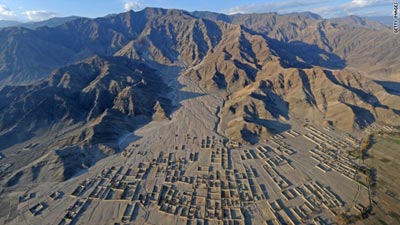
 SANGIN: Multi-million dollar plans to reintegrate Taliban fighters into society to help end a decade of war have hit a stalemate in one of Afghanistan's toughest battlegrounds.
Despite a deal struck earlier this year between the government and tribal elders in the north of Sangin district, violence continues and US Marines are dubious of insurgent claims to want peace.
But a plan to reintegrate low-level fighters, which has been running for about a year and has cost at least $140 million in foreign aid, has proved to be a complicated and unpopular process.
It has hit particular problems in Helmand province, which includes Sangin, one of the most dangerous districts for foreign troops in Afghanistan, and which is seen as strategically pivotal to the outcome of the war as a whole.
The scheme is supposed to provide an amnesty to Taliban who agree to renounce violence, sever ties with terror groups and live by the Afghan constitution.
The British general in overall charge of the scheme, Major General Phil Jones, has said 1,740 former fighters have joined the process across Afghanistan and that peace talks are ongoing with up to 45 other groups nationwide.
But Jones acknowledged that the programme had met most resistance in Helmand, where the idea of reintegration is too closely allied with surrender a taboo concept.
US Marines trying to administer the process say they are sceptical of the intentions of those who have joined up.
The New America Foundation noted that political motives often trump economic incentives even among low-level fighters.
US Lieutenant Colonel Thomas Savage, commander of 1st Battalion 5th Marines deployed to Sangin since March, said development aid remained the troops' key weapon.
"It's the one advantage we have over the Taliban, and that's that we can do stuff for them and the Taliban can't," said Savage.
"They don't have anything to offer them other than this way of life. It's a patronage society if they're going to come over they want something AFP
Copyright AFP (Agence France-Presse), 2011
















Comments
Comments are closed for this article.