



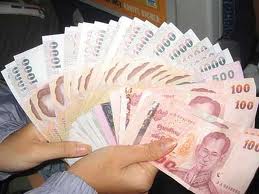
 SINGAPORE: Increasing political tensions in Thailand weighed on the baht on Wednesday, as emerging Asian currencies softened amid worries about a slowing US economy and China's efforts to tighten lending.
The Indonesian rupiah, however, turned higher after a solid government bond sale.
The baht fell a day after gun battles between Thai police and anti-government protesters in Bangkok killed five and wounded dozens amid authorities' effort to clear demonstrators from the streets.
South Korea's won fell on selling from offshore funds.
The United States, the world's largest economy and Asia's major exports market, showed more signs of a slowdown with disappointing data on housing and New York manufacturing.
"It is difficult for Asian markets to continue to shrug off weak numbers from the US," said Frances Cheung, head of Asian rates strategy at Credit Agricole CIB in Hong Kong.
Emerging Asian currencies are expected to further weaken as the dollar is seen ultimately benefitting from the Federal Reserve's reduction in its stimulus.
Later on Wednesday, the Fed will release minutes of its January policy meeting when it decided to trim its asset buying by another $10 billion.
Investors were closely watching China's central bank as it is trying to engineer a gradual upward shift in the cost of money to encourage companies to deleverage and discourage high-risk shadow banking activity.
Regional currencies have been under pressure from worries that the efforts may hurt growth in the world's second largest economy.
BAHT
The baht fell as offshore funds, foreign banks and local lenders sold the currency on escalating political turmoil.
"Regional currencies are weaker, but the baht has more effect from the chaos yesterday," said a Thai bank trader in Bangkok, referring to the gun battles on Tuesday.
The trader expected the baht to weaken to 33.00 per dollar.
Another trader, however, said the Thai currency may find support around 32.65.
The baht has the 50.0 percent Fibonacci retracement at 32.67 of its appreciation so far this year.
"The political factors were priced in already. We have to see more violence to make the dollar higher again," said the domestic bank trader.
WON
The won slid as offshore funds sold the currency, while foreign investors sold Seoul shares pushing down the main index.
Domestic exporters bought the won on dips for month-end settlements, limiting its downside.
Investors were awaiting the Fed's minutes for its January meeting later in the day.
"The won came under pressure from weaker stocks and offshore selling, but sizeable exporter deals capped slides. Few players see a clear direction," said a South Korean bank trader in Seoul.
SINGAPORE DOLLAR
The Singapore dollar eased on selling from funds and leveraged accounts.
The city-state's currency recovered some earlier losses on month-end demand from local corporates.
RUPIAH
The rupiah started the day weaker on month-end dollar demand from Indonesian companies such as importers.
But the Indonesian currency turned higher as speculators chased it after the finance ministry on Tuesday raised 12.25 trillion rupiah ($1.03 billion), well above an indicative target of 10 trillion rupiah.

























Comments
Comments are closed for this article.