



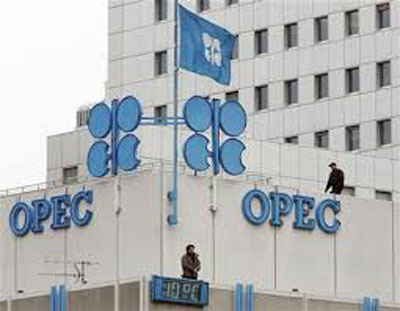
 LONDON: OPEC will be able to handle the extra oil expected to come from Iran, Iraq and Libya, OPEC's secretary general said on Monday, insisting the group would collectively head off any oversupply.
Top OPEC supplier Saudi Arabia along with core Gulf producers the United Arab Emirates and Kuwait have increased supplies to fill the gap left from outages in Libya and Iraq and Western sanctions on Iran.
A resolution of these issues could add at least 2 million barrels per day (bpd) to OPEC oil production, analysts say, potentially driving down oil prices unless the other countries cut back on production.
"When they come, we will accommodate them, and OPEC will be as before," Abdullah al-Badri said at a briefing with reporters at a London conference. "We've faced a lot of difficulties in the past, and we were able to overcome them, and this we will overcome."
The Organization of Petroleum Exporting Countries, which pumps more than a third of the world's oil, has set a collective target for its 12 members to pump 30 million bpd but has not specified each country's individual share. That could make it harder for the group to enforce cutbacks.
But Badri, who has frequently indicated that a set of individual output limits exists within the 30 million bpd target, said members knew what their shares of overall production should be.
"When we agreed this 30 million bpd, everybody knows his share," he said. "So when Libya, Iran will come back, everybody will know his share."
UAE Oil Minister Suhail bin Mohammed al-Mazroui, who was also attending the conference at London's Chatham House, said the eventual full resumption of Iranian production and exports was not unduly worrying.
"That's a discussion that's going to happen under OPEC I'm not concerned, to tell you the truth. You need to look at the bigger picture," he said.
"OPEC's concern is to keep the market well supplied." Strikes and protests in Libya, violence and bad weather in Iraq as well as sanctions against Iran have helped reduce OPEC production over the past year.
A Reuters survey this month showed OPEC's oil output fell in December to the lowest since May 2011 at around 29.53 million bpd, from 29.64 million bpd in November.
Badri declined to predict the outcome of OPEC's next meeting to be held in June, although he said prices were "comfortable" for producers and consumers at the current levels around $107 a barrel for Brent crude.
The prospect of rising Iraqi production and whether Iraq would agree to an OPEC output cap has long been issue for OPEC. Badri did not expect Iraq to be a topic in 2014.
"I don't think there will be a discussion of Iraqi production this year," he said.




















Comments
Comments are closed for this article.