



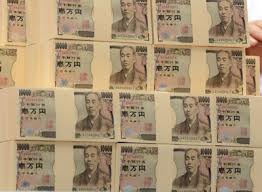
 TOKYO/SYDNEY: The yen clawed back lost ground against the euro and dollar in Asia on Thursday after touching fresh lows against both, on track for one of its worst monthly performance this year, while the Australian dollar jumped on unexpectedly strong business investment data.
Activity was relatively thin ahead of the US Thanksgiving holiday. US financial markets will be shut on Thursday, followed by a half-session for the US bond market on Friday.
The dollar rose as high as 102.28 yen on the EBS trading platform, its highest since May 29.
The euro rose as high as 138.83 yen, its highest since June 2009. Immediate resistance for the euro is the 139 yen level, last broken in June 2009, and then 139.26 yen, its peak set that month.
The greenback last fetched 102.02 yen, down about 0.1 percent on the day, while the euro bought 138.53 yen, also down about 0.1 percent. But so far this month, both the euro and dollar are up nearly 4 percent against the yen.
"The euro zone economy is not so good, but I think the euro crisis is receding.
So I think not so many people worry about the bad points in the euro area, and so they accumulate euro-long positions against the dollar," Masashi Murata, senior currency strategist at Brown Brothers Harriman in Tokyo.
"Also, some Japanese investors are taking long positions in euro-yen and pound-yen, because they get better rates than in dollar-yen," he said.
Against the dollar, the euro traded at $1.3580, nearly flat from US levels late on Wednesday.
Some investors have been taking yen-short positions because the Federal Reserve is poised to taper its stimulus when the US economy shows enough improvement, while the Bank of Japan remains committed to keeping an ultra-loose monetary policy to shore up growth and achieve its 2 percent inflation target.
On Wednesday, BOJ board member Sayuri Shirai said the BoJ should consider expanding monetary stimulus even further if economic and price growth sharply deviates from its projections.
With Japanese government bond yields pressured by the BoJ's buying, Japanese investors have been seeking higher returns abroad, amassing nearly $14 billion in foreign bonds last week in their seventh straight week of net buying - the longest such run in a year.
Many investors expect the yield differential between US Treasuries and JGBs to widen, though the impact of foreign bond buying on foreign exchange markets is limited if investors hedge their bond purchases.
The Australian dollar was up 0.5 percent at $0.9125 after scaling a session peak of $0.9140. It rebounded from a three-month low of $0.9061 hit on Wednesday, as some speculators were forced to cover short positions after the upbeat data.
The closely watched report from the Australian Bureau of Statistics showed businesses upgraded their spending plans for 2013/14 well above expectations, suggesting the boom in mining investment was not slowing nearly as quickly as many feared.
Commodity bloc currencies, grouping the Australian, New Zealand and Canadian dollars, had fallen heavily against the US dollar on Wednesday after investors latched onto US data showing an improving jobs market and more cheerful consumers.
Dollar bulls took heart after data showed the number of Americans filing new claims for unemployment aid unexpectedly fell last week.
A reading of US consumer confidence rose but a separate survey showed continued weakness in business spending on capital goods, which suggested slower economic growth in the fourth quarter.

























Comments
Comments are closed for this article.