



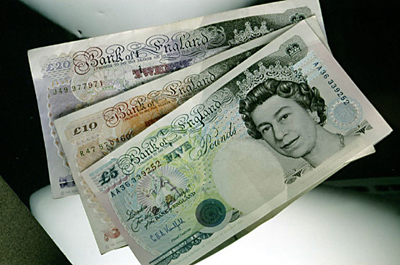
 LONDON: Sterling traded near a three-week low on Thursday versus the dollar which was supported by growing optimism that a deal might be reached to break the ongoing US budget gridlock.
The pound was also under pressure on concerns that the pace of economic recovery in the UK may be starting to slow after the previous day's weak industrial output data.
Sterling showed little reaction to the Bank of England's widely-expected decision on Thursday to keep interest rates and its quantitative easing target unchanged.
The pound was flat at $1.5950, having dropped to as low as $1.5914, its lowest since Sept. 18 and far from a nine-month peak of $1.6260 hit in early October. Support was cited around the Sept. 16 low of $1.5869.
The euro was flat at 84.78 pence, staying close to a five-week peak of 84.935 pence hit earlier on Thursday.
The dollar was broadly stronger on signs Washington was moving towards a deal to avert a potential US debt default, as well as on US Federal Reserve minutes showing that its decision last month not to slow stimulus was a "close call".
"It is more about dollar strength. We have seen significant gains in sterling over the last couple of months (against the dollar) and some kind of dollar rebound was due. A lot of that will be dependent on the debt ceiling situation," said Craig Erlam, market analyst at Alpari.
A sustained break below $1.5950 could lead to sterling slipping to the $1.5750 level over the next week, he added.
"I don't think UK data is going to get significantly better to drive sterling higher. Data is likely going to level off from here... as opposed to any unrealistic hopes of continuing to improve at the same rate," Erlam said.
Data on Wednesday showed industrial output fell 1.1 percent on the month in August which called into question how much the UK economy can go on strengthening after a recent run of above-forecast data.
A steady flow of forecast-beating numbers lifted sterling nearly 8 percent against the dollar between early August and early October as investors brought forward their expectations of when UK interest rates would rise.
Analysts said the pace of sterling's rise had left it vulnerable to any downturn in British economic data.
"The figures from the UK recently had a period of consistent strength and this is why sterling rose so far so fast. The industrial production data brought the market back to reality and it's going to be more difficult for sterling," said Sasha Nugent, analyst at Caxton FX.


























Comments
Comments are closed for this article.