



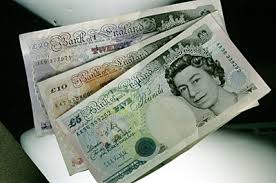
 LONDON: Sterling rose on Friday after Bank of England Governor Mark Carney saw no need for additional monetary stimulus as Britain's economic recovery is showing signs of gaining traction.
It was on track for its fourth straight week of gains against the dollar and its best monthly performance since at least April 2011.
UK government bonds rose, tracking a broad rise in US and German government bonds and sending 10-year yields to a one-month low.
Carney told the Yorkshire Post the BoE would consider the case for more easing if the economy falters, but for now he felt the recovery had "strengthened and broadened".
"The BoE is now by far the most hawkish central bank out there out of the BoE, the Federal Reserve, the European Central Bank and the Bank of Japan," said Valentin Marinov, currency strategist at Citi.
He expected the pound to gain further, with the potential to rise towards $1.63 against the dollar and 82 pence per euro.
Sterling was up 0.5 percent against the dollar at $1.6115, edging back towards the Sept. 18 eight-month high of $1.6164. It was helped as concerns about political wrangling over the US budget and a weaker-than-forecast US consumer confidence survey put pressure on the dollar.
A string of recent strong UK data has supported sterling and caused investors to bring forward their expectations of a BoE rate hike to early 2015, much earlier than the central bank's 2016 time frame for a first increase.
By contrast, the Fed stunned markets last week by refraining from paring back its bond-purchase programme, while the European Central Bank said that it stood ready to pump in more stimulus if needed. This has prompted bets on more sterling gains.
The pound also rose against the euro, which was down 0.2 percent at 83.90 pence.
However, some analysts said sterling might struggle to rise much higher.
"When we got towards the $1.6170 levels post the US Federal Reserve meeting last week, that launched almost like a tsunami of selling pressure on the pound. I think that is still going to cap the upside," said Kathleen Brooks, research director at FOREX.com.
GILTS RISE
British government bonds extended gains made each day this week, with the yield on 10-year debt sinking 4 basis points on the day to 2.710 percent, its lowest since Aug. 27.
Yields on this gilt are now almost 35 basis points below a peak of 3.046 percent reached earlier this month, while spreads versus Bunds and Treasuries are close to their tightest level since the Fed's decision not to slow down bond purchases.
Gilt prices have been lifted by the Fed's decision as well as end-of-quarter flows into fixed income and relief at the successful sale of 5 billion pounds of 2068 index-linked gilts.
RBC strategist Sam Hill said that markets now had high expectations for incoming British data such as next week's purchasing managers' indexes.
"Even though things look like they are getting better, it's too much to say we're into a consistently above-trend period. It will be the same with the data next week. The scope for disappointment is obviously much greater," he said.
Next week will see the Bank of England buy 1.9 billion pounds of gilts as it reinvests proceeds from bonds which have matured from its 375 billion pounds of gilt holdings. Hill said the sum was too small to give much of a boost to the market.

























Comments
Comments are closed for this article.