



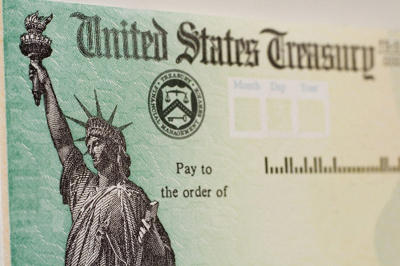
 NEW YORK: US Treasuries prices fell on Monday after news that Spain is seeking help for its troubled banks and better-than-expected data on Chinese manufacturers reduced safe-haven demand for less-risky government debt.
Traders also blamed the market sell-off on investors shifting cash into stocks from bonds in a reaction to a research report from Goldman Sachs, which upgraded its short-term global outlook on equities.
"There's a reallocation into equities from bonds. The month-end flatteners are being unwound," said John Brady, senior vice president of interest rate futures sales at R.J. O'Brien and Associates in Chicago.
The market's losses were limited by nagging worries about the lack of progress in budget talks in Washington and the bumpy debt negotiation between Greece and its lenders.
Benchmark 10-year Treasury notes were 10/32 lower, yielding 1.648 percent, up 3.6 basis points from late on Friday. The 10-year yield flirted with its 100-day moving average of 1.6519 percent earlier following an 8-basis-point decline last week, according to Reuters data.
The three US stock indexes opened higher, with the Standard & Poor's 500 rising for a fourth straight session.
The initial selling in Treasuries stemmed from data showing Chinese manufacturing returned to growth in November for the first time in over a year.
Bonds' losses grew on news that Spain formally requested the disbursement of 39.5 billion euros ($51.4 billion) of European funds to recapitalize its crippled banking sector.
Even with Monday's fall, US bond prices have bounced in a tight range since the US presidential election nearly a month ago on the likelihood of a contentious process between President Barack Obama and Republican lawmakers to avoid the "fiscal cliff."
The absence of a budget deal before year-end would cause a fiscal contraction a series of automatic tax hikes and spending cuts worth $600 billion and possibly tip the US economy into a recession, economists say.
US business executives have cut back spending and hiring on possible fallout from a failure to reach agreement.
The Institute for Supply Management said its manufacturing index unexpected fell in November to the lowest level since July 2009. The report contradicted data released earlier by Markit showing factory activity grew modestly last month.
Tepid growth and high unemployment will likely cause the Federal Reserve to stick with its ultra-loose monetary policy.
"It has set a very high bar to stop easing. We have to see a substantial improvement in the labor market, and we haven't seen that," said Stephen Stanley, chief economist at Pierpont Securities in Stamford, Connecticut.
The US central bank is widely expected to decide at its policy meeting next week that it will continue to buy longer-dated government debt in 2013 in an effort to hold down mortgage rates and other long-term borrowing costs to support the economy. Its "Operation Twist" program, which involves selling short-dated Treasuries and buying longer-dated issues on the open market will expire at the end of the month.
The Fed plans to sell $7 billion to $8 billion in short-dated issues at 11 a.m. (1600 GMT) for Operation Twist after buying $16.8 billion in long-dated debt last week.























Comments
Comments are closed for this article.