



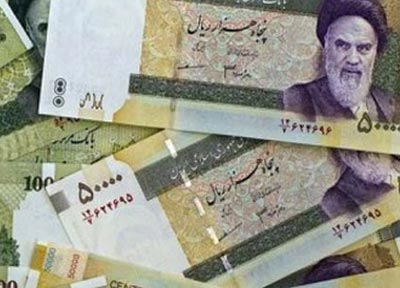
 TEHRAN: Money changers in central Tehran were open on Saturday but refusing to sell dollars at a fixed rate in defiance of a new order by authorities seeking to reverse a collapse in Iran's currency that sparked protests this week.
"We received an order from the Money Changers' Association (under control of the Central Bank) telling us to buy the dollar at 25,000 rials and sell at 26,000," one exchange bureau employee told AFP.
"Nobody is selling at this price and we are not trading," he said. The bureaux in the central Ferdowsi area of Tehran had opened for the first time since Wednesday's protests, in which scuffles broke out between police and stone-throwing individuals.
Sixteen exchange market "disruptors" were arrested, according to prosecutors.
The dollar rate being imposed on Saturday would strengthen the rial by 25 percent than the last trades recorded on Wednesday, when the dollar was fetching around 36,000 rials itself a 40 percent weakening of Iran's currency compared to the previous week.
Normally the exchange bureaux freely trade according to market supply and demand, in contrast with an official exchange rate of 12,260 rials to the dollar the government extends only to its agencies and a limited number of privileged importers.
Most exchange tracking websites in Iran again had the dollar rate censored after briefly displaying the imposed rate.
Illegal money changers walking in the Ferdowsi district were surreptitiously offering a rate of 30,000 rials to the dollar.
Gold coin vendors in Tehran's nearby Grand Bazaar were manning their shops but refusing to sell because, they said, the currency market was still too volatile.
Iranian President Mahmoud Ahmadinejad has put the blame of the currency collapse on Western economic sanctions.
But his hardline critics say the fault mostly lies with the monetary policies of Ahmadinejad's government.
US government, which is leading the sanctions, has also pointed the finger at Iran's economic management, but said sanctions relief could quickly improve the situation if Tehran curbed its disputed nuclear programme.
Western countries have imposed their sanctions to stop Iran developing what they suspect is a nuclear weapons capability.
Iran's leaders, who insist their atomic programme is exclusively peaceful in nature, have vowed never to yield to the pressure.


























Comments
Comments are closed for this article.