



 SINGAPORE: Emerging Asian currencies rose on Friday and most were set to see weekly gains after the European Central bank said it was ready to buy bonds of troubled euro zone members.
The South Korean won hit a nearly one-year high on bids from offshore funds, while the Taiwan dollar enjoyed inflows from foreign financial institutions and demand from exporters for settlements.
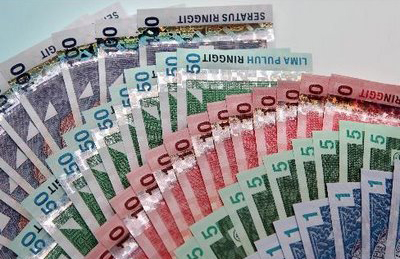
The Malaysian ringgit rose 0.2 percent, although it gave pared earlier gains after worse-than-expected export data.
Asian shares and the euro were firmer after ECB President Mario Draghi said on Thursday that the bank has a "fully effective backstop mechanism in place" to buy the bonds of troubled euro zone states such as Spain when they request aid, and that conditions linked to it need not be punitive.
The mood in global financial markets is subject to September US non-farm payrolls data due at 1230 GMT, but emerging Asian currencies are likely to stay firm, said BNP Paribas currency strategist Thio Chin Loo.
"If the NFP is stronger than expected, we will see more risk-on and strong Asian FX," said Thio in Singapore.
"Even if NFP disappoints, markets could spin it positively by reading that the QE will continue.
The liquidity is positive for stocks and Asian FX will do well," she added, referring to the Federal Reserve's quantitative easing.
US jobs likely increased by 113,000 last month, although the jobless rate likely to edged up to 8.2 percent from 8.1 percent in August.
The Indian rupee has risen 2.3 percent against the dollar so far this week, becoming the best performer in the region, according to Thomson Reuters data.
The rupee was poised to see a fifth week of appreciation, which would be the longest weekly winning streak since early February, the data showed, as the government took more reform measures to lure foreign investment.
Still, many investors doubt how further emerging Asian currencies can rise, given a slowing global economy.
Some dealers said long positions in regional units appeared to be crowded and those currencies may see some corrections after the US jobs data.
"If the non-farm payrolls are strong tonight, the dollar will rise and burn all dollar-short positions," a senior Malaysian bank dealer in Kuala Lumpur.
Next week, some Asian central banks are also scheduled to hold policy meetings and expectations of their easing may curb their currency's strength, dealers said.
The Monetary Authority of Singapore is expected to slow the city-state's currency's pace of appreciation at its Oct. 12 meeting, a Reuters poll showed, amid signs the economy is likely slipped into a recession in the third quarter.
The Bank of Korea said earlier this week it was now directing policy at boosting economic growth, boosting views that the central bank will cut interest rates on Oct. 11.
WON
The won advanced to 1,109.6 per dollar, its strongest since Oct. 31 2011, as offshore funds chased the local unit and domestic interbank speculators added dollar-short positions.
Exporters also bought the South Korean currency for settlements, while the country's foreign exchange authorities were not spotted slowing down the won's strength, dealers said.
Still, prevailing caution over possible dollar-buying intervention forced investors to take profits, limiting gains in the won, dealers said.
The local unit has technical resistance at 1,109.4, the 61.8 percent Fibonacci retracement of its depreciation between August and September last year.
Once the resistance level in cleared, it may head to the psychologically important 1,100.
But the won is likely to stay firmer in the longer term, given sustained inflows to the country.
Foreigners' net investment in South Korean bonds in September rose by the most since March, data showed earlier.
"The QE, a potential rate cut (by Bank of Korea) and the won's appreciation trend are seen behind of foreigners' bond purchases. Especially, there are few places except some countries like Korea to invest now," said a financial regulatory official in Seoul.
TAIWAN DOLLAR
The Taiwan dollar strengthened as foreign financial institutions bought it, tracking a firm euro, while exporters and interbank speculators joined the bids, dealers said.
The central bank was spotted buying US dollar through state-run companies to stem the local unit's strength, they added.
Traders were also reluctant to push the Taiwan dollar stronger than 29.200 to the greenback, around its peak on Sept. 17.
PHILIPPINE PESO
The Philippine peso gained with risk appetite improved, although its appreciation was checked by talk of intervention by the central bank.
The authority was suspected of buying dollars below 41.40, dealers said.
Traders hesitated to buy the peso, squaring bullish positions, before the US payrolls data.
"The upside was limited as people reduced risk exposures with US NFP tonight. The market was cautious going higher as fear of intervention grew," said a European bank dealer in Manila.
Meanwhile, the central bank governor said the peso remains competitive and its strength versus the greenback is due to the country's strong economic fundamentals.
RINGGIT
The ringgit rose, but traders cut long positions with worse-than-expected Malaysian export data and before the US jobs report.
The country's overseas shipments in August fell 4.5 percent from a year earlier, the biggest annual drop in nearly three years and weaker than a forecast of 2.5 percent slide.


























Comments
Comments are closed for this article.