



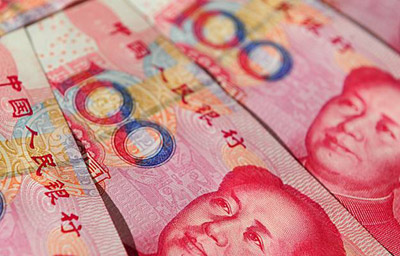
 SHANGHAI: Spot yuan hit its strongest rate against the dollar since early July on Thursday, as banks in China moved to reduce their exposure to the risk of further slides in the dollar.
The dollar index has flattened out in recent trading days and China's central bank has continued its habit of setting the midpoint in line with the dollar index's movements, fixing the midpoint at 6.3387, slightly weaker from Wednesday's fixing of 6.3378.
However, spot yuan prices firmed rapidly in morning trading, at one point trading at 6.3504, only 0.18 percent away from the midpoint -- the closest it has been to the fix since late May and its strongest point since July 5.
"The yuan broke through its resistance point of 6.3580 today on dollar-selling by foreign banks, which were taking stop-loss positions around 6.3520 per dollar," said a trader at a joint-stock bank in Shanghai.
However, the trend was not sustained. The trader said clients began looking to buy dollars again in the afternoon, which pushed the yuan back close to its opening price at 6.3590, 25 pips away from Wednesday's close.
Market participants' bout of yuan buying was restricted by domestic economic indicators released on Thursday, which included a reading showing consumer price inflation at a 30-month low.
While positive for the economy, traders believe slowing inflation will allow the central bank to loosen monetary policy, which would apply depreciation pressure on the yuan.
"I think the yuan will come under a degree of pressure around 6.345," said a trader at a major Chinese bank in Beijing.
Dollar buying sentiment is weakening in international markets for two reasons. First, confidence in the euro zone has begun to rebound from a low point in late July, which has caused the euro to strengthen slightly, and by extension putting downward pressure on the dollar index. Second, expectations that the United States will execute a third round of monetary loosening that would increase the dollar supply, again putting downward pressure on the dollar.
Chinese corporates have also been engaged in unwinding short dollar positions over the course of 2012, traders and economists told Reuters, but that process may be slowing.
"I believe the (strengthening) trend is sustainable in the future," said the Shanghai-based trader.
China's central bank increased the trading range for spot yuan prices to 1 percent up from 0.5 percent in April. Since then spot prices first stuck close to the midpoint, then began to diverge more widely as the Greek debt crisis began to rattle economic confidence and drive investors into dollar holdings.
During this point spot prices began to regularly trade weaker than the fixing, peaking on July 20 when spot prices officially hit the limit of the trading band, but since then the fixing and spot prices have experienced a gradual rapprochement, as market consensus about the yuan's equilibrium value and regulators' ideas about what constitutes a healthy exchange rate grow closer together.
Onshore and offshore yuan forwards continue to suggest further depreciation for the yuan is on the cards.
The offshore one-year non-deliverable forward contract traded at 6.4265 per dollar at the close. The one-year onshore forward was at 6.4649.
The spread between onshore and offshore spot yuan (CNH) has widened slightly this week, but remains relatively close to the onshore price at 6.3635. This compares with a period from September 2011 through January 2012, during which time foreign investors' concerns about a possible "hard landing" for China's economy caused CNY/CNH spreads to widen dramatically, hitting a high of 13 basis points at one point.






















Comments
Comments are closed for this article.