



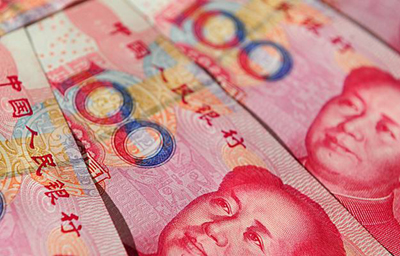
 SHANGHAI: The Chinese yuan hit the limit of its recently widened trading band for the first time on Friday as the spot market shook off attempts by the central bank to push the yuan upward.
The People's Bank of China (PBOC) set the midpoint at 6.3112 per dollar early on Friday, continuing to keep the yuan firm against the US currency as the dollar index kept up its gradual slide away from a peak hit on July 12.
Spot markets stayed largely flat but weakened slightly, causing the yuan to run into the 1 percent limit from which it can trade away from the midpoint in afternoon trading. It weakened to change hands at 6.3743 per dollar a few minutes before the market close, striking the edge of the band, then rebounded to close at 6.3735, identical to its opening price.
"Toward the end of the trading day, a few big customers came in and started buying (dollars)," said a trader at a Chinese bank in Shanghai. "The rate was already close to the limit, and that pushed it against it."
Traders said they saw no strong signals from the United States that it was prepared to ease monetary policy again to spur growth -- which would put negative pressure on the dollar index and by extension provide positive support to the yuan against the dollar.
Spot yuan has not traded over 54 points on any single day this week.
"There hasn't been any big change this week," said a trader at a foreign bank in Shanghai. "The US Fed and Bernanke did not say anything new. The yuan is trading slightly above 6.38; it looks like there's a degree of intervention at 6.38."
The PBOC doubled the yuan's daily allowable trading band in mid-April to 1.0 percent from 0.5 percent.
Since the change, traders increasingly see market factors - rather than the fixing - driving the exchange rate. However, they also say the central bank has signalled that it would not tolerate abrupt moves in the currency.
An overly quick depreciation of the yuan could cause destabilising capital outflows, which would be exacerbated by the slowdown in inbound foreign direct investment. The Ministry of Commerce said on Tuesday that FDI into China declined by 3 percent in the first half of 2012 from a year earlier.
Traders say that the central bank has been using strong midpoints to signal to the market that it will not allow the yuan to weaken past 6.4 per dollar. But it appears the bank underestimated the willingness of market participants to follow its guidance into the weekend.
PBOC data issued on July 12 showed that the central bank and Chinese financial institutions bought a net 49.1 billion yuan ($7.7 billion) worth of foreign exchange in June, up from 23.4 billion yuan in May but down sharply from 277.3 billion in June last year.
Average monthly net forex purchases in the first six months of 2012 were just 50.4 billion yuan, down significantly from an average of 348.1 billion yuan a month in the first half of 2011.
Until very recently, the PBOC and banks typically bought large amounts of dollars from domestic firms eager to sell dollars received through foreign trade in exchange for yuan to use at home. But that has changed with the slowdown in the domestic economy and new expectations for yuan depreciation.
The yuan had a quiet week offshore. The one-year non-deliverable forward strengthened slightly this week but continued to trade at a discount to the spot price at 6.4150 by the market close.
Offshore yuan traded in Hong Kong, CNH, remained close to the onshore price at 6.3720.






















Comments
Comments are closed for this article.