


Domestic gas output to fall by 30pc, demand to rise by 70pc

IQBAL MIRZA
KARACHI: Pakistan’s entire production of natural gas, in the next 10 years, is likely to fall by 30 per cent while demand is expected to rise by almost 70 percent, reaching 8.5 billion cubic feet per day. If this trend persists the country would run out of gas in less than 20 years, knowledgeable sources told Business Recorder here on Wednesday.
They said that our daily gas production is around 4 billion cubic feet, while the accumulated demand of gas exceeds 6 billion cubic feet. Unfortunately, they added, no major gas field is likely to become operational in the coming years.
Compared with any other country of the world, Pakistan has simply become the largest user of CNG, according to the statistics issued by the International Association for Natural Gas Vehicles (IANGV).
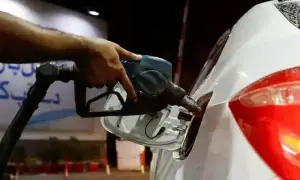
Economic Survey of Pakistan 2010-11 reveals that 3,329 CNG refuelling stations are operating in the country and 2.5 million vehicles are running on gas now. Recording the highest 21% conversion ratio from petrol or diesel to CNG, Pakistan is well ahead of India that has a little over a million vehicles converted to CNG, 450,000 in China, and Italy with 730,000 vehicles running on gas.
The end result is that the country is fast running out of natural gas, mostly due to increasing consumption of CNG in the recent decade in all parts of the country. Oil and Gas Regulatory Authority (OGRA) has recently admitted that despite a ban on issuing new licenses for CNG stations since 2008, it issued 523 licenses for new CNG stations during this period.
Power sector in Pakistan consumes more than 40 per cent of natural gas for power production. Similarly, fertiliser and petrochemical industries are totally dependent upon natural gas because these sectors, having no other energy alternative, cannot survive a single day without uninterrupted gas supply.
In the current scenario, there seems to be well-disciplined mafia involved into turning most of the gas flow towards the CNG pumps and distribution stations only, especially when all other industrial and manufacturing sectors are badly suffering from continuous gas shortages on regular basis. According to sources uncontrolled and unregulated rise in CNG consumption is directly affecting common household and also the industry. Despite suffering from acute shortages of gas supply in the recent period, the government is constantly awarding new permits to investors for opening new CNG stations and gas distribution outlets across the country. The question is if there is less energy available in the country for existing domestic and industrial consumers, why new CNG outlets and stations are being approved by the government.
The same is true for the rest of the industrial and manufacturing sectors other than the CNG sector, because in spite of earning millions in foreign exchange for the country, there is no gas available to feed these highly lucrative industrial sectors. The recent CNG catastrophe shows that we are in fact sacrificing national economy just for the sake of promoting CNG sector.
Sources said that the growth in CNG sector is also leading to an increase in gas theft. Unaccounted for Gas (UFG), a term used for gas theft, on Sui networks was rampant at around 15% (500 mmscfd) in 2011 which increased from 4% (around 100 mmscfd) in 2004/2005. Sources claimed that growth in UFG is directly proportional to growth in CNG sector as CNG stations have mushroomed in entire country. How could CNG stations offer discounts as much as above 20% when they get no such incentive from gas companies, sources wondered.
The ministry for petroleum and natural resources took an excellent initiative by tabling Gas Utility Act 2011 that covers severe punishments for both domestic and industrial consumers on illegal gas connections. The act proposes imprisonment on gas theft for different consumers along with hefty fines. If this act is implemented in letter and spirit, it would drastically reduce the UFG on system and make gas available for the use of key development sectors like fertilizer, textile, and power etc.

















Comments
Comments are closed for this article.