



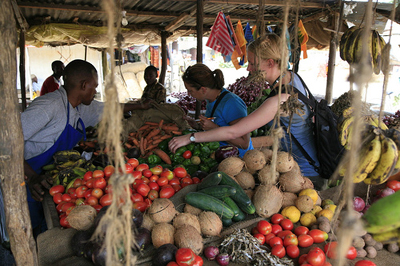
 DAR ES SALAAM: Inflation in Tanzania dipped only slightly to 19.4 percent in February from 19.7 percent in January due to slowing food prices, leaving the country struggling to meet its target of single digit inflation by June.
Poor rains across east Africa for much of last year affected food security and electricity output, triggering spikes in the levels of inflation and threatening economic growth.
NBS said food prices rises slowed to 26.7 percent year-on-year in February from 27.8 percent a month ago, pushing the inflation rate lower.
"The speed of price increases for commodities in February 2012 has decreased compared to the speed recorded in January 2012," state-run Nation Bureau of Statistics (NBS) said on Thursday.
Food and non-alcoholic beverages make up almost half of the basket of goods used to measure Tanzania's inflation.
The World Bank has backed the government's forecast that inflation could be lowered to single digits by mid 2012, while the International Monetary Fund has said it expects this to happen towards the end of the year.
Analysts said neither target was likely to be met.
"I don't see the inflation rate coming down to single digits any time soon or in the year 2012 for that matter ... it just can't happen," said Honest Ngowi, an economics lecturer at Mzumbe University's Business School in Dar es Salaam.
"We don't have a monetary inflation where there is too much money supply. Ours is a structural inflation due to the nature of the economy ... the infrastructure is not in good shape and we have erratic power supply."
NBS said prices rose 1.9 percent on the month in February, mainly as a result of higher electricity prices.
Tanzania raised power tariffs by 40 percent in January 2012 to cover higher costs of power generation from imported fuel.
The annual inflation rate for energy increased to 33.5 percent in February 2012 from 30.1 percent registered in January 2012, the statistics agency said.
Energy is the, second-biggest component in the basket of goods used to calculate Tanzania's inflation rate, with a 13.9 percent weight.




















Comments
Comments are closed for this article.