


Khyber Pakhtunkhwa government, Higher education commission and NRPU have initiated a project titled "Commercialization of High Quality Rapeseed Variety Hasnain-2013" for enhancing oilseed Productivity in KP.
Principle investigator and the project manager, Vice chancellor Islamiya College University, Professor Dr Habib Ahmad, while talking to media after the inauguration ceremony Saturday, said that the project was basically designed to provide high quality certified Rapeseed to the farmers, which is the limiting factor in the present agriculture system of the country. He said that the main objectives of the project are to procure, process and market 150 tons of certified Rapeseed during the project's three years time ie 2015-18.
He said that the project is further aimed to focus on multiplication of certified seed of improved commercial variety of Hasnain-2013, which will further motivate the private sector in seed business particularly in local seed production and will involve and encourage local extraction industry in the procurement process.
VC said that the project activities are underway in full swing across the province. Around 80 acres of crop of early generation (Pre-Basic) has already been sown in different area of KP during the last September-October to achieve the target of 50 tons of seed procurement.
Dr Habib Ahmad said, "The cultivar is the highest yielding across Pakistan in the seven test sites in National Uniformity Rapeseed Yield Trial and still have the potential to outperform. The cultivar is significantly in early maturity and have the distinctiveness of wavy leaf margin, light green colour, pod shape is curved silliqua, black seed colour, high yielding and resistant to prevailing diseases and insect pest attack."
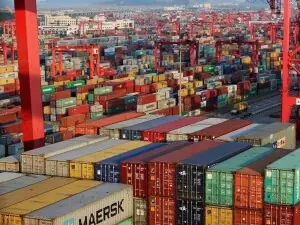
He said that the domestic edible oil production does not meet the need of the country and the total availability of edible oils in 2014-15 was 2.335 million tons. He added that the local production stood at 0.546 million tons, which accounted for 23.38 percent of the total availability while the remaining 76.6 percent was made available through imports at the cost of Rs 139.344 billion.
It's pertinent to mentioned here that edible oil stands at the top in the import of food items and second, after petroleum, in the total imports. In order to save the foreign exchange, the government has encouraged the cultivation of edible oilseed crops in the country and under this project of the KP government traditional or conventional oilseed crops are rapeseed/mustard, sesame and groundnut, while non-traditional oilseed crops are sunflower, soybean and safflower. Among these crops, rapeseed/mustard and sunflower have assumed special position in the agriculture economy of Pakistan and much of the research efforts have been directed towards the improvement of these oilseed crops.




















Comments
Comments are closed for this article.