


Pakistan car sales surge 48% in July-October
- Year-on-year performance rebounded on the back of improved macroeconomic situation, experts say
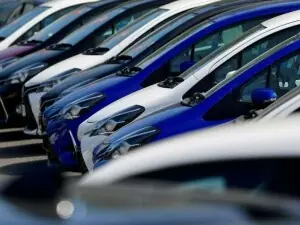
Car sales in Pakistan surged 48% in the first four months of FY27, reaching 63,418 units, reflecting an improved macroeconomic situation and strong growth across most automotive segments.
- Overall 48% surge in car sales during July-October FY27.
- Varying performance across different automotive segments.
- Industry concerns regarding the overdue auto policy.

Car sales in Pakistan continued their upward trend, rising 48% during the first four months (July-October) of the current fiscal year (FY27) compared with the corresponding period of the previous fiscal year.
The year-on-year (YOY) performance rebounded on the back of improved macroeconomic situation, while the month-on-month (MOM) performance indicators presented a seasonal and sequential pattern, according to experts.
According to Pakistan Automotive Manufacturers Association (PAMA) data released on Wednesday, car sales increased by 48% to 63,418 units.
Sales of trucks went up by 51% to 3,476 units, and the sales of farm tractors surged by 41% to 8,263 units.
Two- and three-wheelers, including motorbikes and rickshaws, sales rose by 27% to 753,902 units.
However, sales of jeeps-cum-pickups and buses went down by 32% to 11,391 units and by 16% 269 units respectively.
All other segments registered a healthy YOY growth during the period July-October, Pakistan Automotive Manufacturers Association (PAMA) Director General (DG) Razi-ur-Rahman said in a statement. During the first four months of FY27, passenger cars registered YOY growth of 24% in production and 48% in sales.
Conversely, Jeeps, and Pickups experienced stagnant momentum, posting a 5% decrease in production alongside a sharp 32% decline in sales.
Meanwhile, farm tractors posted a 41% surge in sales, as production grew by 22%.
The two and three-wheelers categories maintained consistent growth, recording a 26% increase in production and 27% growth in sales compared to the same period last year.
“The ambiguity and uncertainty surrounding overdue auto policy the continues the haunt the industry,” PAMA said. “Inventories have been piling up, and customers are reluctant to make a purchase decision. This delay is counter intuitive on the gains that industry has made after several years of demand contraction.”
Last week, PM Shehbaz approved the final draft of the Auto and Auto Parts Manufacturing Policy for the period 2026-2031, paving the way for its submission to the Federal Cabinet for consideration and formal approval.




















Comments