



Pakistan’s petroleum pricing mechanism has once again raised serious questions about transparency, timely policy intervention and the burden imposed on already albatross citizens. High-Speed Diesel (HSD), a critical fuel for agriculture, freight transportation, public transport and industrial activity, is not merely another petroleum product.
The pivotal question is straightforward: if a more appropriate international pricing benchmark could have reduced the domestic cost of HSD, why was the change not introduced earlier.
Pakistan’s petroleum pricing framework has relied on import-parity pricing (IPP) since 2000–01, using international petroleum benchmarks and associated costs and margins. Over time, the pricing formula has evolved, with Platts assessments becoming a key reference for international petroleum product prices.
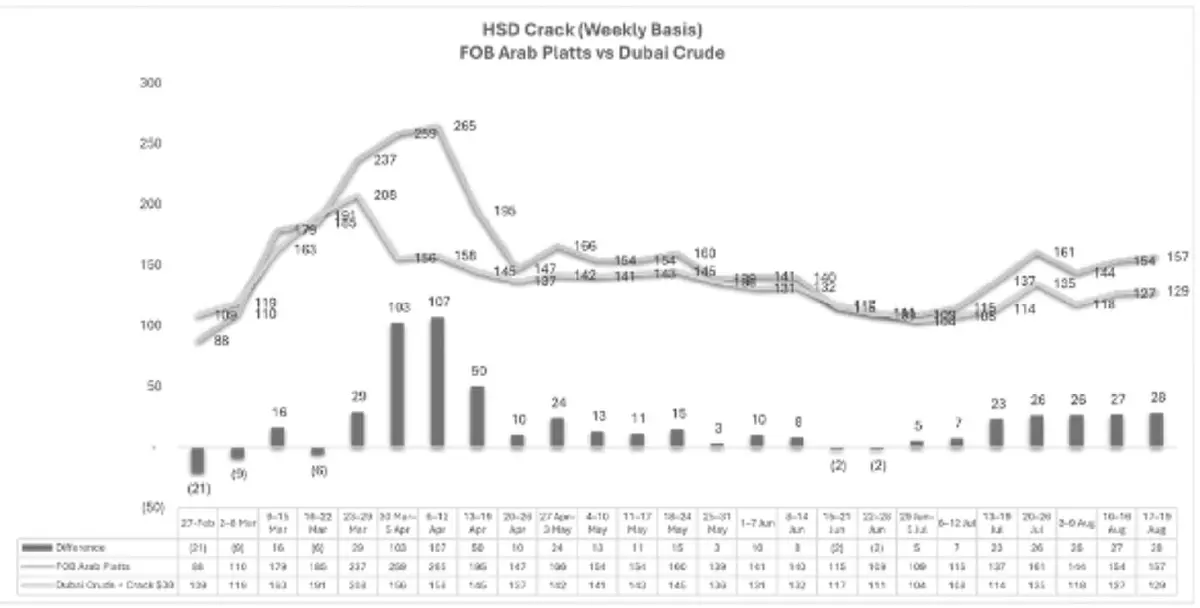
The current HSD pricing mechanism raises concerns that the permitted crack spread may give refineries an undue advantage, potentially enabling them to earn windfall profits by importing petroleum products directly from the international market while benefiting from the pricing formula.
Since the Gulf crisis intensified in late February 2026, international oil markets have experienced substantial uncertainty. Disruptions, geopolitical risk and changing regional supply conditions have increased the importance of selecting a representative benchmark for Pakistan’s HSD imports.
Under the pricing arrangement described in the underlying calculations, Pakistan continued to rely on the Arab Gulf Platts benchmark before shifting to a Dubai crude-linked benchmark on 19th August 2026. The reported HSD crack component at the time of the shift was USD 41.89 per barrel, compared with USD 38.0 per barrel which was set on 19 October 2026. But why the policymakers did not shift toward Dubai Crude earlier or why did they not set the HSD crack at USD 38.0/BBL. Moreover, pressure from refineries appears to have constrained the Ministry’s ability to implement a more substantial reduction.
The HSD crack spread represents the difference between the price of refined diesel and the relevant crude-oil benchmark.
Table 1. Monthly HSD Crack Impact Before the Shift to Dubai Crude
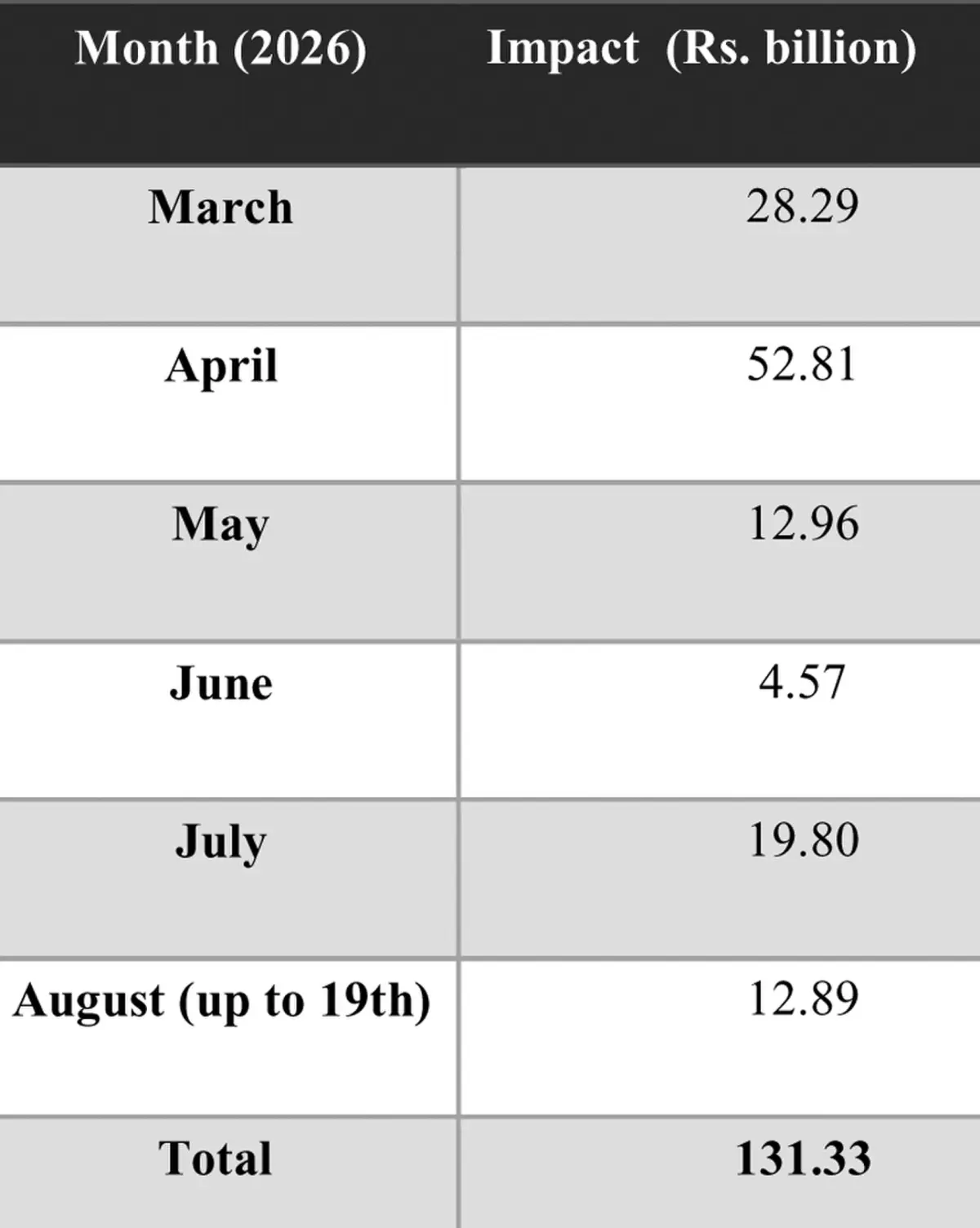
The table highlights the additional monthly burden imposed on consumers due to the delayed transition to the Dubai Crude benchmark. This resulted in an estimated economic cost of Rs 131.33 billion to the general public from March 2026 to 19 August 2026.
Even after adopting the Dubai Crude benchmark, the HSD crack remained at an exceptionally high level. The subsequent reduction in the HSD crack from USD 41.89/bbl to USD 38/bbl, rather than an earlier and more timely adjustment resulted in an additional estimated cost of Rs 8.18 billion to consumers. Consequently, combined estimated economic burden amounts to approximately Rs 140 billion.
From day one, I have consistently asserted that the HSD pricing formula is fundamentally flawed. Yet, the concerned government ministries repeatedly insisted that refineries could not operate without adopting the Platts-based pricing mechanism and warned that they would be forced to shut down otherwise.
Now, all of a sudden, we are being told that the HSD crack was incorrectly benchmarked after an estimated Rs 140 billion has already been imposed on the poor masses. This is not a minor technical error; it is a grave failure of Governance and a serious breach of public trust. Who will take responsibility for this colossal financial damage? There must be accountability, and those responsible must be held answerable.
Table 2. Profit Before Taxes of Following Refineries.
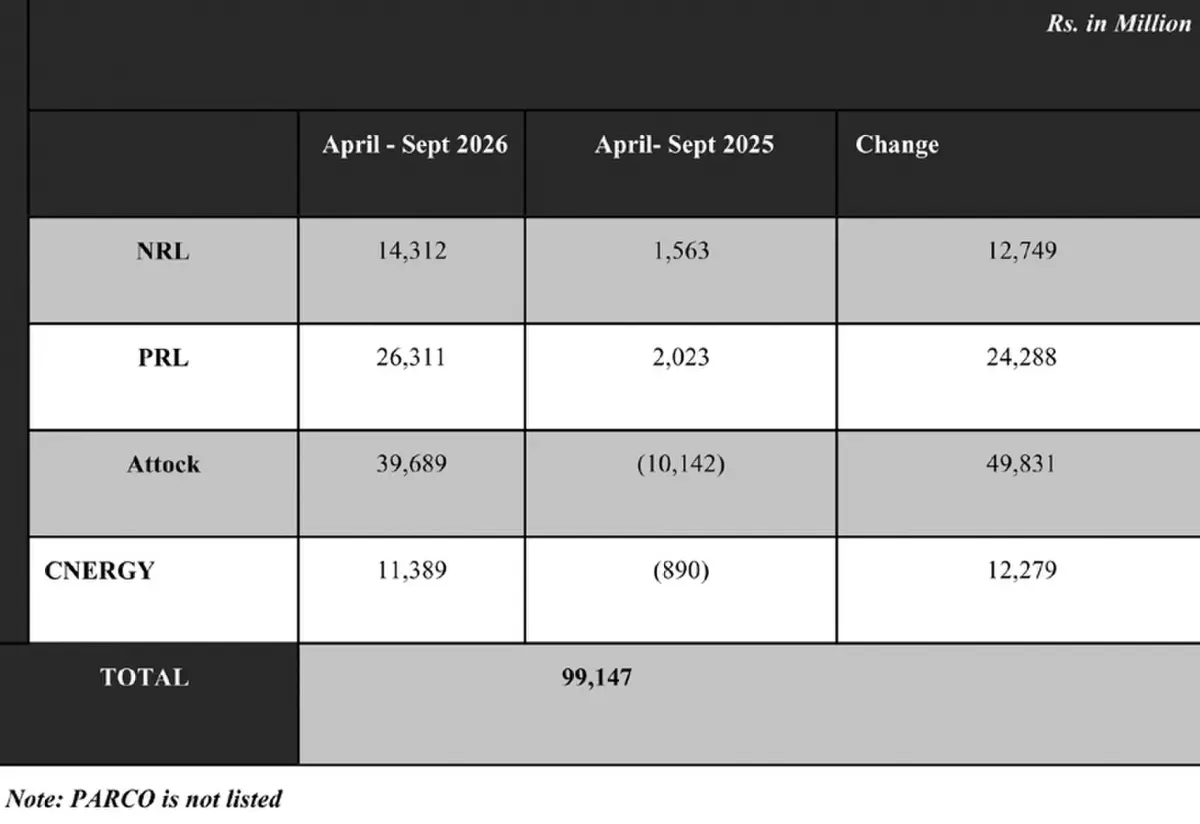
The four major listed refineries alone reported profits of nearly Rs 100 billion, excluding PARCO. Including PARCO, total profits approach Rs 140 billion during April–September, raising serious concerns about the burden on consumers.
This raises a fundamental question: Are the policymakers sitting in the Petroleum Division capable of assessing the consequences of their own policies? If they cannot distinguish between a sound policy and a flawed one, what justification do they have for occupying these positions? Public policy cannot be reduced to blindly defending a formula, dismissing legitimate concerns, and acknowledging mistakes only after the damage has been done.
This is not merely a technical miscalculation; it is a grave failure of policy oversight and a breach of public trust. Who will be held accountable for this colossal economic damage? The Petroleum Division must provide clear answers, and those responsible must be held accountable.
Additionally, this poor policy decision has further fuelled inflationary pressures. Based on an estimated long-run elasticity of 0.27, the 40.89 percent increase in HSD prices from March 2026 till 19th August implies an estimated 11.04 percent increase in non-energy CPI. Given the 76.4 percent weight of non-energy items in the overall CPI basket, assuming 50 percent (6 months) realization of the estimated inflationary impact, the weighted impact on headline CPI is 4.22 percentage points.
Had policymakers recognized the inflationary consequences earlier, Pakistan could have potentially saved Rs 2.5 trillion in domestic debt-servicing costs through a 4.2-percentage-point policy rate reduction, creating much-needed fiscal space and economic relief. Similarly, reducing the HSD crack to USD 30 per barrel from the outset could have saved consumers up to Rs. 200 billion, particularly when it was already trading below USD 32.12 on Friday, 30 October 2026.
Pakistan cannot control global oil markets, but it can ensure transparency, timely adjustments and consistency in domestic petroleum pricing, with benchmark selection reflecting actual import economics. The public deserves a clear answer: was the change made when it was economically justified, or only after consumers had already paid the price?
Copyright Business Recorder, 2026














Comments