


ISLAMABAD: The government on Friday confirmed its decision to wind up the Pakistan Agricultural Storage and Services Corporation (PASSCO), despite the organisation recording profits in eight of the past 10 financial years.
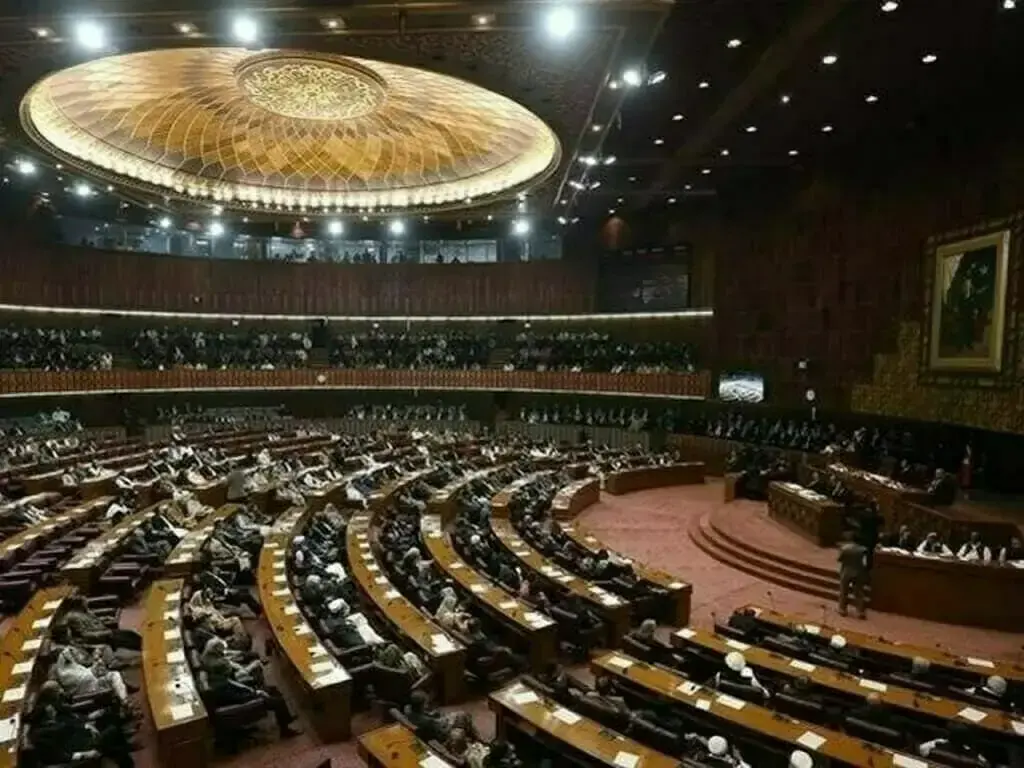
In a written reply to a question by MNA Shahida Rehmani, Minister for National Food Security and Research Rana Tanveer Hussain told National Assembly that Economic Coordination Committee (ECC) had approved the winding-up on December 9, 2025. The federal cabinet ratified the decision on December 23, 2025.
He said the move was part of the government’s broader agriculture sector reform and deregulation agenda.
The reforms aim to improve efficiency, promote competition, reduce fiscal and storage-related costs, and encourage private investment in wheat procurement, storage, transportation and marketing.
The transition towards a market-oriented, private-sector-led wheat system was initiated under the Interim National Wheat Policy 2025-26. It is being carried forward through the National Wheat Policy 2026-30, he added.
The minister acknowledged that PASSCO had performed important public service functions over the years. These included procuring and maintaining wheat stocks for strategic reserves, deficit areas, the armed forces and other emergency requirements.
Asked whether PASSCO had remained profitable over the past five decades, he said its financial performance had varied over time.
It had also been influenced by government-directed procurement, storage, and financing and carrying-cost obligations. Its performance, therefore, could not be assessed solely as that of an ordinary commercial entity.
The audited financial statements submitted with the reply show that PASSCO recorded profits in eight of the 10 financial years from 2016-17 to 2025-26. It reported losses in 2023-24 and 2024-25.
Its profit after tax stood at Rs343.19 million in 2016-17, rising to Rs408.71 million in 2017-18 and Rs1.59 billion in 2018-19. The corporation earned Rs6.02 billion in 2019-20 and Rs4.05 billion in 2020-21.
Profits declined to Rs955 million in 2021-22 and Rs418.66 million in 2022-23. PASSCO then slipped into a loss of Rs862.48 million in 2023-24.
The loss widened sharply to Rs20.48 billion in 2024-25. However, the annexure reports a profit after tax of Rs6.02 billion for 2025-26.
The government also reported dividend payments of Rs985.52 million in 2020-21 and Rs238.75 million in 2021-22.
On the implications of PASSCO’s winding-up for food security, wheat availability and price stability, the minister said these concerns had been considered under the interim and long-term wheat policies.
They had also been discussed by the Wheat Board, the ECC and the Steering Committee on Wheat Imports.
He said available PASSCO stocks were being utilised to meet provincial requirements. Any remaining shortfalls were being addressed through imports, where necessary.
The government was also developing an alternative institutional arrangement to maintain strategic wheat reserves after PASSCO’s winding-up.
However, the minister did not disclose details of the proposed arrangement, including its institutional structure, financing or implementation timeline.
He acknowledged the risks associated with the transition but said the government was mindful of them. He maintained that PASSCO’s closure would not mean an end to food security arrangements.
The measures being pursued include maintaining and periodically reviewing federal and provincial strategic wheat reserves.
The government also plans to import wheat through the Trading Corporation of Pakistan (TCP) to meet confirmed shortfalls.
Other measures include encouraging private-sector participation in wheat procurement, storage, transportation and trade, and ensuring the free inter-provincial movement of wheat and wheat products.
The government would also continuously monitor wheat production, stocks, prices and supply-demand conditions, he added.
He said timely government intervention would be undertaken wherever necessary to safeguard consumers and maintain market stability.
Health Minister Mustafa Kamal told the House that audit objections involving Rs4.27 billion in non-functional infrastructure at the Pakistan Institute of Medical Sciences (PIMS) remain unresolved, with no responsibility fixed or recoveries made.
He added that the Common Management Unit received USD372.24 million over the past five years for Global Fund-supported tuberculosis, malaria and HIV/AIDS programmes, against which expenditure of USD347.45 million was reported.
Copyright Business Recorder, 2026






















Comments