


'Pakistan’s battery storage imports hit 4.5GW in first six months of 2026'
Pakistan's battery storage imports surged, prompting a parliamentary dialogue on long-term energy planning. Discussions covered safety, grid stability, affordability, and industrial investment challenges amid high utility tariffs.
- The rapid increase in Pakistan's battery storage imports.
- Concerns over unregulated, unsafe battery imports and grid stability.
- The financial strain on industries and low-income households.
- Government initiatives for pilot BESS projects and regulation.
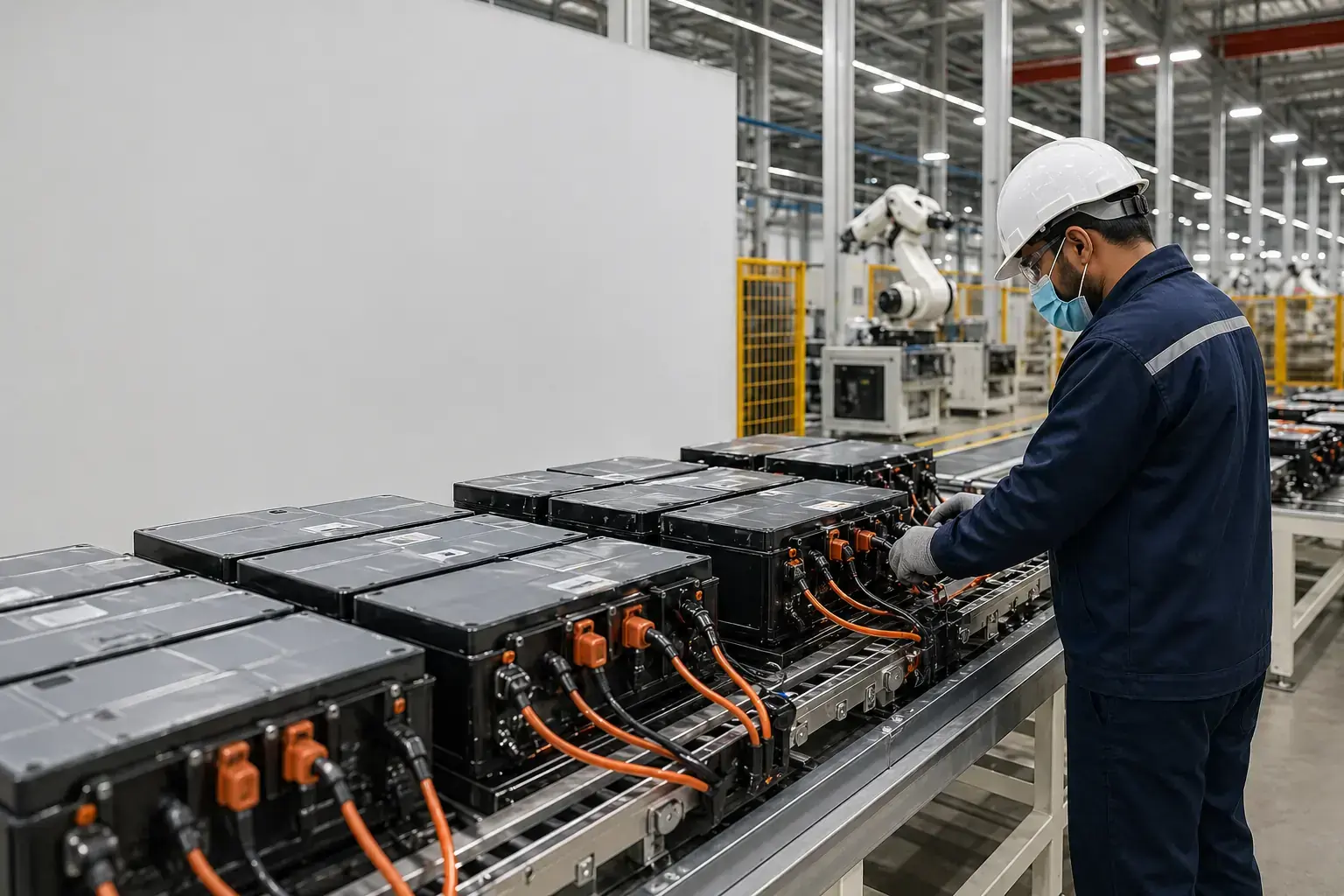
A Pakistan Solar Association representative has said that the country imported over 4.5 gigawatts (GW) of battery storage equipment in the first six months of 2026 alone - nearly equalling half of the nation’s entire cumulative historical imports of 9.5GW.
This surge in energy storage adoption, driven by citizens and industrial enterprises seeking relief from exorbitant utility tariffs, served as the backdrop for a recent Parliamentary Dialogue organised by the Parliamentary Forum on Energy & Economy.
Opening the proceedings, Convener Sher Ali Arbab, MNA, stressed the strategic imperative of long-term energy planning: “Battery storage is the key to optimising our power sector for the next two decades. We are generating expensive power that goes underutilised during peak daytime hours, while facing rapid national expansion in electric vehicles and over 40 expanding data centers. We must avoid short-term band-aid solutions and establish a transparent, holistic legislative framework through cross-party consensus.”
Co-Convener Dr Nafisa Shah, MNA, warned against unregulated market dynamics, asserting: “We cannot allow Pakistan to become a dumping ground for sub-standard, dangerous battery imports that lack safety standards, testing infrastructure, or recycling protocols. Our policy focus must proactively balance grid stability with public welfare, ensuring that clean energy benefits reach low-income households.”
Moderator Usama Mela highlighted the pressing challenge of grid defection, stating: “The elephant in the room is that BESS will lead a gradually increasing number of consumers off the grid year by year, placing immense financial pressure on utility tariffs unless proactively managed.”
Highlighting capital distortions in the industrial sector, Chaudhry Mubeen Arif Jutt, MNA, alongside Asad Alam Niazi, MNA, voiced alarm over capital diversion away from core industrial expansion.
“Factory owners and industrialists are currently forced to invest up to twice as much capital in captive solar and battery storage systems as they spend on actual production machinery simply to secure affordable power and remain competitive against foreign rivals,” stated Chaudhry Mubeen Arif Jutt, MNA.
“If the Energy Division fails to provide market-driven procurement signals, utilities will end up penalising off-grid users and low-income consumers who cannot afford storage.”
Challenging official taxation assumptions, Vice Chairman of the Pakistan Solar Association Engr. Chaudhry Uzair highlighted punitive landing costs.
“Storage equipment currently faces a heavy 35% to 40% cumulative tax and custom duty burden, while a basic 5 kWh battery costs upwards of Rs250,000 - making claims of universal affordability completely unrealistic for lower-income households.”
Responding on behalf of the Ministry of Energy, Syed Faizan Shah, Advisor to the Power Division, announced some executive initiatives.
“Within the next 15 days, the Power Division will launch competitive tenders for four 10 Megawatt-hour pilot BESS projects across LESCO, MEPCO, IESCO, and PESCO. Furthermore, NEPRA is formally designating battery storage as a regulated asset, enabling distribution utilities to relieve overloaded transformers at half the capital cost of constructing new grid stations.”
Detailing operational grid stresses, Amir Zia, Chairman of LESCO, added: “Distribution transformers face up to 70% daytime reverse solar flow followed by extreme evening peak demand spikes, making battery storage indispensable to capture daytime surplus electrons and dispatch them during peak evening hours.”

















Comments