



LPG prices have nearly doubled the government’s own ceiling. The fix is enforcement and transparency, not another subsidy
Last week a household in Bahawalpur paid an average of Rs 7,033 for a domestic gas cylinder. In Sialkot it was Rs 7,002, in Islamabad Rs 6,631. Across the 17 cities where the Pakistan Bureau of Statistics records prices every week, the average for the week ended October 22 was Rs 6,311, up from Rs 5,154 only seven days earlier. That is a jump of 22.4 per cent in a single week and more than double the price from a year ago.
These prices are not the product of a free market finding its level.
LPG is a regulated fuel. For October, the Oil and Gas Regulatory Authority (OGRA) notified a maximum price of Rs 3,296 for an 11.8 kg cylinder—about Rs 279 per kilogram—and the notification applies at every level of the supply chain. For the 11.67 kg cylinder priced by the bureau, that ceiling works out to roughly Rs 3,260.
The average consumer is therefore paying about 94 percent above the legal maximum. Even in Larkana, the cheapest city in the survey at Rs 5,600, the price was 72 percent above the cap. Not a single city came close to the notified price.
The Sensitive Price Indicator (SPI) increased 0.65 per cent last week, driven by the highest increases in LPG, which rose by 1.06 per cent. LPG was the biggest contributor to the SPI rising by 1.06 per cent, which led to an overall rise of 0.65 per cent in the Sensitive Price Indicator (SPI) last week.
LPG contributed 0.54 percentage points, more than four-fifths of the contribution. Annual SPI inflation picked up to 11.85 per cent and has been in the range of 11.4 and 12 per cent for five successive weeks. There’s an inequitable burden.
The home is well protected if it is on a piped natural gas supply. Others (small towns, peri-urban areas and most rural areas of Pakistan) rely on cylinders for cooking and are likely to rely on them for heating when the winter season arrives. To them the cost of the cylinder is not an entry in an index; it is a decision about where to spend money on cooking fuel or other things. If the price of the product almost doubles the legally established price, the price policy has, in fact, failed to serve those it is supposed to serve.
While it is tempting to blame the global energy market, oil prices have genuinely risen this year. However, the notified price accounts for import costs and was set for the entire month of October.
The 22 percent appreciation in price over a one-week period signals inefficiencies within the distribution network that remain hidden from consumers. This can be because of supply chain disruption, some distributors hoarding cylinders, or the cylinders being underfilled, or simply because they are overfilled by the distributors, who have no alternative for cylinders.
The lack of supply has been attributed to market traders. There may be a reason for that, but it’s not official, and not being a shortage doesn’t necessarily make selling above the legal maximum legal. The gap was 58 per cent wider a week ago. It rapidly expanded over the course of a few days. If a regulator has a price that it publishes but that it doesn’t see, or that it doesn’t act on, if that price doubles in every major city, then the regulator has a monitoring problem, not a pricing problem.
The question arises what the government should do now?
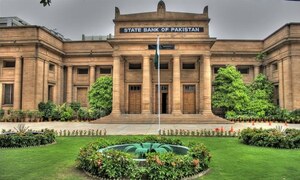
First, enforce the notified price, starting this week. OGRA, working with provincial governments and district administrations, should launch inspections at the distributor, filling-plant and retail level in all 17 SPI cities, beginning with the most expensive markets: Bahawalpur, Sialkot, Islamabad, and Peshawar.
Existing penalties (suspension for repeat offences) should be enforced and advertised.
Second, have a weekly publication of the gap. The market price is already available with the Pakistan Bureau of Statistics, OGRA sets the legal price. A weekly public outcry made city-wise, city-wise would cost virtually nothing, and give the consumers, the media and the National Price Monitoring Committee an immediate clue of the violation.
Third, set the facts of supply. The Petroleum Division to report within a week on LPG importations, local production, stocks of marketing companies and any disruption in October. The solution to a shortage, if that’s the case in the first place, should be to ease the restriction on imports and to free up stocks, rather than to let the shortage be marked at twice the cap.
Fourth, protect consumers at the point of sale. Every retailer will advertise the notified price per kg and will weigh cylinders on demand. The one complaint number should be widely publicised, and relate to Ogra and the deputy commissioner’s office. Roadside decanting into small cylinders, which is more likely to spread when prices are high, should be eliminated.
Fifth, look at the structure of the market. If prices persistently exceed the notified level even when supply is normal, the Competition Commission of Pakistan should examine whether margins and market power in the LPG chain are being abused. The November price notification, due at the end of the month, should be accompanied by a clear statement of how compliance will be monitored.
If there will be calls for a subsidy. That would be the wrong response. When the market price is already almost double the legal one, a subsidy would largely flow to whoever is capturing the gap. The first rupee of relief should come from making the existing ceiling real.
Only if prices remain unaffordable after enforcement should targeted support for low-income households without piped gas be considered, through existing channels such as the Benazir Income Support Programme rather than general price cuts.
Pakistan does not lack price rules for LPG. It lacks a system that checks, every week and in every city, whether those rules are followed. The data to do so already exist. What is needed now is the will to use them.
%All views expressed in this op-ed belong to the writer based on the sensitive price index data published by PBS, week ended October 22, 2026; and OGRA, LPG price notification for October 2026. %Copyright Business Recorder, 2026
The writer is Chief of Research at the Pakistan Institute of Development Economics, Islamabad. She can be reached at Email: [email protected]














Comments