


Karachi’s vanishing mangroves: a wake-up call
Karachi's coastline has been drastically transformed by unplanned urban development, sacrificing vital mangrove ecosystems for short-term gains. This loss severely compromises the city's natural defenses against climate change and urban flooding.
- Satellite evidence of Karachi's coastal degradation.
- Mangroves' vital role in climate resilience and flood protection.
- Urgent government actions needed to protect coastal ecosystems.
- Balancing economic growth with ecological security.
EDITORIAL: The transformation of Karachi’s coastline over the past 25 years should serve as a stark warning about the environmental costs of unplanned urban development.
Satellite images released by the Space and Upper Atmosphere Research Commission (Suparco), comparing the coastal zone near the Mai Kolachi Bypass in 2000 and 2025, reveal how mangrove forests and natural tidal creeks have increasingly given way to reclaimed land and urban development. This is not merely a change in land use; it represents the loss of natural defences that help protect Karachi against climate-related hazards.
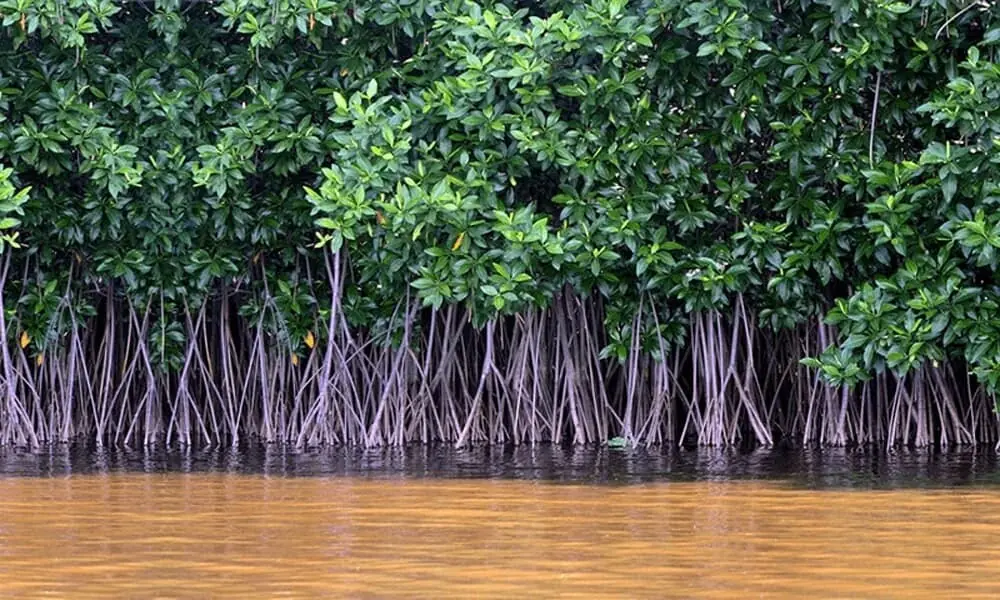
Mangroves are far more than clusters of trees along the shoreline. They act as natural barriers against storm surges and coastal erosion, help mitigate flooding, absorb carbon dioxide, trap sediments and provide habitats for fish, birds and other wildlife. Their intricate root systems stabilise shorelines and support vital ecological processes.
Destroying these ecosystems for short-term commercial or urban gains undermines Karachi’s long-term environmental and economic security. The city has repeatedly experienced urban flooding during intense monsoon rains, exposing the limitations of its drainage infrastructure. The loss of mangroves and disruption of natural tidal channels further undermine coastal resilience as sea levels rise and extreme weather threatens vulnerable communities.
The consequences extend beyond environmental degradation: coastal communities, fishing livelihoods, public infrastructure and urban assets are also at risk. Replacing living ecosystems with concrete and reclaimed land is, therefore, a dangerous trade-off. Coastal protection cannot depend exclusively on embankments, seawalls and other engineered structures.
Unlike rigid infrastructure, healthy mangrove ecosystems can regenerate and adapt to changing environmental conditions, provided they are protected and managed responsibly. They must be treated as essential natural climate infrastructure, not as vacant land awaiting development.
The federal and Sindh governments must act without delay. All coastal development projects should undergo rigorous and transparent environmental impact assessments, with particular attention to their cumulative effects on mangroves, tidal creeks and wetlands. Illegal encroachments and unauthorised reclamation must be curbed through effective enforcement, while existing violations should be investigated and addressed.
Satellite-based monitoring can help authorities track changes in land cover, identify encroachments and make environmental data publicly accessible. Encouragingly, Suparco’s observations from the Shah Bandar region of Sujawal indicate a 115 per cent increase in mangrove forest cover compared with the 2019 baseline. This offers a promising example of the potential for ecological restoration, provided that restored areas are regularly monitored for long-term survival and ecological health.
Pakistan cannot afford to sacrifice its natural coastal defences in the name of development. Genuine progress requires balancing economic growth with ecological security. Protecting Karachi’s remaining mangroves, restoring degraded wetlands, and involving coastal communities in conservation should be assigned urgent priority.
The satellite images provide compelling evidence of the changes already inflicted on the coastline. The challenge now is to halt further destruction and ensure that future generations inherit a safe, healthier and more resilient coastline.
Copyright Business Recorder, 2026




















Comments