


How vertical video is putting the power of storytelling back in people's hands
Mobile phones and vertical video are democratizing visual storytelling, enabling bystanders to document events and challenging traditional journalism and filmmaking to adapt to new formats and audience engagement.
- Bystander footage capturing unfolding events.
- Vertical video's impact on storytelling and journalism.
- Filmmakers adapting to vertical framing and pacing.
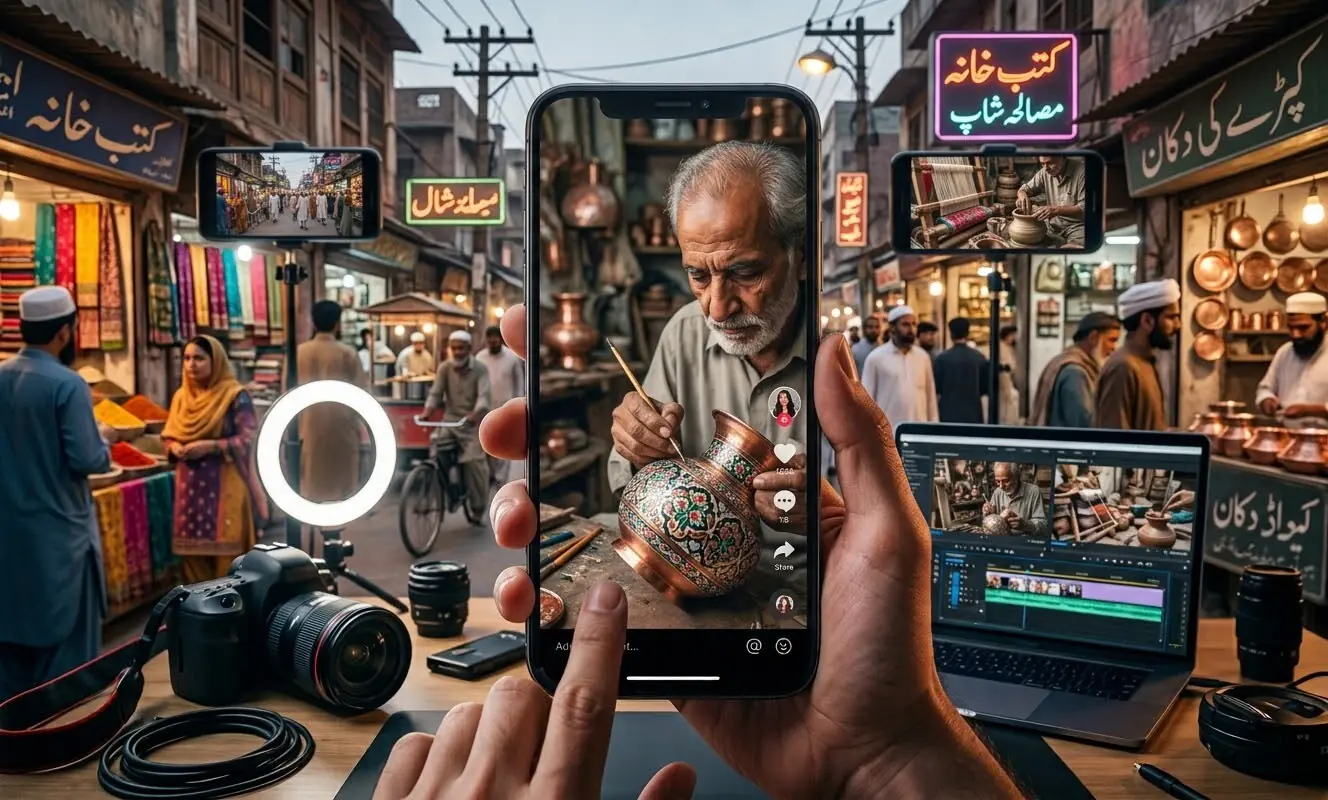
As a visual storyteller, I have often found that some of the most compelling footage of an unfolding event comes not from professional cameras, but from mobile phones held by people already at the scene.
While covering the Gul Plaza fire in Karachi, I saw the weight that footage captured by bystanders could carry. Recorded in the early moments, before mainstream media arrived, such videos offered glimpses of how the tragedy unfolded. They captured events from the perspective of people who were there, witnessing them in real time.
The experience reinforced something I have come to appreciate in visual journalism: a powerful storytelling tool does not always have to be a professional camera in the hands of a trained journalist. Sometimes, it is a small device in someone’s pocket, operated by an ordinary person who happens to be present when something extraordinary unfolds.
A picture may be worth a thousand words, as the familiar saying goes. Video adds movement, sequence and the fleeting details that a still image cannot capture. In the hands of a bystander, a phone can record moments that might otherwise go undocumented.
This is one reason vertical video represents more than a change in how people consume content. It is also changing who gets to document events, tell stories and put them before the public.
“The phone in someone’s pocket is now a camera, an edit suite, and a broadcast tower,” says filmmaker Sualeha Qureshi.
For much of her career in Pakistani media, Qureshi explains, stories passed through a chain of gatekeepers, from reporters and producers to news desks shaped by broadcasters’ commercial and political considerations. Vertical platforms have disrupted that process, allowing people to publish their own accounts without waiting for traditional media to tell their stories.
“The story is now in the hands of the person living it,” she says.
But the ability to record and upload a video does not guarantee that it will reach an audience.
“Access to the camera is democratised. Access to the audience is not,” Qureshi says.
Algorithms influence which videos gain visibility, often rewarding speed, emotion and outrage over context. Governments can also restrict access to platforms, while the rapid circulation of footage can allow misinformation to spread. People whose lives become the subject of viral videos may also face consequences long after the footage has circulated.
The technology has lowered the barriers to telling a story, but it has not removed the challenges of being heard, understood or protected.
For filmmaker Mohammed Anwerzada, vertical storytelling reflects a change in the relationship between content and its audience.
He describes the format as being designed around an individual viewer, someone watching on a commute, during a meal or in a spare moment. With audiences able to swipe away almost instantly, filmmakers must understand who they are addressing and make every second count.
“Each second of storytelling has to be chosen very carefully,” Anwerzada says.
The format demands efficiency, but brevity does not necessarily mean superficiality. A short video can communicate a powerful idea if its images, pacing and message work together.
Anwerzada sees implications beyond entertainment. Vertical video, he argues, has helped people communicate political and social concerns, particularly among younger audiences, giving them another way to participate in public conversations.
“The power is coming back to the people through the vertical format,” he says.
For documentary filmmaker Haya Fatima Iqbal, the rise of vertical video also challenges the way filmmakers have traditionally approached the frame.
Cinematographers have long worked primarily in a horizontal format, composing images across a wider field. The growing popularity of vertical viewing requires them to rethink how they frame people, environments and action, particularly when making films for audiences accustomed to watching on phones.
“Now we can imagine the world in vertical form, so why not try it,” she says.
The change extends to pacing and duration. Directors, producers and editors accustomed to developing narratives in detail must also consider how to tell stories effectively in shorter formats. Iqbal acknowledges that this will involve changes in style and compromises, but argues that filmmakers cannot simply dismiss the shift because audiences are increasingly watching short-form content.
“Some style will change, some sacrifices will be made,” she says.
For Iqbal, the choice is between continuing to complain about declining attention spans and learning to tell stories effectively in the formats audiences are already using. Adapting does not mean abandoning longer documentaries or traditional filmmaking. It means learning how to make vertical storytelling work on its own terms.
Sualeha Qureshi has similarly changed her approach. She no longer treats vertical video as a shortened version of a conventional film, but as a format with its own visual language.
“The tall frame is a portrait frame. It favours one face, close and direct. Almost like a video call,” she says.
That intimacy shapes how she directs performances and composes shots. She plans for vertical viewing from the beginning of a project, framing wider when necessary while protecting the centre of the image so the story remains intact when cropped to a vertical aspect ratio.
“The first two seconds have to earn the next 10,” she says.
For filmmakers, vertical video is not simply about turning a camera sideways or trimming a horizontal film to fit a phone screen. It calls for deliberate decisions about framing, rhythm and audience attention.
Yet the broader change reaches beyond filmmaking. The same device that allows a documentary filmmaker to rethink composition gives a bystander the means to record an incident, preserve a moment or bring an overlooked issue to public attention.
My experience covering the Gul Plaza fire brought that distinction into focus. Professional journalists remain essential to verifying information, establishing context and reporting responsibly. But they are no longer the only people capable of recording the first images of an unfolding event.
A phone cannot guarantee that a story will be told accurately, reach the right audience or lead to accountability. It can, however, give more people the means to document what they witness and share it with the world.
As I have seen in visual journalism, the significance of a camera lies not only in the person holding it, but also in what they are able to show the rest of us. Vertical video has made that ability more accessible. Whether those stories reach an audience, and how the world responds to them, remains another question.
The article does not necessarily reflect the opinion of Business Recorder or its owners.
The author is the Head of Multimedia Desk at Business Recorder (Digital)





















Comments