


Local automotive industry: Haroon calls for a fundamental transformation
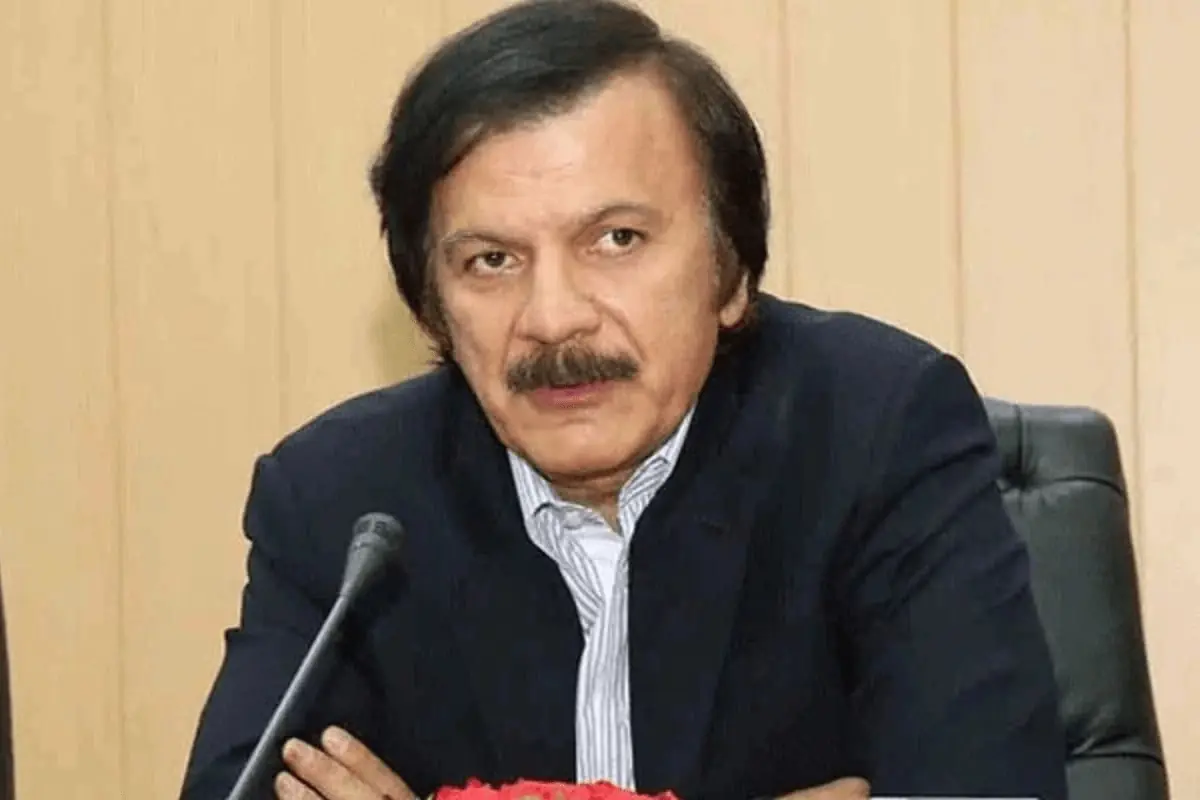

LAHORE: Advisor to the Prime Minister for Industries and Production Haroon Akhtar Khan has called for a fundamental transformation of Pakistan’s automotive industry, saying the country can no longer remain confined to vehicle assembly and must build the engineering, technological and innovation capabilities required to compete in international markets.
Addressing a ceremony here marking the launch of a new vehicle by Changan and its Pakistani partners, the Advisor said Pakistan’s automotive ambition should extend well beyond meeting domestic demand and focus on becoming an integral part of global automotive value chains.
“Pakistan has to move from assembly to manufacturing, from manufacturing to engineering and from engineering to innovation,” he said, stressing that the ultimate objective was to develop products and technologies in Pakistan that could compete and succeed in global markets.
He said the automobile industry was undergoing a profound technological transformation, with modern vehicles increasingly combining mobility with software, electronics, artificial intelligence, connectivity and advanced energy systems.
“Today, a vehicle is no longer simply a machine on four wheels; it is increasingly a computer on wheels,” Haroon said, adding that this transformation presented Pakistan with both a challenge and a major industrial opportunity.
He said Pakistan now faced a strategic choice between remaining a market for technologies developed elsewhere or developing the capacity to design, engineer, manufacture and export technologies of its own.
He emphasised that localisation should be viewed as a means of developing globally competitive industrial capabilities rather than simply increasing the proportion of locally produced components. “Localisation must take us beyond the domestic market. A component made in Pakistan should eventually be finding its way into vehicles in Shanghai, Tokyo, Munich or Detroit,” he said.
He pointed out that the establishment of a major automobile manufacturing facility could generate a much wider ecosystem involving vendors, component manufacturers, engineers, technology providers, logistics operators and service industries.
“The market for Pakistani vendors cannot end at the gates of one factory or within the boundaries of one city. Their market has to be the world,” he added.
Khan said Prime Minister Muhammad Shehbaz Sharif had provided a clear economic direction centred on production, investment, productivity and exports, adding that the government was working to convert this vision into tangible industrial outcomes.
He said the government’s role was to create an enabling environment in which investors could invest, industries could expand, engineers could innovate and businesses could compete without unnecessary administrative obstacles. “The government should not build a wall around industry; it should build a strong platform underneath it.”
Referring to the Auto and Auto Parts Manufacturing Policy 2026–31, the Advisor said the government was working towards creating a more competitive, resilient and export-oriented automotive sector capable of integrating with international production networks.
He said Pakistan’s emerging electric vehicle market could become a defining opportunity for industrial transformation if the country developed domestic capabilities instead of relying primarily on imported electric vehicles.
“The EV transition must not become an electric vehicle import revolution. It must become a revolution in batteries, motors, charging systems, power electronics, software and energy storage,” he said.
He stressed that the transition towards electric mobility could open new industrial avenues for Pakistani manufacturers, engineers and technology companies and should therefore be approached as a broader technological and manufacturing opportunity.
Welcoming growing Chinese investment and participation in Pakistan’s automotive sector, Haroon said the government sought not only financial investment but also technology transfer, engineering cooperation and development of local human capital. “We need capital, but we also need technology and engineering. Our engineers should work alongside engineers from leading global companies so that expertise is developed and retained in Pakistan.”
The Advisor said the government wanted international partnerships to create sustainable domestic capabilities and eventually enable Pakistani companies to enter overseas markets.
He maintained that industrial protection could play a role in nurturing emerging industries, but it should ultimately prepare them for international competition.
“Protection should be a bridge towards competitiveness, not a permanent destination,” he said.
Haroon said tariff rationalisation, productivity improvement and regulatory reform would remain central to the government’s industrial agenda, as excessive regulations and procedural delays directly increased the cost of doing business.
“If we want investment, we have to make investment easier. If we want production, we have to make production easier. And if we want exports, we have to make exports easier.”
He said the government would continue working on the policy and regulatory framework while industry would have to respond by improving efficiency, productivity, quality and competitiveness in line with international standards.
The Advisor also underscored the importance of protecting consumer interests, saying Pakistani consumers deserved globally competitive products, higher safety standards, reliable after-sales services and reasonable prices. He said industrial inefficiencies should not ultimately be passed on to consumers in the form of higher costs or inferior quality.
Highlighting Pakistan’s young population as one of its greatest economic strengths, Khan said the country needed to invest in engineering, technical skills, research and innovation to fully capitalize on its human capital. “Our journey has to be from Made in Pakistan to Engineered in Pakistan, Designed in Pakistan and ultimately Invented in Pakistan.”
He said Pakistan’s industrial ambition should not stop at producing goods for its own market but should aim at developing products and technologies that international markets would actively seek. “Pakistan must not remain a country that only imports from the world. We must build a Pakistan that also produces for and exports to the world.”
The Advisor said the future of mobility was being shaped by electrification, digital technologies, automation and advanced manufacturing, and Pakistan needed to secure a meaningful position in this transformation.
He reiterated the government’s commitment to working closely with the automotive industry, investors, engineers and technology partners to make Pakistan an increasingly important component of global automotive supply chains. “Pakistan has to move from consumer to producer, and from producer to global exporter.”
Haroon congratulated Changan and its Pakistani partners on the launch of the new vehicle, expressing hope that the initiative would contribute to technological advancement, localisation, investment and the broader development of Pakistan’s automotive industry.
Copyright Business Recorder, 2026












Comments