


The water in the bales: What Pakistan’s fodder exports actually cost
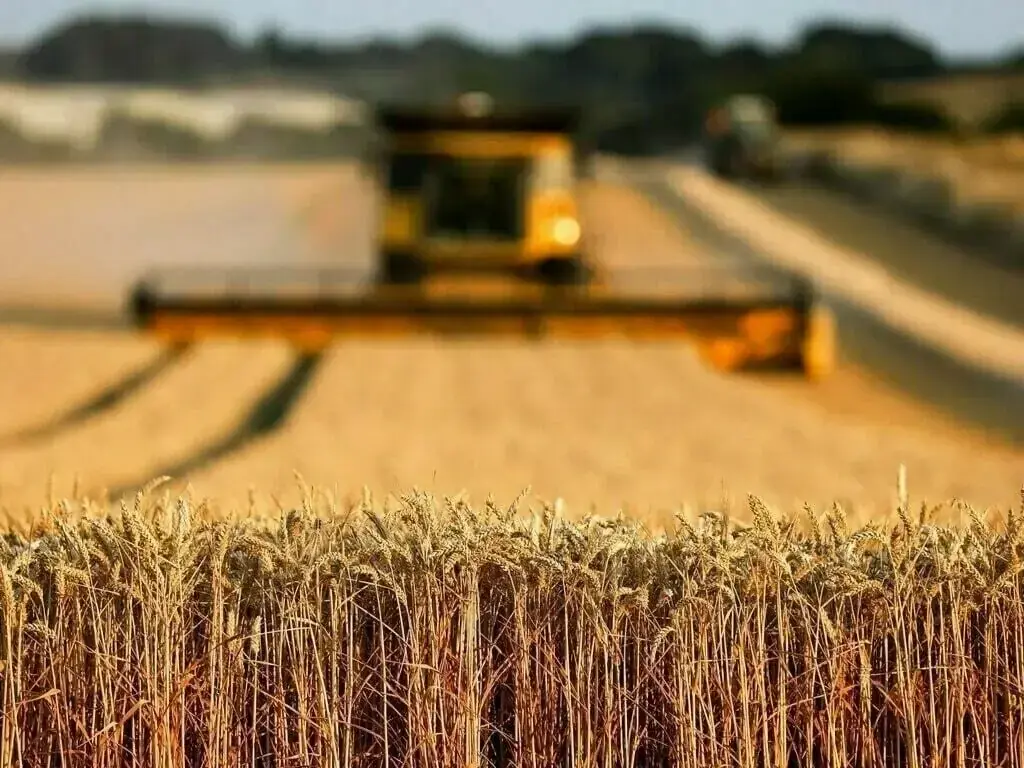

Saudi Arabia and Abu Dhabi reached the same conclusion: irrigated fodder is an extraordinarily expensive use of scarce water.
In 2010 Abu Dhabi decided to halt Rhodes grass planting because of excessive water demand. Thousands stopped growing it. Saudi Arabia followed in 2018, restricting domestic green-fodder cultivation to relieve pressure on exhausted water resources. Its policy anticipated a sharp fall in local production, with imports filling much of the gap.
Neither stopped feeding its livestock. They shifted the water burden. The animals stayed in the Gulf. The thirst moved abroad.
This is virtual-water trade in its clearest form. The crop crosses the border, but the water consumed in producing it does not. It has been withdrawn from a river, canal or aquifer in the exporting country.
Pakistan now wants to supply that thirst. In the fiscal year ended June 2025 the country exported nearly a million tonnes of animal feeding stuff and earned over $110 million. The industry is talking of turning this into a billion-dollar business within five years.
The opportunity looks straightforward: Pakistan grows grass, the Gulf feeds its animals, and foreign exchange comes home. But every bale also carries the water used to grow it. When that water comes from a stressed river or declining aquifer, Pakistan is transferring scarce water from its own account to the Gulf’s livestock economy.
The buyers have already done this arithmetic. Pakistan has not.
My earlier pieces on rice, cotton and sugar examined identifiable commodities whose water was ignored or mispriced. Fodder reveals a more basic problem. Pakistan is promoting the trade before it can distinguish crop residue from forage cultivated for export. The export target has arrived before the water account.
Before expanding, Pakistan needs three answers. What exactly is being exported? How much water does it embody? And what is that water earning? It cannot answer even the first question with confidence.
The headline figure of roughly $110 million mixes cereal straw and husks, hay and forage, bran, oilcakes and prepared animal feed. These products have different values and water claims. Straw and forage account for most of the volume but only about half the value. Ordinary straw and husks dominate, while higher-value forage such as lucerne and alfalfa forms only a small fraction. The return per tonne is modest, far from the success the headline suggests.
This distinction is crucial. Straw is a by-product of a grain crop. Only a fair share of the water used to grow the grain should be charged to the straw. Alfalfa and Rhodes grass grown specifically for cutting, baling and export are dedicated crops. The irrigation water they consume belongs directly in the export account.
Yet some shipments described as Rhodes grass have been declared under the broader cereal-straw category rather than under hay and forage. As a result, official figures cannot reliably separate genuine crop residues from deliberately cultivated forage. If policymakers treat dedicated Rhodes grass as if it were merely leftover straw, they will seriously understate the water cost of the trade.
Pakistan cannot calculate the virtual water in its fodder exports until it knows what is inside each bale. We are selling a category when we should be auditing the crop.
A deeper problem is the absence of a published Pakistan-specific water account. There is no district-level information on how much water export-grade Rhodes grass or alfalfa consumes under Pakistani conditions. The country is flying blind.
A serious account must distinguish canal water from groundwater, renewable supplies from aquifer mining, and water delivered to the field from water actually consumed by the crop. Location also matters. The same crop can be harmless in one district and damaging in another. National averages hide these realities.
Such accounting is more urgent with the spread of solar-powered pumps. When the cost of lifting water approaches zero and groundwater remains unmetered, a farmer has every incentive to irrigate whenever another saleable cut can be produced. What improves the farmer’s energy bill can accelerate aquifer decline.
Farmers are responding rationally to state-created incentives. If a Gulf buyer offers a reliable market and water carries almost no scarcity price, growing fodder for export can make commercial sense. The national balance sheet may tell a different story. Pakistan does not know how much export fodder uses canal water, renewable groundwater or declining aquifers. It is negotiating a sale without knowing the cost.
Other costs are missing. Exported hay removes nutrients that may need replacing. Green-fodder availability at home is already under pressure, so exporting the best forage carries a cost if Pakistani livestock is left with poorer rations.
The market is still narrow. Most exports go to a handful of Gulf states, led by the United Arab Emirates. Industry representatives say sales to Saudi Arabia remain small, while China has yet to approve the product. The billion-dollar ambition depends on destinations that are not currently buying in volume.
There is nothing wrong in principle with virtual-water trade. Countries short of water can sensibly import water-intensive goods and conserve their own resources. But the logic has to run in both directions. Pakistan should export water-intensive crops only when the earnings and wider benefits clearly justify the water that is used up. That judgement cannot be made while water does not appear on the invoice.
The solution is not a ban on fodder exports. It is to bring the trade inside a serious water policy.
Customs and the statistics authorities need clear product-level identification: Rhodes grass, alfalfa, wheat straw, rice straw and the rest. Declarations should be cross-checked with phytosanitary certificates so cultivated forage cannot disappear inside a generic straw category. Large shipments should be traceable at least to their district of origin. Where export fodder is grown with groundwater, large producers should also be subject to licensing and volumetric measurement. District-level water accounts must then show how much water each crop consumes and what value it generates.
Any public programme or incentive designed to expand irrigated fodder for export should be accompanied by a straightforward virtual-water assessment: how much blue water is used, how much of it comes from stressed sources, and what value is earned for each unit of that water.
Export success can no longer be measured only in tonnes and dollars. It must also be measured in the value earned from each unit of scarce water.
The Gulf states reached this conclusion earlier. They conserved their own water and chose to import the crop. Pakistan is now offering to grow that crop without first measuring the water that will be consumed. The Gulf is not buying Pakistani grass because it lacks understanding of water. It is buying because it has done the arithmetic and decided to import the thirst.
Until Pakistan knows what that water earns, the billion-dollar ambition risks becoming an unpriced transfer of its water, wrapped in twine.
Copyright Business Recorder, 2026
The writer is a former Minister of Irrigation, Punjab; a three-time Member of the Punjab Provincial Assembly; a former Member of the National Assembly; a former Senator; and currently engaged with UNDP as Senior Water Sector Expert



















Comments