


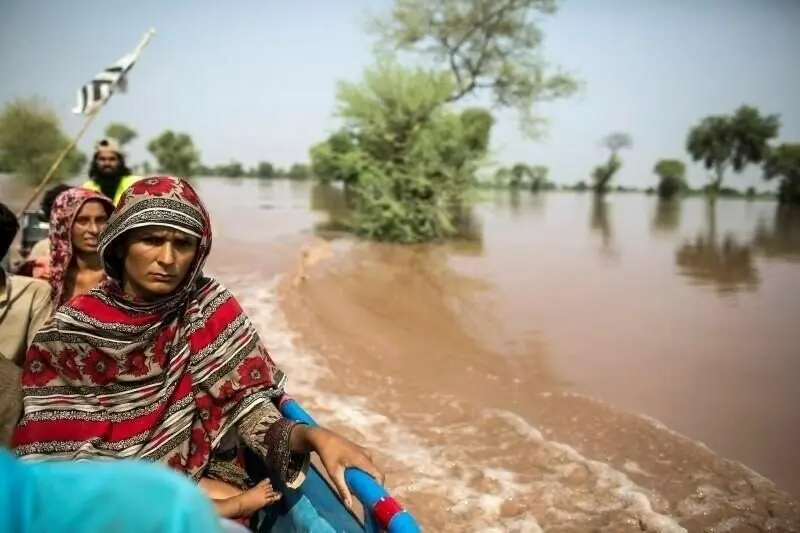
LAHORE: The National Institute of Public Policy (NIPP), an integral unit of the National School of Public Policy (NSPP), in collaboration with the United Nations Population Fund (UNFPA), organised a roundtable discussion on the “Climate Change Study and Action Plan” to examine the growing impact of climate change on women and girls.
The discussion focused on health, sexual and reproductive health (SRH), gender-based violence (GBV) and humanitarian vulnerabilities arising from climate-related disasters.
Dean NIPP Dr Naveed Elahi said it was an honour for the institute to host the roundtable on a critical and timely issue. He appreciated UNFPA for conducting the study, “Drought & Deluge: The Silent Sufferings of Women and Girls in Climate Change,” and presenting its findings and proposed action plan to the policy community.
Dr Elahi said climate change was no longer merely an environmental challenge but had far-reaching implications for public health, human development, social protection and the well-being of vulnerable communities. He stressed the need for evidence-based policymaking and stronger coordination among policymakers, development partners, researchers and other stakeholders to translate research findings into practical interventions.
Dr Rafi, co-researcher of the study, presented its findings on behalf of UNFPA. Participants examined the intersection of climate change with women’s health, SRH and gender-based vulnerabilities and discussed measures to implement the proposed action plan at the national and provincial levels.
UNFPA Humanitarian Analyst Dr Rashid highlighted the humanitarian dimensions of climate-induced disasters and their impact on vulnerable populations, particularly women and girls. He stressed the need to incorporate gender-sensitive approaches into disaster preparedness, humanitarian response and climate-resilience planning.
UNFPA representative Saida Inayat highlighted the increased vulnerability of women and girls to gender-based violence during climate-related emergencies and displacement. The participants called for GBV prevention and response mechanisms to be integrated into climate adaptation and disaster-management frameworks.
UNFPA Lahore representative Hasna also contributed to the discussion, sharing ground realities as well as facts and figures concerning the impact of climate change.
Special Secretary Health Abdur Razzak, PDMA Director General Saif Jappa, Allama Iqbal Medical College Principal Dr Tayyeba Wasim, Dr Wahee, MD PRNPU, health CEOs and representatives of the Women Development Department were among senior officials and stakeholders who participated in the deliberations.
The participants discussed gender-responsive climate policies, women’s health, SRH, GBV, disaster preparedness, humanitarian response and institutional coordination.
The session concluded with an emphasis on coordinated, evidence-based and gender-responsive policy action to address the effects of climate change on women and girls and ensure that the study’s recommendations were incorporated into policy and planning processes.
Copyright Business Recorder, 2026


















Comments