


The remittance support to current account
Pakistan's current account remains stable in early FY27, primarily supported by strong remittances and manageable imports, despite a widening goods trade deficit and muted goods exports.
- Strong worker remittances supporting the current account.
- Widening goods trade deficit and muted goods exports.
- Specific factors causing a temporary import bill slowdown.
- Growing services exports, particularly in the IT sector.
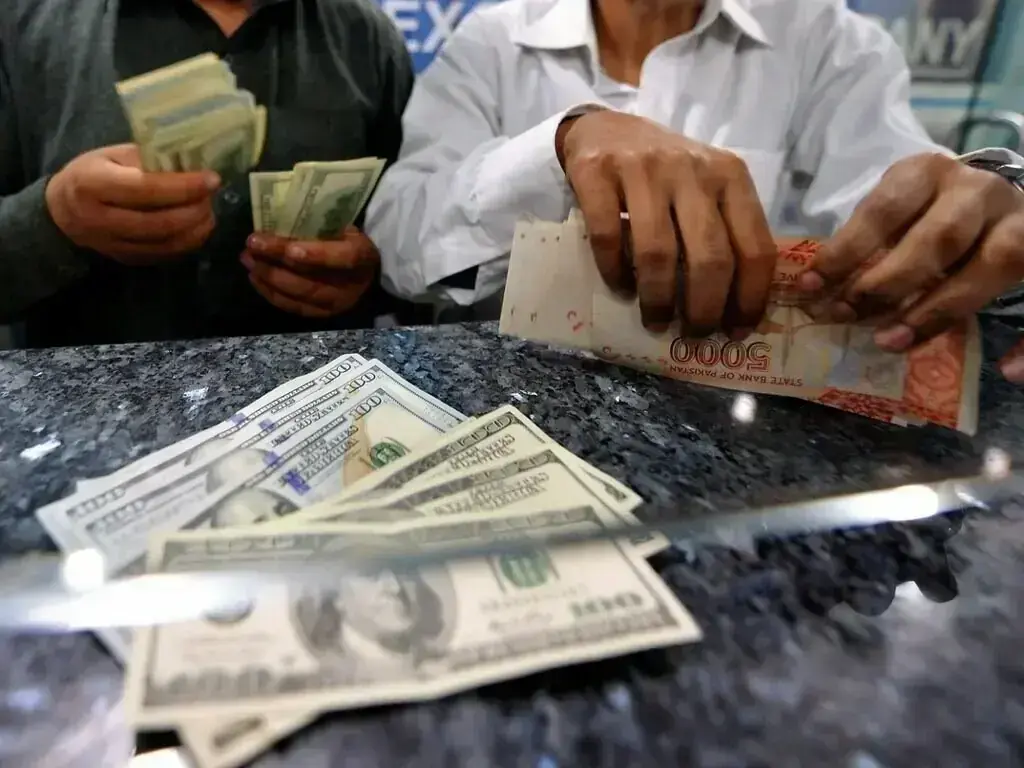
The current account remains comfortably placed in the opening months of FY27. The August deficit was modest, and the cumulative position is still broadly consistent with the annual target. There is little to worry about at this stage.
The goods and services account, however, continues to tell a different story.
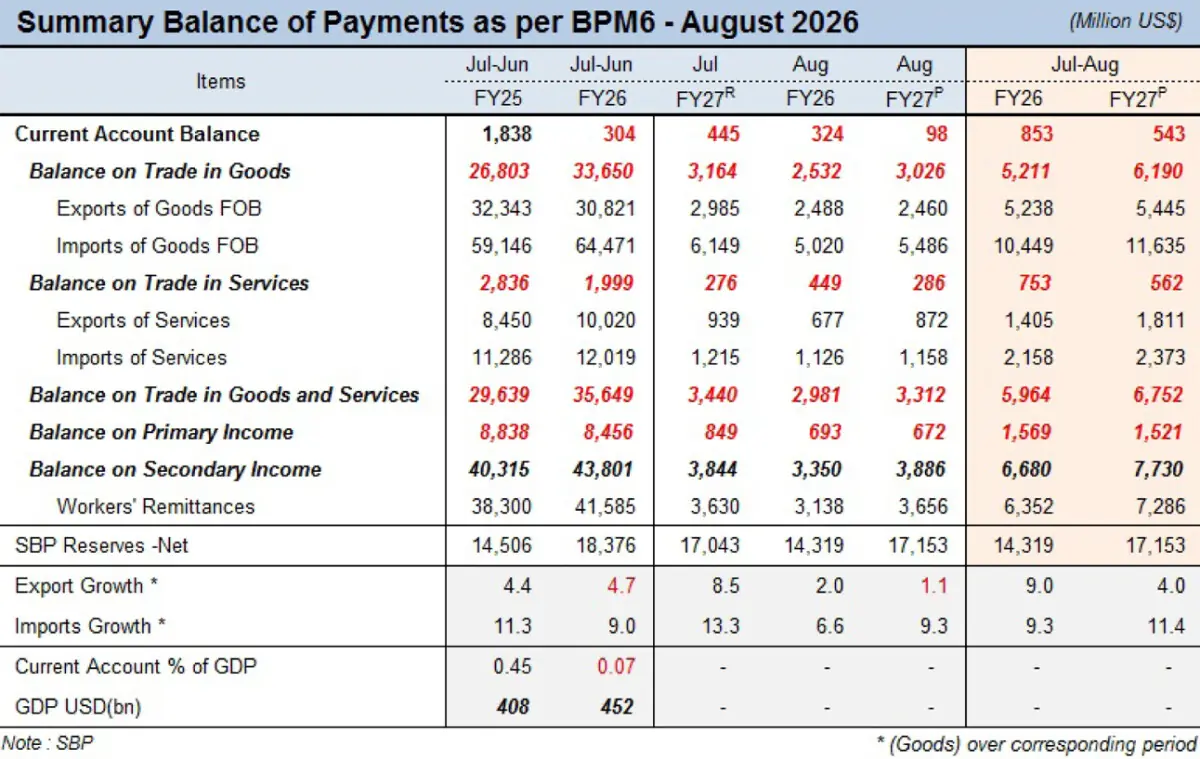
The goods trade deficit has widened by around 11 percent year-on-year in the first two months. This is despite some moderation in the import bill in August. The export side remains relatively muted. Textiles continue to lead the show, but growth is still in low single digits.
Services, meanwhile, are doing somewhat better.
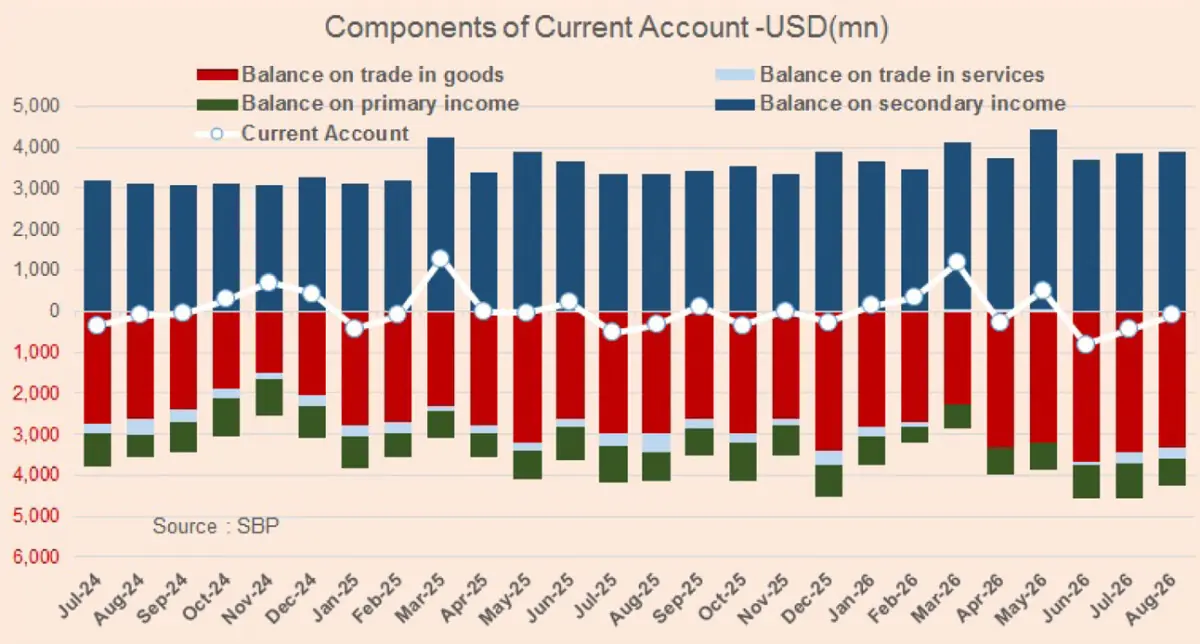
Services exports have grown around 29 percent year-on-year. More importantly, services exports now provide a sizeable offset to the goods export weakness. There was a slight month-on-month dip in August, but that is hardly a concern at this stage. The longer-term trend remains encouraging, particularly with IT exports continuing to strengthen.
The real story, however, remains remittances.
Workers’ remittances continue to come in at remarkably strong levels. August inflows remained above USD3.6 billion, broadly maintaining the pace seen in July.
This is significant because the usual seasonal boost has now started to fade. Yet inflows have remained elevated. It increasingly looks as if the formal channel is settling at a higher structural level.
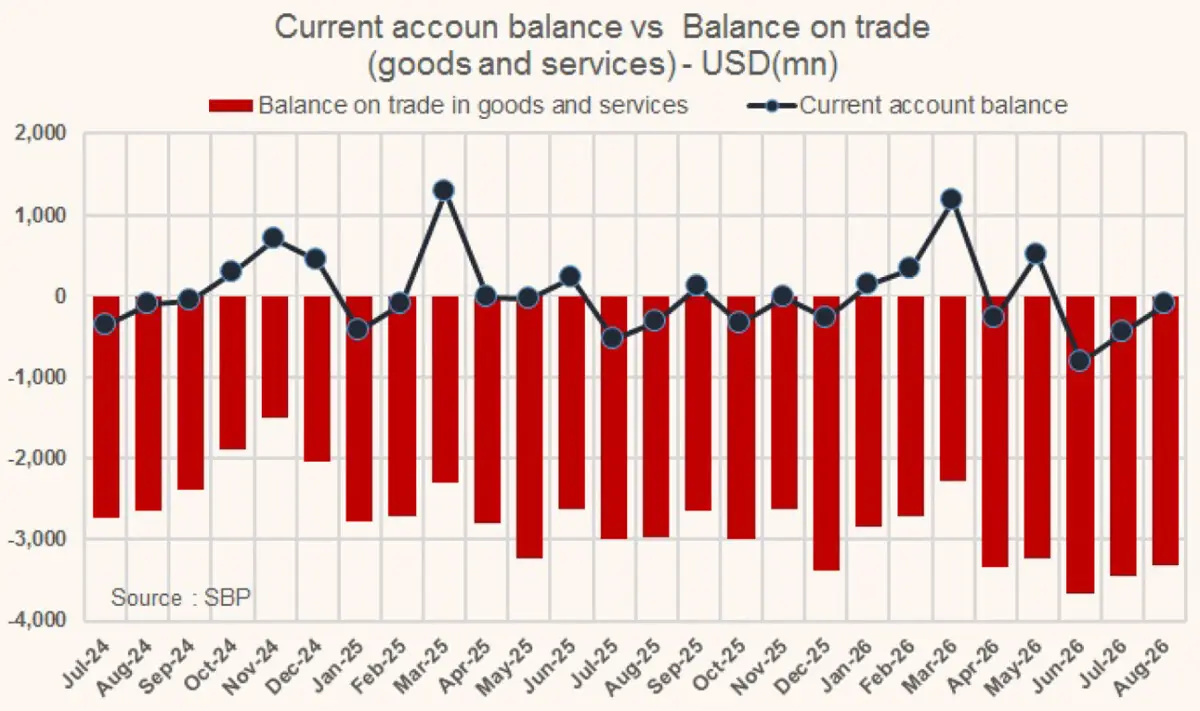
One possible explanation is that informal channels have been squeezed further. Whatever the reason, the implication for the external account is clear.
Pakistan’s biggest export is manpower. And that export is currently doing much of the work needed to keep the current account in check.
The import side also brings some relief this time around.
The difference between PBS and SBP import numbers has narrowed significantly. After staying in double digits for two consecutive months, the gap is now down to around 4 percent. That is much closer to the longer-term norm and removes one immediate source of uncertainty around the external account.
The slowdown in import payments is also partly explained by some very specific factors.
LNG shipments have not come through at the pace seen earlier, for one reason or another. This has provided a temporary cushion to the import bill. Another important development is the performance of local refineries. With refineries running at full throttle, diesel imports have almost disappeared.
Palm oil imports have also dipped during the first two months of FY27, providing another contribution to the softer import bill.These factors are important because they suggest that not all of the import moderation necessarily represents a broad-based weakening in domestic demand.
That distinction matters.If imports remain contained, the external account should remain comfortable. But if the import bill breaks free again, the equation can change rather quickly.
The current account is essentially being supported by three things. A manageable import bill, reasonably resilient services exports and, above all, strong remittances.
The export side of the equation is still the weak link. Goods export growth remains low, while the pace of import growth can pick up quickly when energy demand, machinery or domestic activity gathers momentum.
For now, there is no imminent pressure. But the bigger structural question remains unanswered. Can goods exports eventually generate enough growth to match rising import demand?
For now, remittances are making sure that question does not become an immediate problem. If imports stay contained, the current account should remain broadly in control. The real risk only emerges if the import bill breaks free and starts averaging around USD6.5 billion a month for a sustained period.
Then the burden will fall even more heavily on remittances. And for Pakistan, that is not a small buffer. It is the country’s biggest export, just in human form.





















Comments