


Mian Zahid demands paying capacity charges from federal budget
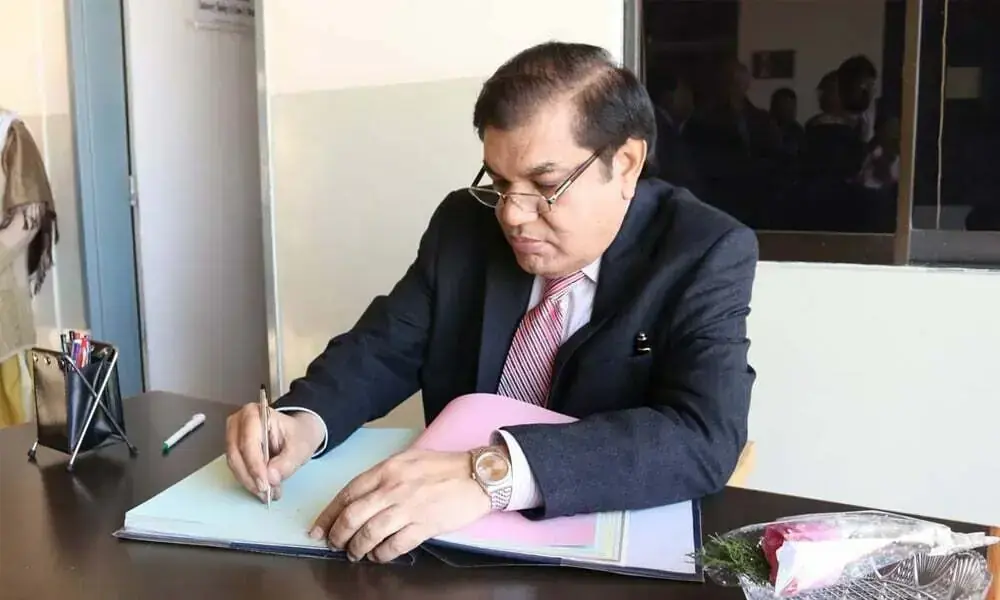
KARACHI: Mian Zahid Hussain, President Pakistan Businessmen and Intellectuals Forum and All Karachi Industrial Alliance, Chairman National Business Group Pakistan, Chairman Policy Advisory Board FPCCI, has urged the Federal Government to pay the capacity charges of the country’s surplus electricity - which amounted to approximately Rs. 1,700 billion in 2025-2026 - from the federal budget instead of electricity bills so that industries can also obtain electricity at a reasonable price.
He stated that the transition to a competitive energy market is no longer a choice but an issue of national economic survival. Similarly, the immediate privatization of inefficient DISCOs is essential.
The swift and unhindered implementation of the CTBCM, coupled with appropriate wheeling regulations, will promote industrialisation, create thousands of jobs, provide import substitution, and advance the country’s exports.
He assured that the business community is ready to fully support the government’s power sector reforms, provided they prioritise industrial sustainability and economic stability over the protection of outdated monopolies.
He stated that the swift and transparent implementation of the Competitive Trading Bilateral Contract Market (CTBCM), an energy reform model approved by NEPRA is a crucial step in rescuing Pakistan’s industrial sector from the energy crisis.
He termed the transition of the electricity market from a monopoly to a competitive, multi-buyer, and multi-seller model as a significant economic milestone.
Hussain said that the CTBCM is a comprehensive framework that will abolish the long-standing monopoly and single-buyer model of the Central Power Purchasing Agency (CPPA-G), transforming it into a competitive wholesale electricity market. Initially, 800 megawatts from the transmission network have been allocated for auction.
Under this mechanism, bulk power consumers with a minimum load of 1 megawatt or more will have the option to purchase electricity directly from power suppliers or generators of their choice through B2B contracts, rather than from their local DISCO.
He added that in this system, which will operate under the supervision of the Independent System and Market Operator (ISMO), electricity buyers will utilise the existing grid infrastructure for procurement and will pay Use of System Charges (UoSC), or wheeling charges, for this usage.
Hussain stated that Pakistan’s business community has suffered for decades from the inefficiencies, losses, mounting circular debt, and monopolistic pricing of state-owned power distribution companies (DISCOs).
With electricity tariffs for the industrial sector being the highest in the region, the cost of doing business has increased.
Hussain expressed concern over the wheeling charges and “stranded costs” recently approved by NEPRA. He pointed out that while the base wheeling charges (Use of System Charges) range from Rs. 6.23 to Rs. 9.09 per unit, the imposition of an additional stranded cost of up to Rs. 16.35 per unit on industries remaining outside the auction could push these charges beyond Rs. 25 per unit for certain categories. Therefore, there is a need to rationalise these charges.
Copyright Business Recorder, 2026





















Comments