


A ceasefire in fine print
Renewed US-Iran strikes are escalating a dangerous conflict, driven by ambiguous agreements and US domestic politics, leading to significant economic and human costs that demand urgent diplomatic resolution.
- Economic impact of Strait of Hormuz disruption.
- Rising civilian casualties and widening conflict.
- Ambiguous wording of the Islamabad Memorandum of Understanding.
- US domestic politics influencing diplomatic reluctance.

EDITORIAL: The renewed exchange of US and Iranian strikes has pushed a war that had already defied every promise of a quick conclusion back towards dangerous escalation.
Iran is signalling that it remains prepared to return to diplomacy if Washington honours the Islamabad Memorandum of Understanding, while the Trump administration appears increasingly constrained by domestic politics as November’s congressional elections approach.
Washington’s hesitation may be understandable in electoral terms, but allowing military confrontation to drift until the domestic political calendar becomes more convenient is an extraordinarily dangerous way to manage a war centred on one of the world’s most important energy arteries.
The costs are already spreading far beyond the battlefield. The IMF has warned that inflationary pressure resulting from the continuing disruption in the Strait of Hormuz is contributing to higher global borrowing costs and threatening progress made by developing and low-income countries in controlling their debt burdens.
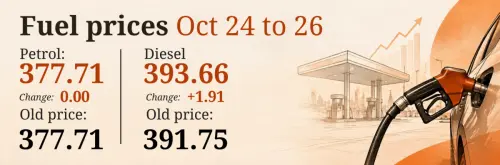
Oil prices continue to complicate inflation, monetary policy and public finances, while uncertainty over shipping through Hormuz keeps a substantial risk premium embedded in international energy markets. Countries thousands of miles from the conflict are therefore paying for decisions over which they exercise no control.
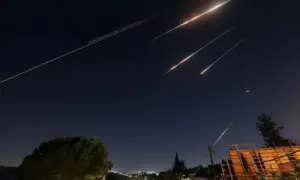
The human cost is worsening as well. Civilian casualties inside Iran continue to rise as American strikes intensify, Iranian retaliation against US assets and attacks affecting Gulf states and shipping widen the circle of danger.
Once military exchanges acquire their own momentum, every retaliation provides justification for the next one. The room for miscalculation grows with every round, and so does the possibility that a supposedly controlled confrontation develops into something neither side originally intended.
What makes the situation especially frustrating is that the latest breakdown appears to have become entangled in the deliberately ambiguous wording of the Islamabad MoU.
Iran interprets provisions concerning Hormuz as recognising its authority to control passage through the strait, while Washington insists upon free navigation without Iranian supervision. An agreement intended to stop the fighting therefore left one of the most consequential questions unresolved. That ambiguity has now become another source of confrontation.
This should make renewed negotiation urgent. Iran has signalled willingness to return to the diplomatic track, and the mediation architecture created through Islamabad remains available.
Washington’s reluctance, influenced partly by fears of appearing weak on Iran so close to congressional elections, risks allowing political calculation at home to dictate escalation abroad. Wars do not become safer simply because politicians would prefer to postpone difficult compromises until after polling day.
This space has repeatedly argued that this was a pointless war from the beginning, pushed towards military confrontation at Israel’s instigation and subsequently embraced by Washington without any convincing explanation of how force would deliver a durable political settlement.
The consequences are now increasingly difficult to disguise: death and destruction, disruption through Hormuz, higher energy costs, pressure on global inflation and debt, and an American military commitment with no obvious route to an acceptable end-state.
Something will have to give. Iran cannot indefinitely hold international shipping hostage to its interpretation of a disputed clause, and the United States cannot indefinitely substitute military pressure for negotiations while assuming escalation will remain manageable.
The Islamabad MoU may require clarification or renegotiation, particularly over Hormuz, but that is precisely what diplomacy is for.
The alternative is to keep discovering, strike by strike and tanker by tanker, just how expensive ambiguous peace and open-ended war can become.
Copyright Business Recorder, 2026
















Comments