


Customs litigation: FBR introduces independent scrutiny mechanism
The FBR has established new independent committees to scrutinize customs litigation before cases proceed to higher courts, aiming to improve quality, ensure consistency, and reduce weak cases.
- Geographical jurisdictions of the four new scrutiny committees.
- Committee composition including retired judges, lawyers, and customs officers.
- Scrutiny of new and review of pending customs litigation cases.
- Digital mechanism for referring and processing cases via dedicated portal.
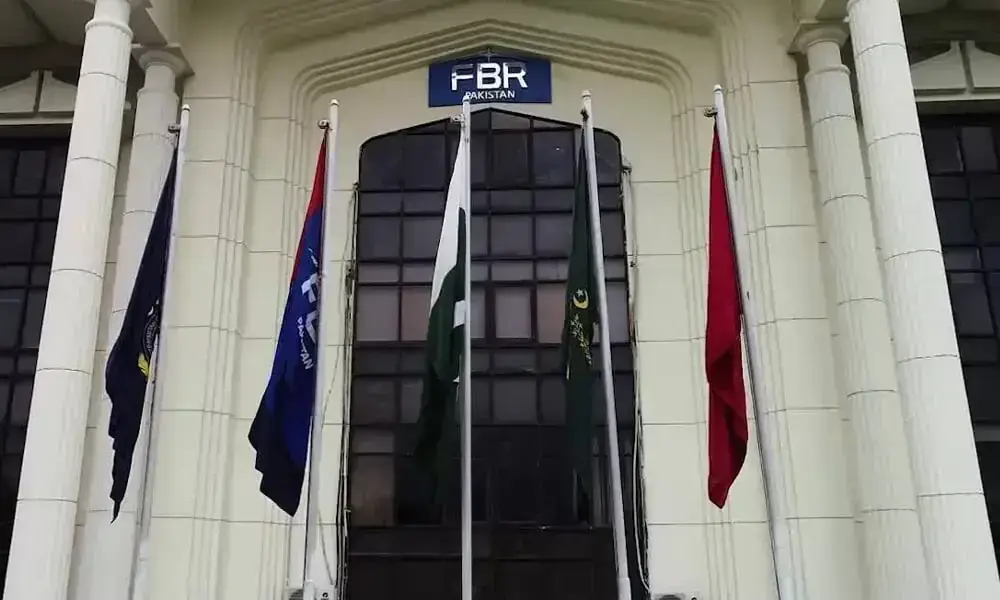
ISLAMABAD: The Federal Board of Revenue (FBR) has introduced a new institutional mechanism for independent scrutiny of customs litigation before cases are taken to the High Courts, Supreme Court or Federal Constitutional Court, with the objective of improving the quality of litigation, ensuring consistency in legal decisions and reducing unnecessary or weak cases.
The new rules, through a notification, have been incorporated into the Customs Rules, 2001 and have come into force immediately.
Under the new framework, the Board will constitute independent case scrutiny committees with specified territorial jurisdictions.
The committees will examine Customs cases before the concerned field formation decides to file a reference before a High Court or a petition before the Supreme Court or Federal Constitutional Court.
READ ALSO: Federal taxes: FBR creates ‘Independent Case Scrutiny Committees’
The rules provide for four committees covering different geographical jurisdictions of Customs formations.
Committee No. 1 will cover Customs formations and directorates falling within Islamabad, Gilgit-Baltistan and related northern jurisdictions. Its jurisdiction includes the Collectorates of Customs (Airports), Islamabad; Customs (IOCO), Islamabad; Customs (Enforcement), Islamabad; Customs, Gilgit-Baltistan; relevant directorates of Customs, including I&RM, Valuation, PCA and Internal Audit, NNDA, IPRE and other formations.
Committee No. 2 (Central) will cover Customs formations in Peshawar and adjoining areas, including Collectorates of Customs (Enforcement), Peshawar; Appraisement, Peshawar and Kohat; relevant Customs directorates and offices in Peshawar; and other specified formations in the northern and central jurisdiction.
Committee No. 3 (South-I) will cover major Customs formations in Punjab, including Lahore, Sargodha, Sialkot, Faisalabad, Multan and related jurisdictions. Its territorial coverage includes the Collectorates of Customs (Enforcement), Lahore and Sargodha, Airports Lahore, Sambrial-Sialkot, Appraisement Lahore and Faisalabad, as well as relevant Customs directorates.
Committee No. 4 (South-II) will cover the southern Customs formations, including Karachi, Quetta, Gwadar, Taftan, Hyderabad and Gadani. The jurisdiction includes various Karachi Collectorates and directorates as well as Customs formations in Balochistan and other specified areas.
Retired judges, lawyers and Customs officers to sit on committees
A significant feature of the new mechanism is the proposed composition of the scrutiny committees.
Each committee will include a retired judge of the Supreme Court, Federal Constitutional Court or any High Court of Pakistan as Chairperson. The committees will also include an advocate having at least 15 years’ experience in Customs, tax and commercial litigation before the High Courts and/ or Supreme Court, along with a serving or retired officer of the Pakistan Customs Service of BS-20 or above. This composition is aimed at bringing judicial, legal and technical Customs expertise into the decision-making process before the FBR commits resources to higher-court litigation.
No reference before a High Court or petition before the Supreme Court or Federal Constitutional Court can be filed after issuance of the rules unless the case has first been placed before the concerned scrutiny committee and the committee’s recommendation is on record.
The move effectively places an additional institutional filter between Customs field formations and higher-court litigation.
The committees will be responsible for examining cases before a decision is taken to initiate litigation, periodically reviewing pending references and petitions to determine whether continuation of litigation remains warranted, maintaining a database of settled legal questions and relevant precedents, and identifying systemic issues requiring legislative or administrative intervention.
The committees will not only scrutinise new litigation. They will also periodically review cases that are already pending before courts.
The purpose will be to determine whether continuation of litigation is justified, potentially allowing Customs to withdraw cases where further litigation is not considered warranted. The rules specifically provide for review of pending references and petitions and for maintaining a database of settled legal questions and precedents to promote consistency in future litigation.
This could have implications for the FBR’s existing Customs litigation portfolio, particularly cases where the legal position has subsequently become settled through judicial precedents.
The FBR has also envisaged a digital mechanism for referral and processing of cases.
According to the rules, the entire process of referring cases to the committees, conducting proceedings and communicating recommendations will be carried out through a dedicated portal of Pakistan Single Window (PSW) or through modifications to the existing WeBOC system.
Until the dedicated portal becomes operational, referrals and proceedings may be conducted manually in the form and manner determined by the Member (Legal & Accounting-Customs).
The referral will have to contain material particulars of the case, relevant reference documents, revenue implications, questions of law requiring consideration and, where applicable, recommendations from the Chief Collector, Member (Customs-Operations) or Member (Legal & Accounting-Customs), along with relevant supporting documents.
Cases placed before the committee are to be dealt with within 15 days of receipt. If the committee fails to finalise its recommendation within that period, the Chairperson may extend the timeline by a further 10 days, with the Member (Legal & Accounting-Customs) being informed.
If the committee does not render a decision within the prescribed period, including the permissible extension, the case will be deemed to have been cleared for filing, subject to compliance with all other applicable legal requirements. The Secretary will record the lapse of the prescribed period and inform the relevant Member, Chief Collector or Director General so that the case can proceed.
Copyright Business Recorder, 2026


























Comments