


Natural Gas (Development Surcharge) (Amendment) Bill, Gas Infrastructure: Development Cess (Amendment) Bill tabled in NA
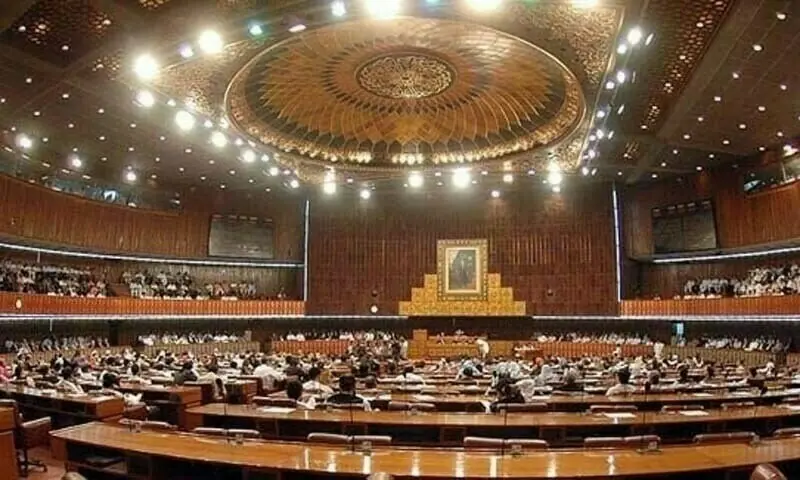

ISLAMABAD: The federal government on Wednesday introduced the Natural Gas (Development Surcharge) (Amendment) Bill, 2026 and the Gas Infrastructure Development Cess (Amendment) Bill, 2026 in the National Assembly, seeking to amend the mechanisms for the collection and adjustment of the gas development surcharge and the utilisation of GIDC funds for gas infrastructure and other strategic projects.
The Natural Gas (Development Surcharge) (Amendment) Bill, 2026, seeks to amend the mechanism for calculating and adjusting the development surcharge on natural gas, including provisions for carrying forward negative differential margins for adjustment in the following financial year.
The Gas Infrastructure Development Cess (Amendment) Bill, 2026, seeks to allow the federal government to use GIDC funds for gas infrastructure development and other strategic gas infrastructure projects.
READ MORE: Rs400bn dues: NA likely to take up GIDC (Amendment) Bill, 2026
In the absence of Minister for Petroleum Ali Pervaiz Malik, Minister for Parliamentary Affairs Tariq Fazal Chaudhry introduced these two bills in the House. However, a total of seven bills were introduced in the Lower House of the Parliament.
These include; “The Hyderabad Institute for Technology and Management Sciences (Amendment) Bill, 2026”, “The Seed (Amendment) Bill, 2026”, “The Employees’ Old-Age Benefits (Amendment) Bill, 2026”, “The Natural Gas (Development Surcharge) (Amendment) Bill, 2026”, “The National University of Pakistan (Amendment) Bill, 2026”, “The Gas Infrastructure Development Cess (Amendment) Bill, 2026” and “The Dock Workers (Regulation of Employment) (Repeal) Bill, 2026.”
According to the “Gas Infrastructure Development Cess (Amendment) Bill, 2026,” the government seeks to broaden the scope of utilisation of the cess for gas infrastructure development and other strategic gas infrastructure projects.
Under the proposed legislation, the Gas Infrastructure Development Cess (GIDC) would be utilised by the federal government for or in connection with gas infrastructure development or any other strategic gas infrastructure projects.
The bill seeks to amend Section 4(1) of the Gas Infrastructure Development Cess Act, 2015, replacing the existing provision governing the utilisation of the cess. The amendment would be deemed to have been in force since the original provision was enacted.
The bill states that the existing law provides for utilisation of the GIDC for specified gas infrastructure projects, including the Turkmenistan-Afghanistan-Pakistan-India (TAPI) ancillary projects, the Iran-Pakistan Pipeline Project, pipeline projects and LNG or other projects.
According to the Statement of Objects and Reasons, the amendment has become necessary in view of the infrastructure development requirements of the energy sector and the evolving energy landscape of the country.
It said that broadening the scope of utilisation of the cess would provide greater flexibility for gas infrastructure development and other strategic gas infrastructure projects.
The proposed amendment would allow the government to utilise GIDC funds beyond the specifically listed projects under the existing law, giving it greater flexibility to finance strategic gas infrastructure initiatives.
The Natural Gas (Development Surcharge) (Amendment) Bill, 2026, seeks to amend the existing law governing the levy, collection and adjustment of development surcharge on natural gas, including provisions for negative differential margins and disconnection of gas supplies in case of persistent default.
Under the proposed legislation, the development surcharge would be linked to the differential margin between the prescribed price and the sale price of natural gas, with the Oil and Gas Regulatory Authority (Ogra) empowered to determine and notify the prescribed price and related revenue requirements.
The bill proposes to introduce a definition of “negative differential margin”, which would arise when the prescribed price exceeds the sale price. It provides that where a negative differential margin emerges, the development surcharge would not become payable immediately. The liability would be recalculated after incorporation of the final tariff adjustment determined by the authority.
The proposed law further provides that if a negative differential margin cannot be fully adjusted against the available differential margin, the remaining amount would be carried forward to the next financial year for adjustment against the differential margin.
The bill also seeks to clarify the definitions of “sale price”, “prescribed price”, “natural gas”, “late payment surcharge” and “Ogra Ordinance” in the Natural Gas (Development Surcharge) Ordinance, 1967.
The proposed legislation introduces revised provisions for consumers who default on payment of the development surcharge.
Under the bill, where a consumer remains in default for six consecutive months, the company would serve a notice requiring payment of the outstanding amount along with the late payment surcharge within one month.
If the consumer fails to make the required payment, the company would be authorised to disconnect the natural gas supply.
However, the bill provides an opportunity for restoration of supply if the consumer pays 60 percent of the default amount along with the late payment surcharge within six months of receiving the notice. The remaining 40 percent would have to be paid within 30 days.
Where the consumer fails to make payment under these provisions, the gas supply would remain disconnected until the outstanding amount and late payment surcharge are paid.
The bill also proposes amendments to the Schedule of the Ordinance, including changes relating to the names of gas companies and replacing entry 5 with Oil and Gas Development Company Limited (OGDCL).
According to the Statement of Objects and Reasons, the Natural Gas (Development Surcharge) Ordinance, 1967 was introduced to provide for the levy and collection of development surcharge based on the differential margin between the prescribed and sale prices of natural gas.
The government said the regulatory and pricing framework of the gas sector had evolved, particularly following the establishment of Ogra under the Oil and Gas Regulatory Authority Ordinance, 2002, which now determines and notifies gas sale prices and revenue requirements.
It said certain anomalies had emerged in the implementation of the existing law, including a lack of clarity over the definitions of sale price and prescribed price, the absence of provisions dealing with negative differential margins, recovery of accumulated development surcharge and late payment surcharge, and enforcement measures in cases of persistent default.
The proposed amendments, the government said, were aimed at addressing these issues and aligning the 1967 Ordinance with the prevailing regulatory framework of the gas sector.
Copyright Business Recorder, 2026
















Comments