


Credibility before privatisation
Pakistan's power distribution privatization faces investor demands for strong guarantees due to past credibility issues, requiring the government to balance investor protection with consumer interests.
- Investor demands for contractual and regulatory protections.
- Government's red lines regarding foreign currency returns and IPP contracts.
- Cleaning up legacy obligations and the future tariff regime.
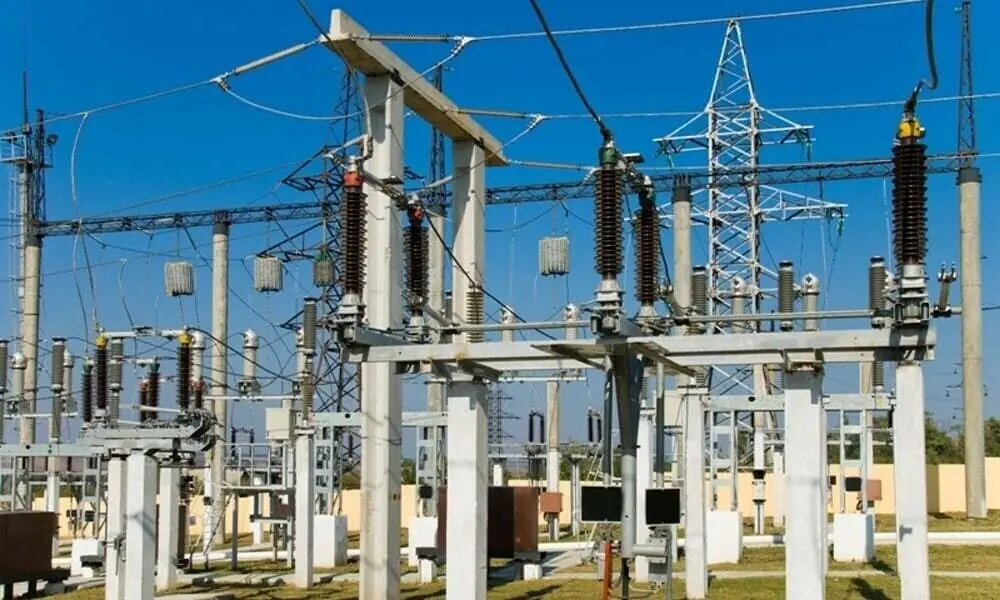
EDITORIAL: The proposed privatisation of three power distribution companies (Discos) has reached the point where the government must confront a question that extends well beyond the mechanics of selling shares: what exactly is it offering investors, and what kind of power market will they inherit?
The interest shown by both domestic and foreign investors in Faisalabad Electric Supply Company, Gujranwala Electric Power Company and Islamabad Electric Supply Company is encouraging.
The reported interest of around a dozen investors, including four foreign entities, suggests that there is commercial appetite for Pakistan’s power distribution business if the operating environment can be made sufficiently predictable. However, the demands being placed on the government also reveal something less comfortable. Investors are effectively pricing Pakistan’s credibility risk into their bids.
Requests for protection against future reopening of contracts, stronger regulatory guarantees, longer tariff control periods, timely tariff adjustments and protection against arbitrary policy changes are not entirely surprising.
Pakistan’s history of revisiting commercial agreements, renegotiating signed contracts and allowing regulatory uncertainty to persist has understandably left investors wary. The weakness of dispute-resolution mechanisms and the broader judicial environment only compounds that concern.
The government therefore needs to distinguish between demands that are commercially reasonable and those that would merely transfer private-sector risks to consumers and the exchequer.
A demand for predictable regulation, for instance, is hardly excessive. If an investor is expected to commit substantial capital to a distribution company, it needs confidence that the regulator will follow a transparent methodology, tariff determinations will be timely and approved investment plans will not become hostage to political consideration.
Similarly, contractual protections against arbitrary reopening should be considered seriously. A contract that can be reopened whenever the political winds change is not much of a contract.
The government’s consideration of political-risk guarantees from multilateral institutions could consequently prove useful. Such guarantees would not only protect investors; they could also impose greater discipline on the state itself.
Pakistan needs precisely this kind of external credibility mechanism if it wants to attract long-term foreign capital into infrastructure.
Be that as it may, there are clear red lines. Foreign currency-linked returns are one such issue. Investors naturally prefer returns in dollars when their perception of currency risk is high. But guaranteeing dollar-denominated returns to privatised distribution companies would effectively transfer exchange-rate risk to a country whose external account remains structurally vulnerable.
Electricity consumers should not be made to shoulder the cost of protecting investors from every macroeconomic risk.
The same caution applies to demands for exemption from purchasing expensive electricity from existing independent power producers.
The concern itself is legitimate. A distribution company should ideally have the ability to procure electricity efficiently, particularly as Pakistan moves towards a more competitive electricity market. But the government cannot simply allow selected private distributors to walk away from existing contractual obligations while the state remains responsible for capacity payments. Someone will have to pay.
This is where the government’s previous dealings with IPPs (independent power producers) become particularly relevant.
The state has already demonstrated that power contracts can become the subject of renegotiation when their fiscal burden becomes politically difficult to sustain. That episode may have been justified by the government at the time, but from an investor’s perspective the lesson is obvious: today’s legally binding agreement may not necessarily remain equally sacrosanct tomorrow.
Pakistan cannot simultaneously complain about investors demanding sovereign and contractual protection and ignore the credibility concerns created by its own track record. The proposed privatisation must therefore be accompanied by absolute clarity on legacy obligations.
Investors would like to know precisely what liabilities they are buying, what liabilities remain with the government, how pension obligations will be treated, how outstanding receivables will be settled and what happens to accumulated circular debt. There should be no ambiguity that later becomes the basis for another round of disputes.
This is especially important because public-sector enterprise liabilities have continued to grow. The State Bank’s reported Rs3.11 trillion liability stock across public sector enterprises, up 8.7 percent in the last fiscal year, is a reminder that privatisation cannot simply be viewed as a transaction that transfers an inefficient entity from the public to the private sector.
The balance sheet must be cleaned up sufficiently for the new owner to operate on commercial terms.
The tariff regime is perhaps the most consequential issue of all. Investors’ preference for a seven- to ten-year control period, compared with the proposed five years, deserves serious consideration if it is accompanied by clear performance obligations.
Distribution infrastructure requires long-term investment. It is difficult to expect a private investor to commit substantial capital to network modernisation if the rules governing its allowed returns can change before those investments have matured.
However, longer tariff periods should not become a carte blanche. The appropriate model would be to link allowed returns to measurable improvements in service quality, losses, collections, reliability and investment delivery. If a private operator performs better, it should be rewarded. If it fails to meet agreed benchmarks, consumers should not be required to compensate it indefinitely.
There is also a strong case for moving away from the current uniform tariff structure over time. A system in which efficient distributors and inefficient distributors are effectively treated alike weakens incentives for improvement.
However, this transition must be carefully designed because regional disparities in electricity access, income and network losses are real. Privatisation should not result in abrupt tariff increases for consumers merely because they happen to fall within a more efficient distribution territory.
The answer lies in separating commercial efficiency from social policy. If the state wishes to subsidise particular consumers or regions, it should do so transparently through the budget rather than embedding the subsidy within the balance sheets of distribution companies.
Private investors cannot be expected to function as instruments of opaque fiscal policy.
The objective should not simply be to sell three Discos. It should be to establish, once and for all, that Pakistan is capable of making commercial commitments—and keeping them.
Copyright Business Recorder, 2026





















Comments