


Economists see little chance of US granting USD10bn ESF request
- Independent economists say that securing such a sizeable bilateral financial support from Washington would be an uphill task
Pakistan's Finance Minister requested a $10 billion US Exchange Stabilization Facility, but economists are highly skeptical of its approval given US fiscal pressures and geopolitical tensions.
- Pakistan's request for a $10 billion US Exchange Stabilization Facility.
- Economists' doubts about the facility's approval and feasibility.
- The ESF mechanism as a currency swap to boost reserves.
- Pakistan's continued reliance on IMF and multilateral financing.
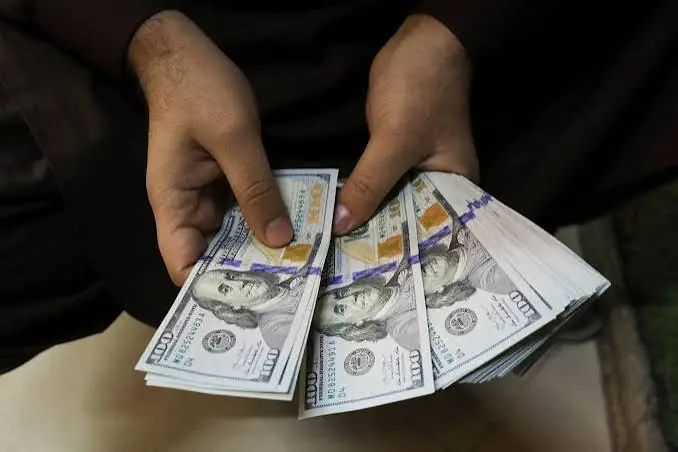

ISLAMABAD: A challenging proposition with little prospects of success, amid high global oil prices and mounting economic and geopolitical pressures on Washington.
This was the consensus of independent economists on Finance Minister Muhammad Aurangzeb’s formal request for a USD 10 billion Exchange Stabilization Facility (ESF) from Scott Bessent, the Treasury Secretary of the United States during his recent visit to Washington.
Senior government officials when requested by this correspondent to comment remained tight lipped thereby leaving key questions unanswered about its structure, conditionalities, financing mechanism and the likelihood of approval.
Independent economists stated that securing such a sizeable bilateral financial support from Washington would be an uphill task, particularly when the US itself is grappling with fiscal pressures, volatile energy markets and heightened geopolitical tensions.
Former finance minister Dr Hafeez Pasha described the reported proposal as largely “hearsay”, with no progress on the facility.
“There is hardly any chance of this facilitymaterialising. It’s just hearsay and there is no progress at all,” Pasha said.
Also read: Aurangzeb briefs Baker about recent visit to US
He added that if Pakistan wanted additional financial relief, the more realistic avenue remained the International Monetary Fund (IMF), which is scheduled to undertake the next review of Pakistan’s ongoing programme next month.
Former Finance Ministry adviser Dr Ashfaque Hassan Khan said the reported request appeared difficult to materialize under the prevailing circumstances.
“At a time when the US economy is itself under pressure due to rising oil prices and geopolitical tensions, extending such a large facility to Pakistan is doubtful,” he said.
Khan added that there was “no free lunch in the world”, arguing that any substantial financial support from Washington would inevitably come with expectations and reciprocal demands.
“Even if the US extends this facility to Pakistan, it would demand something larger in return,” he said, without elaborating on what those demands could entail.
Economist and former adviser to the Ministry of Finance Dr Khaqan Najeeb argued that Pakistan was seeking a bilateral support mechanism through the US Treasury’s ESF, which can provide dollar loans, credit lines, or currency swap arrangements.
Dr Najeeb referred to the US Treasury’s agreement to purchase up to USD 20 billion in pesos from Argentina in exchange for US dollars, by using resources from the ESF that allowed Argentina to draw USD 2.5 billion through the swap line till October 2025. And added that “this is the most likely structure for Pakistan as a currency swap line: the US ESF provides dollars to Pakistan’s central bank against rupees, with an obligation to reverse the transaction at maturity. It is not a grant, not aid, and not a sovereign guarantee. It is a collateralised, reversible financial backstop: closer in nature to a repo arrangement than a conventional loan.”
He said the primary purpose for the request was to strengthen SBP’s gross reserves, provide a credible external liquidity backstop and reduce pressure on the rupee. It would also reduce Pakistan’s dependence on repeated bilateral rollovers and multilateral financing. It should be viewed as an external liquidity buffer, not as financing for the budget or development expenditure. In economic terms, one would see it as a liquidity insurance facility.
Elaborating further Dr Najeeb said that the ESF’s likely conditions would centre on macroeconomic stability, an IMF engagement, credible repayment capacity and reforms. If approved, the facility is likely to be routed through the State Bank of Pakistan rather than the federal government’s budget. The ESF mechanism is a central bank-to-Treasury swap with the SBP holding the dollars as reserve assets. In Argentina’s case, the Treasury executed a swap transaction whereby Argentina’s central bank exchanged pesos for dollars.
Dr Najeeb agreed that there was no public information yet on pricing, fees, or amortization but added that the reported maturity is up to five years. If it is an ESF-type facility, the cost would likely be linked to the US dollar funding cost plus a risk premium/fees, with repayment in dollars. There is no amortisation schedule in the conventional sense; it is a bullet-style reversal at the end of the term, which makes reserve management at maturity critical.
He further contended that this primarily is a reserve-adequacy and external-liquidity risk management measure, rather than evidence of an immediate reserve crisis. Pakistan has improved its reserve position, but its external financing remains dependent on official flows and rollovers. A USD 10bn committed backstop would materially improve confidence and reduce the probability of a balance-of-payments shock, he added.
All three economists however agreed that the uncertainty is compounded by the absence of any official announcement from either Islamabad or Washington regarding the reported request. Against this backdrop, the three economists agreed that Islamabad would likely have to continue relying on the IMF programme and conventional multilateral and bilateral financing channels rather than banking heavily on an unconfirmed US financial backstop.
Business Recorder repeatedly approached Spokesperson of Finance Ministry and Advisor to Finance Minister, however no response was received. This correspondent also sought views of IMF Resident Representative in Pakistan, but till filing of this report no response was received.
Copyright Business Recorder, 2026




















Comments