


Govt seeks IMF flexibility in fuel pricing to cushion oil price shocks, says minister
- IMF mission will also be coming in August-September, says Pervaiz Malik

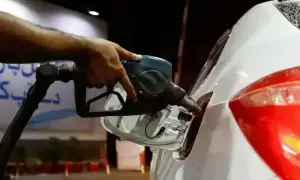
Petroleum Minister Ali Pervaiz Malik has said that Pakistan is engaging with the International Monetary Fund (IMF) to explore greater flexibility in its fuel pricing mechanism, including the possibility of introducing a dynamic grid and a price stabilisation fund.
Speaking in an interview to Aaj News on Monday, the petroleum minister said the government’s finance team was already discussing the matter with the IMF
“Do we have the flexibility to buffer the price increase impact? I don’t think we do. But our finance team is engaged with the IMF.
“The IMF mission will also be coming in August-September, and I will also request them as well that perhaps we need a dynamic grid, so that when prices are high, the levy can be reduced; that is how you can cushion this,” he said.
“There are also talks of forming a price stabilisation fund; we are looking into this,” he said.
Malik explained that the petroleum development levy (PDL) was temporarily eased when oil prices surged following the Middle East conflict but was subsequently restored as prices stabilised to meet budgetary commitments. “Today it has reached close to its original level,” he said.
While responding to a query, the minister defended the government’s adherence to market-based fuel pricing.
“When a country is operating under an IMF programme with limited fiscal resources, preventing price transmission has consequences,” he said. “If we had done any irresponsible act this time as well, the country would have reached bankruptcy, like in 2022.”
Pakistan’s petroleum product prices have historically been subject to fortnightly reviews, but a significant change was introduced in July 2026 by the federal government, authorising the Oil and Gas Regulatory Authority (OGRA) to determine prices on a daily basis, amid rising fuel prices.
This move aims to align domestic pricing with international market movements more closely, improve transparency, and avoid additional risk to the state.
Responding to criticism over high refinery margins, the minister said the government had re-engaged local refineries through a committee constituted by Prime Minister Shehbaz Sharif to take voluntary measures ensuring consumer protection amid renewed tensions in the Middle East.
He argued that the refinery sector’s profitability was helping finance the Brownfield Refinery Upgrade Policy, which aims to modernise domestic refining capacity and “make this sector sustainable”.
“Rather than providing blanket relief, the government should provide targeted relief for vulnerable consumers,” he said. “This will cost the government and the exchequer a smaller amount.”







Comments