


EDITORIAL: The Prime Minister is right to place agriculture and livestock at the centre of Pakistan’s export growth ambitions. Few sectors offer the same combination of existing scale, employment, productive capacity and scope for relatively rapid gains.
Pakistan does not have to discover agriculture’s potential; it already has it. The more difficult question is why, after decades of policy attention, that scale still struggles to translate into consistently higher productivity, greater value addition and a larger exportable surplus.
That is where the argument about agriculture being the lowest-hanging fruit becomes less straightforward. The opportunity may be obvious, but capturing it is not.
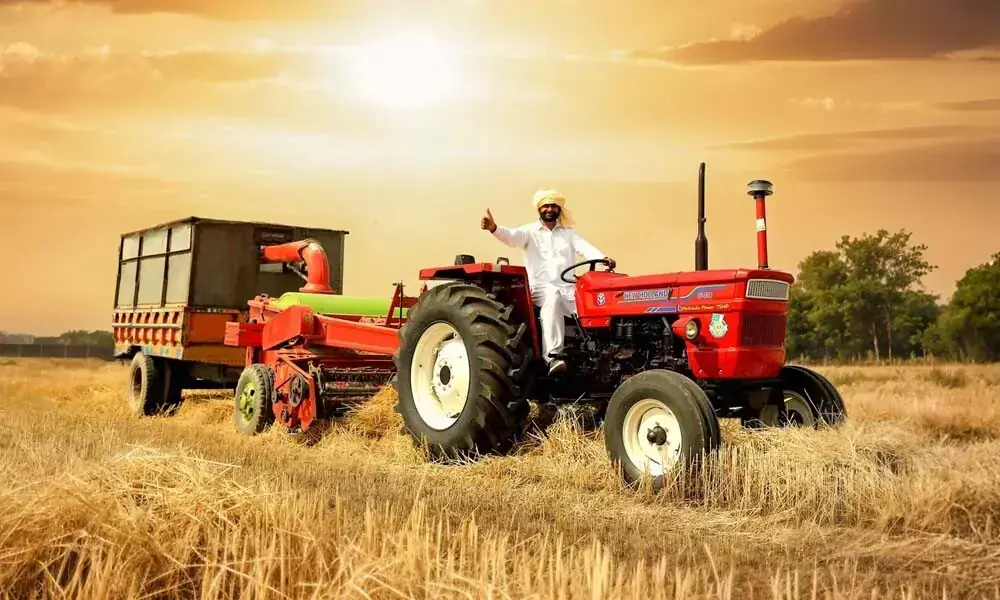
Pakistan has spent years expanding agricultural credit, subsidising tractors and inputs, intervening in commodity markets and, more recently, financing solarisation and digitising farmer support. Many of these interventions have merit in isolation. Yet they coexist with weak seed systems, poor genetics, inadequate research, inefficient water use, fragmented mechanisation, limited extension, inadequate storage and, in livestock, persistent problems of disease control, traceability and productivity.
It is difficult to escape the conclusion that Pakistan has often been better at financing agriculture than improving it. That distinction matters because the next phase of agricultural policy cannot simply be another round of farmer support dressed up as transformation. Recent reforms offer a better starting point.
Seed-sector restructuring, attempts to rebuild agricultural research, livestock identification and traceability, commodity-market reform, electronic warehouse receipts and a greater focus on water productivity all address more fundamental constraints.
The challenge now is to avoid spreading resources across an ever-growing list of schemes and instead scale the relatively few interventions capable of changing the underlying economics of production.
Seed and genetics should sit near the top of that list. So should agricultural research. The productivity gap begins well before financing becomes relevant. Better varieties, stronger breeding programmes, climate resilience and higher seed replacement can raise the productive frontier itself rather than merely lower the cost of operating below it.
Mechanisation requires a similar rethink. Pakistan’s farm structure is increasingly fragmented, which limits the economics of individual ownership of sophisticated machinery.
The answer cannot remain limited to subsidising tractors. Machinery-service models can allow small farmers access to planters, harvesters, laser levellers, balers, drones and other equipment without requiring every farm to own the asset. That would treat mechanisation as productive infrastructure rather than a distribution programme.
Water policy needs an even sharper break from the past. Lowering the cost of pumping water is not the same thing as improving water productivity.
Indeed, cheaper pumping without effective groundwater management can worsen the underlying problem. Policy should increasingly be judged by the value generated per unit of water, with crop choice, irrigation technology and water availability considered together rather than through separate schemes administered in separate silos.
Livestock presents perhaps the clearest illustration of the difference between scale and productivity. Pakistan can take considerable comfort from the size of its livestock population, but export markets do not buy population statistics. They buy traceable, healthy, consistently bred animals and products that meet veterinary, sanitary and quality standards.
Genetic improvement, animal identification, disease surveillance, vaccination, feed quality, milk yield, carcass weight and certification matter considerably more than headline herd numbers.
The same problem continues beyond the farm gate. Producing more is of limited value if output cannot be aggregated, stored, graded, processed, certified and moved efficiently.
Warehousing, cold chains, packhouses, testing facilities, processing capacity and logistics are not ancillary to agricultural transformation. They are part of it.
This is also where agricultural policy needs to move away from treating the individual farmer as the basic unit of intervention.
The more useful organising principle is the production cluster. Identify where a commodity already has scale and commercial potential, then solve the constraints around that geography together. Seed, water, machinery, extension, storage, processing, finance and market access need to reinforce one another.
Pakistan has spent too long running these as separate schemes, administered by separate institutions, with separate targets and little reason to assume that all the pieces will eventually meet at the same farm gate. The result has been plenty of intervention and surprisingly little transformation.
Finance certainly has a role, but it should come after this logic rather than substitute for it. Agricultural credit has too often been treated as though increasing the supply of money would itself generate productivity. It will not. There is little economic virtue in financing low productivity more cheaply.
The financing constraint becomes more relevant once viable value chains and investible businesses begin to emerge. Storage operators, cold-chain businesses, processors, machinery-service providers, livestock enterprises and export-oriented SMEs can all face limited bank appetite even where the underlying economics are sound. That is where partial credit guarantees and other risk-sharing structures can help crowd commercial capital into activities that would otherwise struggle to obtain financing.
Used selectively, public risk capital can help complete agricultural value chains without requiring the state to fund them itself. Used indiscriminately, it simply becomes another subsidy.
The broader policy test, therefore, should change. Success cannot be measured by the number of tractors distributed, cards issued, tube wells solarised or the volume of agricultural credit disbursed. Those are programme metrics. They tell us what government spent or delivered, not whether agriculture became more productive.
The relevant measures are harder: yield per acre, seed replacement, output per unit of water, milk and meat productivity, disease prevalence, post-harvest losses, storage capacity, processing intensity and, ultimately, the value of what Pakistan is able to sell abroad.
The Prime Minister has identified the right place to look for growth. The harder part is accepting that agriculture’s problem is no longer one of recognition. Pakistan has recognised the opportunity often enough. What it has yet to build is the productivity system required to capture it.
Copyright Business Recorder, 2026












Comments