


Less complexity, more confidence: the future of banking in Pakistan
Despite a surge in digital transactions, Pakistan's banking sector needs to prioritize simplicity, clarity, and digital-first design, especially for Islamic banking, to build trust and foster financial inclusion.
- Surge in Pakistan's digital banking transactions.
- Why cash remains popular despite digital growth.
- Building trust through digital-first banking design.
- Simplifying Shariah-compliant banking for everyday use.

Pakistan does not need more banking applications, it just needs fewer complications. Over the past few years, the country has witnessed a surge of digital platforms and financial tools promising speed and convenience. Downloads have grown, transaction volumes have climbed, and in FY25 alone retail payments crossed 9.1 billion transactions valued at Rs612 trillion, with digital channels now accounting for about 88% of all retail transactions. The infrastructure is active and expanding and the direction of travel is clear.
Yet scale does not automatically create simplicity. For many Pakistanis, banking still feels procedural and uncertain. Forms require interpretation, charges require explanation, and digital interfaces demand careful navigation. Even a small mistake can feel costly. That quiet hesitation keeps cash in circulation even when digital alternatives are available.
Cash endures for a straightforward reason - it is simple, immediate, and predictable. That is the standard digital banking must now meet. For decades, banking in Pakistan has relied on physical presence as a signal of stability. Branch networks conveyed permanence, documentation reinforced legitimacy, and face-to-face interaction provided reassurance. Even as mobile wallets and digital platforms gained traction, the broader system remained structured around branches and legacy processes.
A digital-first bank starts from a different foundation. Digital is not treated as an additional channel layered onto older systems; it becomes the architecture itself. Onboarding, verification, and service delivery are designed for real-time interaction from inception. Infrastructure is built for responsiveness rather than delayed processing. This shift is not only technological; it reshapes how trust is built. When physical scale is no longer the primary marker of credibility, digital design must assume that responsibility. Processes must be clear enough to reduce doubt, security must be visible enough to build confidence, and support must remain accessible when reassurance is needed.
The future of banking here will be determined less by how many features are introduced and more by how many barriers are removed.
At the same time, Pakistan’s financial direction is evolving in another important way. Islamic banking now represents a substantial and growing share of the overall sector, with Islamic banking assets representing more than 22.9% of total banking sector assets and deposits holding an even larger share, underscoring its integration into the mainstream. This development introduces a practical challenge: can Shariah-compliant banking be delivered in a way that feels straightforward for everyday use?
For many customers, the obstacle is not preference but rather complexity. Product structures can appear layered, terminology can feel technical, and comparisons can seem unclear. If Islamic banking is to serve everyday Pakistan at scale, it must be presented with transparency and consistency. It must feel intuitive rather than instructional. The convergence of digital-first architecture and Islamic-first orientation creates an opportunity. An institution built digitally from inception does not need to retrofit compliance into legacy systems or redesign entrenched processes. It can embed structure, clarity, and alignment into its foundation.
In banking, renewal should mean a deliberate redesign of systems around how people transact today. In Pakistan, that translates into banking that is easy to enter, easy to understand, and consistent in everyday use. If digital banking is to serve everyday Pakistan, it must begin with ordinary moments: paying school fees without losing half a day, sending money to family without standing in line, checking balances without uncertainty, understanding charges without assistance, and opening an account without feeling overwhelmed. These are not ambitious demands but simply reasonable expectations.
The future of banking here will be determined less by how many features are introduced and more by how many barriers are removed. Simplicity drives inclusion, clarity builds confidence, and consistency changes behavior over time. Pakistan’s financial sector stands at an important point, shaped by digital acceleration, Shariah alignment, and rising customer expectations. Institutions that recognise this moment must respond with discipline and focus. Technology alone will not build trust; thoughtful design will.
The article does not necessarily reflect the opinion of Business Recorder or its owners.
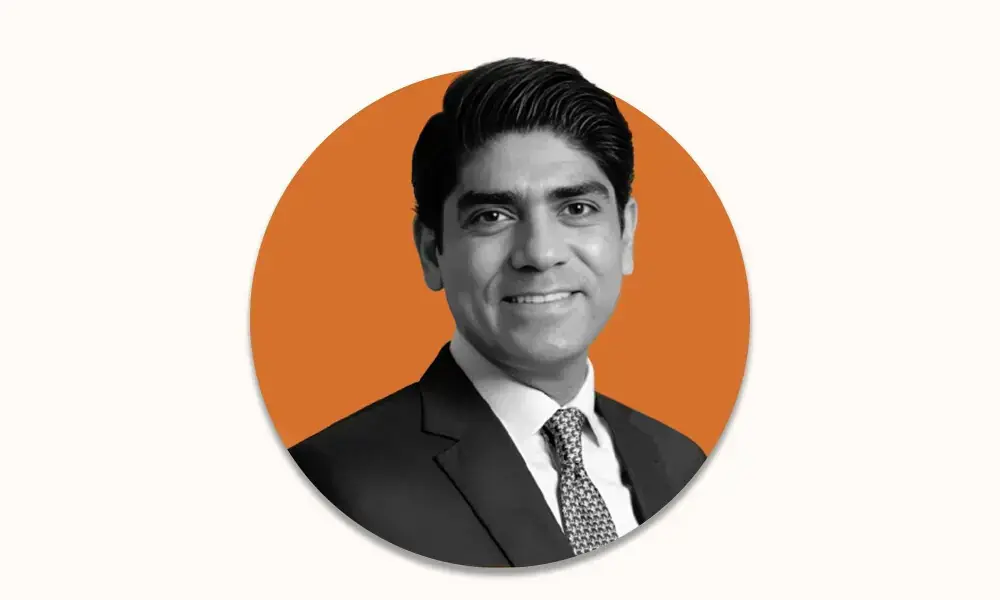
The write is CEO, Mashreq Pakistan























Comments