


Saudi strikes target Yemen’s Hodeidah
- Strikes hit facilities belonging to state telecommunications corporation in Hodeidah city, Houthi-run Al Masirah TV reports
US and Saudi forces launched strikes in Yemen and Iran following Houthi naval blockades and attacks on tankers, escalating the Middle East conflict and impacting global shipping.
- Escalating conflict between US/Saudi Arabia and Iran/Houthis.
- Houthi naval blockade and attacks on Red Sea shipping.
- Impact on global oil tankers and shipping insurance.
- US and Iranian military strikes and reported casualties.
- US warnings for citizens in the Middle East.
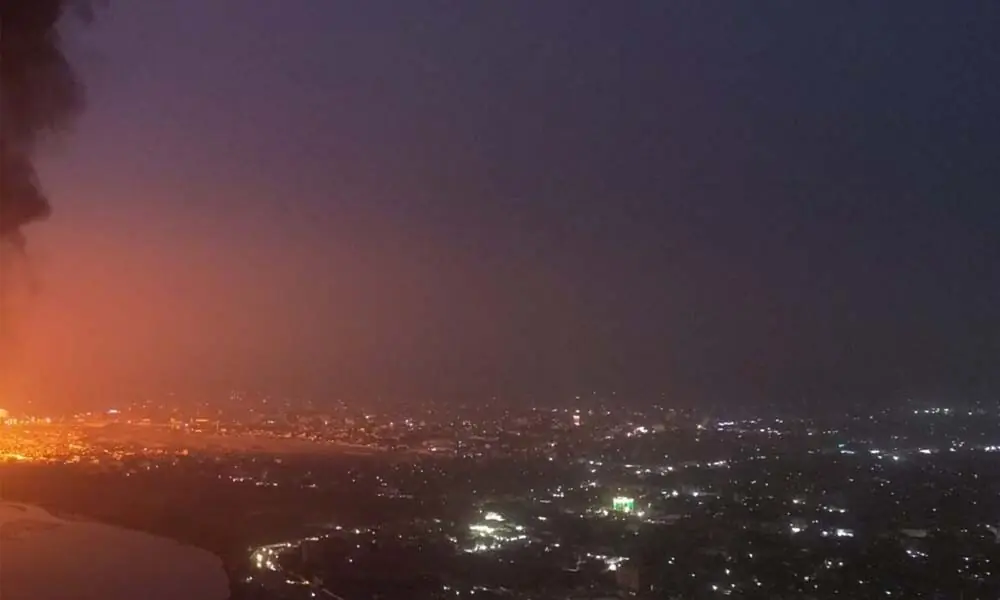

SANAA/DUBAI: Saudi strikes attacked Yemen’s Red Sea governorate of Hodeidah on Friday, Houthi-run Al Masirah TV reported, after eyewitnesses earlier said several strikes had targeted Hodeidah’s port.
Yemen’s Houthi movement said on Monday it would impose a naval blockade on Saudi Arabia in the Red Sea, opening a potential new front against the United States in its war with Iran. The Saudi-led coalition said it would respond “firmly”.
Al Masirah said Saudi strikes hit facilities belonging to the state telecommunications corporation in Hodeidah city. The broadcaster also said Saudi forces targeted Kamaran island, off Yemen’s western coast. Reuters could not immediately verify the reports.
READ MORE: Houthis say they don’t seek to close key Bab al-Mandeb Strait
Saudi Arabia has sought to avoid a return to full-scale conflict in Yemen since a 2022 truce with the Houthis halted most major fighting in a war that killed hundreds of thousands of people.
Meanwhile, US missiles struck targets across Iran on Friday after President Donald Trump vowed “major military punishment” for Tehran and Houthis in Yemen for extending the Middle East war to a second major shipping chokepoint, the mouth of the Red Sea. Two weeks after the collapse of an interim truce meant to end the war, the Iranian armed forces responded by firing at US bases in neighbouring Arab countries and warning people there that they may strike non-military buildings used by US personnel.
The Houthis, who control northern and western Yemen, have announced a naval blockade on Saudi Arabia, which has diverted millions of barrels of oil each day by pipeline to the Red Sea to skirt Iran’s near-total blockade of the Strait of Hormuz.
The entrance to the Gulf has so far been the focus of a war that has killed thousands in almost five months, stoked global inflation and fanned fears of an economic downturn.
The Houthi fighters struck two Saudi tankers on Thursday in the Red Sea’s Bab el-Mandeb strait.
Tankers rerouting, shipping insurance goes up
Meanwhile, the Houthi attacks forced several other tankers to turn around and head north through the Suez Canal, potentially using a much longer route to reach Asia by sailing around Africa. Shipping insurance costs through the southern Red Sea doubled for some companies on Thursday, sources said.
Still, half of the 18 ships exiting Bab el-Mandeb on Thursday were carrying crude oil, including two Chinese supertankers. The number of tankers crossing through the Strait of Hormuz fell to just one on Thursday, the lowest since May 7. The Iranian and Omani foreign ministers discussed security developments and maritime navigation in the Strait of Hormuz that runs between the two countries in a phone call, a statement on Iranian Foreign Minister Abbas Araqchi’s Telegram channel said.
Iran threatens US forces
Trump said on social media that he would hold Iran accountable for any further attacks by Yemeni fighters, “and major military punishment will be inflicted upon Iran and, of course, the Houthis, themselves”.
He told Axios he was considering re-launching major combat against Iran. “They haven’t received enough pain yet,” the US news outlet quoted him as saying. In a statement on X, the Iranian health ministry said 59 people had been killed and 666 wounded since the resumption of clashes with US forces in late June. Iranian media cited the head of Iran’s top joint military command as saying Iran would kill a member of the US forces for every Iranian killed.
The war has led to the deaths of 18 US service members. The Pentagon said on Monday that 100 service members had been injured since July 7 and 96% have returned to duty.
US warns citizens in mideast to exercise caution
The Iranian army said it had attacked US military equipment depots at Al-Adiri, officially named Camp Buehring, in northern Kuwait, and the positions of US troops at Camp Arifjan and at Camp Doha, near Kuwait City. In the early evening, Kuwait said its air defences were intercepting “hostile” targets launched from Iran.
Iran’s Revolutionary Guards said they had significantly damaged a surveillance tower used by the US Fifth Fleet in Bahrain.
They also said they had attacked a US barracks and fighter jets in Jordan, and a US barracks and spy balloon as well as Patriot air defences in Erbil in Iraq’s Kurdish region, according to the semi-official Tasnim news agency.
Jordan’s army said it had downed seven Iranian missiles and six drones, state TV reported, and that the attack had caused no material damage or casualties.
The US embassy in Baghdad said US citizens in the Middle East should exercise caution and remain on heightened alert.
US missiles hit a Guards HQ, media says
US missiles struck a Revolutionary Guards Navy headquarters in the Ziba Kenar area of the Caspian Sea province of Gilan, according to a security official in Gilan quoted by Iranian media. Provincial authorities said US projectiles had also struck the port city of Bandar Anzali, according to the ILNA news agency.
Four people were killed and five injured in a US attack on the Iranian city of Ahvaz, the state broadcaster IRIB said.
In a statement carried by Iran’s Fars news agency, the Revolutionary Guards warned the populations of Gulf countries of potential strikes against US military personnel who may be using “buildings in cities as locations to direct their crimes”.

















Comments