


Coal fills the gap
Pakistan's FY26 power sector saw record hydel and RLNG recovery, but structural shifts mean the challenge is now timely generation. Solar's impact on demand increased reliance on imported coal.
- Record hydel generation and RLNG supply recovery.
- The evolving challenge of timely electricity generation.
- Impact of solar power on grid demand and evening peaks.
- Increased reliance on imported coal for grid balancing.

FY26 ended with Pakistan’s power sector in a better place than many would have expected just a few months ago. The feared collapse in RLNG supplies never fully materialized, hydel generation reached an all-time high, and cumulative grid generation managed to post positive growth after two difficult years.
Yet beneath those reassuring headlines lies a very different story. The electricity system that emerged from FY26 is structurally different from the one planners designed for. The fuel mix has changed, the demand profile has changed, and the cost of balancing the grid has changed with it.
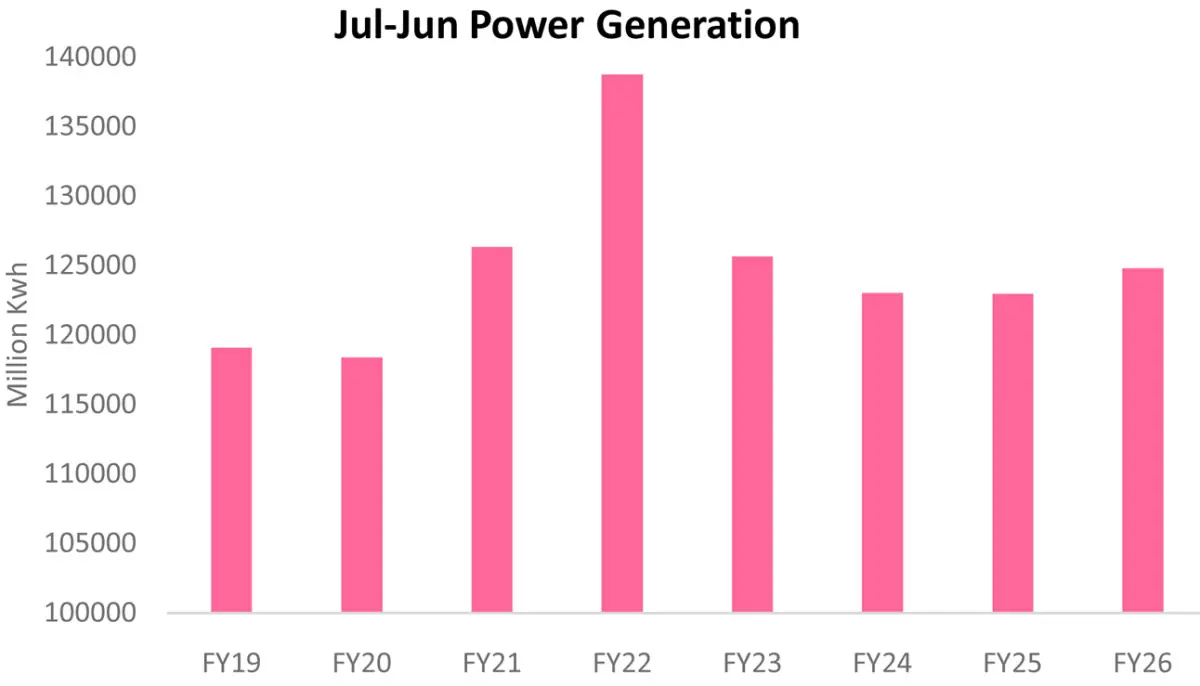
National grid generation reached nearly 125 billion kilowatt hours during FY26, up just 1.5 percent from the previous year.
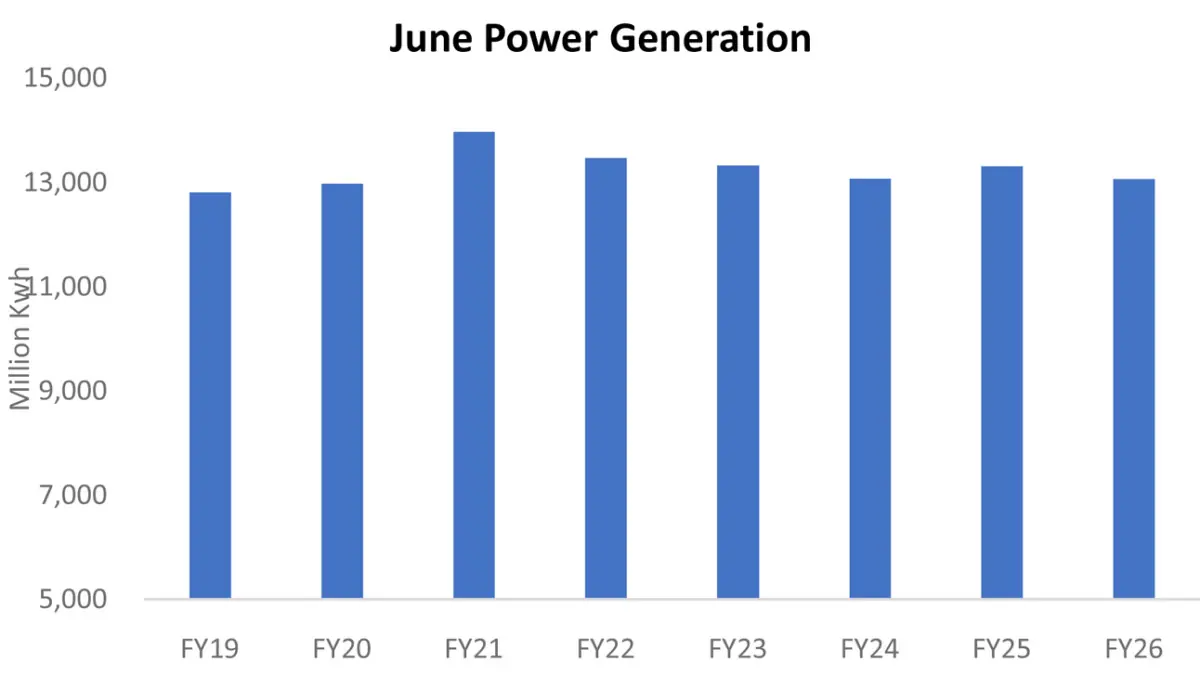
June generation stood at around 13 billion units, down 2 percent year-on-year, while actual generation remained about 3 percent below reference levels. Demand has undoubtedly recovered from the lows of recent years, but it still remains well below the peaks recorded in FY22.
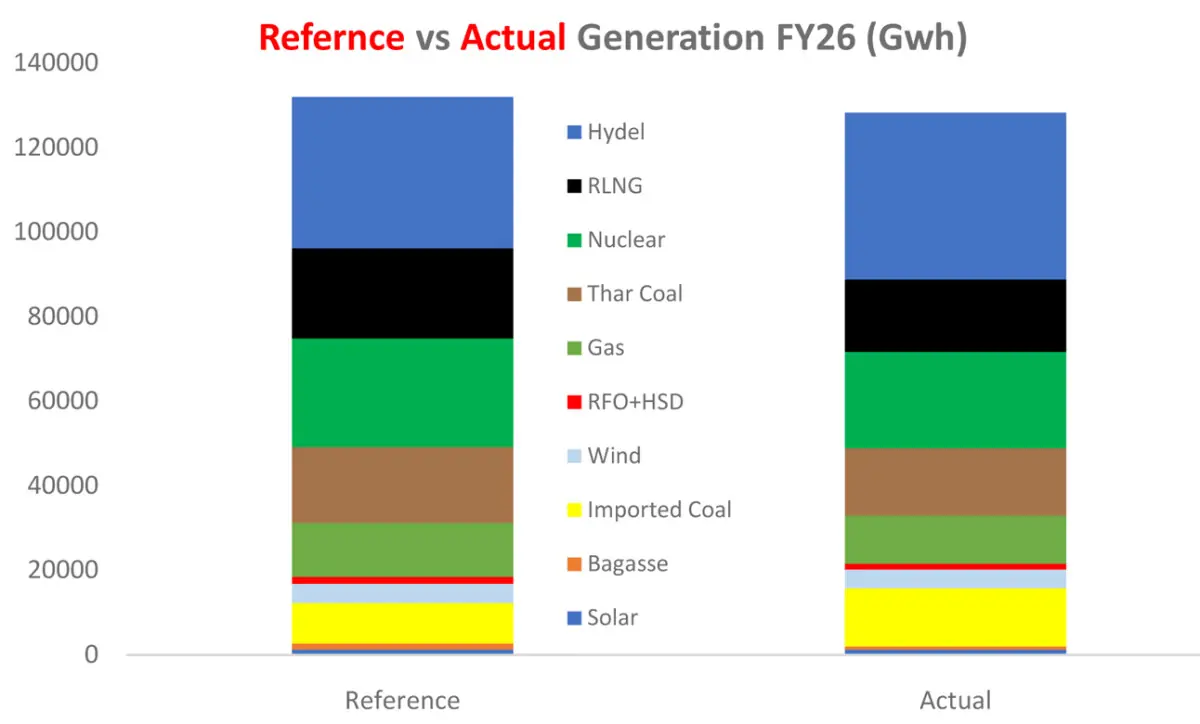
The headline performer was hydel. At nearly 40 billion units, hydropower recorded its highest annual generation on record, accounting for roughly 31 percent of total electricity generation.
Hydel output exceeded reference levels by around 10 percent, providing the system with a substantial amount of low-cost electricity and preventing fuel costs from rising even further.
RLNG also staged a recovery after the severe disruption witnessed during the latter part of the fiscal year. Pakistan managed to secure additional LNG cargoes despite the uncertainty surrounding global gas markets and the regional conflict. RLNG’s share recovered to around 13 percent of generation.
But the recovery remained incomplete.
Even after the turnaround, RLNG generation still finished nearly 19 percent below reference, translating into almost 4 billion fewer units than originally planned. Pakistan’s most flexible source of thermal generation remained constrained precisely when the grid needed it the most.
That missing RLNG had to be replaced somehow.
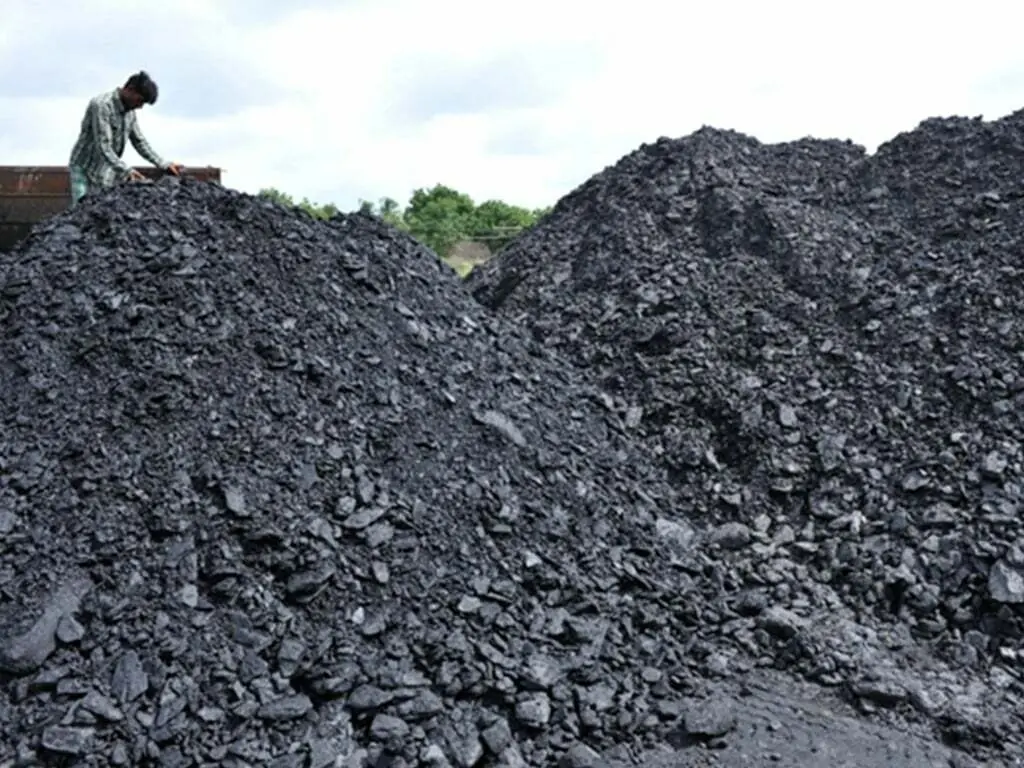
The answer once again was imported coal.
Imported coal generation exceeded reference levels by roughly 43 percent during the year, producing nearly 4 billion additional units above planning assumptions. Coal’s share reached around 11 percent of total generation, not because demand surged unexpectedly, but because the grid increasingly required dependable thermal generation capable of supporting the evening ramp.
This is perhaps the defining electricity story of FY26.
For years, planners focused primarily on generating enough electricity. Increasingly, the challenge is becoming generating electricity at the right time.
Pakistan’s rapidly expanding base of behind-the-meter and off-grid solar continues to hollow out daytime demand. During sunny hours, the national grid supplies considerably less electricity than it did only a few years ago, even as overall electricity consumption has increased. Once the sun sets, however, demand returns abruptly, requiring conventional power plants to ramp up output within a very short period.
The duck curve that once seemed like a future concern has now firmly arrived.
Hydel has helped soften the impact. RLNG’s recovery prevented a more severe disruption. But neither was sufficient to eliminate the growing dependence on imported coal during critical hours. The system continues to dispatch more coal than envisaged, not because it is the cheapest option, but because it is increasingly one of the few options available.
The consequence has been visible in consumers’ bills. Fuel cost adjustments remained positive through much of the second half of FY26 as imported coal repeatedly exceeded reference generation while RLNG continued to underperform. The higher cost of balancing the system has increasingly found its way into monthly adjustments.
Operationally, the challenge remains equally apparent. The evening peak has become steeper, ramping requirements continue to increase, and system operators have less flexibility than planning assumptions envisage. Transmission constraints have eased compared to previous years but have not disappeared, meaning balancing the grid remains as much an operational exercise as a fuel management one.
The irony is difficult to ignore. Pakistan’s solar revolution has almost certainly reduced overall fuel imports and protected the country from a far larger energy shock during a year marked by geopolitical uncertainty. But it has simultaneously made operating the grid considerably more complicated. The problem is no longer producing enough electricity. It is producing the right electricity at the right hour.
FY26 may ultimately be remembered as the year Pakistan’s power sector adapted to that new reality. The next challenge will be building a system flexible enough to live with it.




















Comments